
RSVGPF Strengthens National Disaster-Response Capacity Through Logistics Training
Kingstown: When disaster strikes, an effective response depends on more than personnel being ready. Relief supplies must be located, moved and distributed quickly, while agencies coordinate their efforts under pressure.
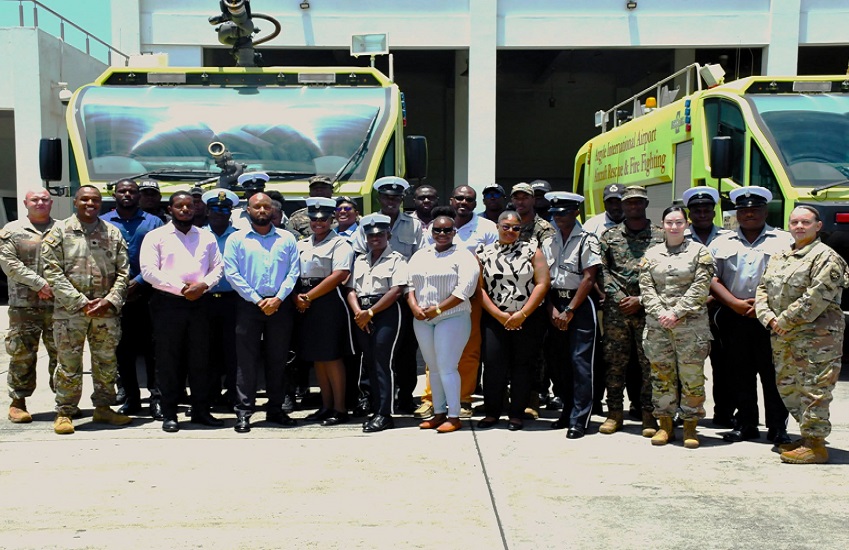
Against that background, the Royal Saint Vincent and the Grenadines Police Force hosted a four-day Humanitarian Assistance and Logistics Sustainment Training Course from Monday, July 13 to Thursday, July 16, 2026, at the Argyle Fire Station.
The course brought together 26 participants from various departments and agencies to examine one of the most demanding aspects of disaster response: getting personnel, equipment and essential supplies where they are needed, and sustaining that support as an emergency develops.
For Saint Vincent and the Grenadines, this is not a distant concern.
Our country is exposed to hurricanes, volcanic eruptions, earthquakes, tsunamis, flooding and landslides. Any one of these events can isolate communities, disrupt transportation and communications, overwhelm available resources and create an urgent need for food, water, shelter, medical supplies and security.
Participants were therefore trained in logistics planning and sustainment, the establishment of distribution points, the assessment of logistical needs and the role of logistics in developing operational courses of action. These are the systems that help determine what affected communities require, where resources should be sent and how assistance can continue when roads, ports or other essential services are disrupted.
The course was facilitated by members of the Florida National Guard: SFC Garcia Rossini Claudio Elizabeth, CPT Hollandi James and LTC Montgomery Sterling. Also participating were LTC Theobalds, Training Officer of the RSVGPF, and Mr. Kemron Alexander of the National Emergency Management Organisation.
Their involvement reflected an essential reality of emergency management: no single agency can manage a major national disaster alone. Law enforcement, emergency-management personnel and other response agencies must be able to share information, coordinate resources and operate from a common plan.
For the RSVGPF, the training strengthens its ability to maintain public safety, support relief operations and assist communities during periods of national emergency. More broadly, it adds to the country’s capacity to deliver an organised and sustained response when lives, livelihoods and essential services are at risk.
Disasters cannot always be prevented. The level of preparation before they occur, however, can determine how effectively a country protects its people and begins its recovery.