


Category: Caribbean

  • Trinidad PM revokes diplomatic passports of ex-leaders

    Trinidad PM revokes diplomatic passports of ex-leaders

    Prime Minister Kamla Persad-Bissessar has initiated a significant policy shift regarding the distribution of diplomatic passports in Trinidad and Tobago following concerns about widespread misuse.

    Investigations revealed that nearly one thousand individuals currently hold these documents despite failing to meet the necessary eligibility requirements.

    Consequently, former leaders Dr. Keith Rowley and Stuart Young have been ordered to surrender their diplomatic credentials in exchange for official passports.

    While Young has characterized the move as victimization, the Prime Minister maintains that the changes are a necessary corrective action prompted by requests from foreign governments.

    The new system aims to distinguish clearly between state representatives granted international immunity and other officials performing administrative duties.

  • CAL drops Blue Waters from its in flight service

    CAL drops Blue Waters from its in flight service

    Caribbean Airlines has abruptly terminated its long-standing partnership with Blue Waters, a prominent beverage supplier, after fifteen years of service.

    This sudden operational shift follows the legal detention of the water company’s owners, who are currently being investigated regarding an alleged criminal conspiracy against government officials.

    In response to the crisis, the national carrier has transitioned to serving Dasani water across its entire flight network.

    The former suppliers maintain their innocence, arguing through their legal representatives that the state’s actions are unconstitutional and based on personal or political motives.

    This switch has caused immediate logistical challenges for airline crews, who had to manually obscure old branding before new supplies were secured.

  • CWI, Teneo launch strategic Transformation Partnership

    CWI, Teneo launch strategic Transformation Partnership

    Cricket West Indies recently announced a formal partnership with the global advisory firm Teneo to spearhead a comprehensive organizational and financial transformation.

    This strategic collaboration aims to optimize operational performance and bolster the commercial viability of the West Indies cricket brand.

    By leveraging Teneo’s international expertise in sports consultancy, the governing body intends to refine its current cost-saving initiatives and long-term business strategy.

    This initiative is a core component of the organization’s 2024-2027 Strategic Plan, which focuses on institutional sustainability and governance reform.

    The partnership seeks to capitalize on the region’s iconic sporting identity to ensure future growth and stability for the sport.

  • CWI Explores Chinese Partnership for Cricket Campus

    CWI Explores Chinese Partnership for Cricket Campus

    Cricket West Indies (CWI) is currently exploring a strategic partnership with the People’s Republic of China to enhance regional sports infrastructure.

    This collaboration focuses on the development of a world-class High-Performance Center at the Coolidge Cricket Ground, which will serve as a hub for elite training and administration.

    The project seeks to utilize Chinese expertise in construction, design, and equipment supply to create a premier environment for player advancement.

    Furthermore, the initiative aims to support the growth of cricket within China, allowing international stakeholders to utilize the new campus.

    This move aligns with the “The Long Run” strategic plan, which prioritizes modernizing Caribbean cricket facilities through global investment.

    The partnership reflects a shared commitment to fostering international cooperation and achieving long-term excellence in the sport.

  • EU says 5 Caribbean nations must terminate CBI by 2028

    EU says 5 Caribbean nations must terminate CBI by 2028

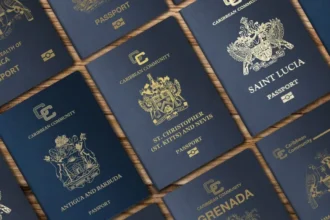
    The European Union (EU) has issued a formal ultimatum to Caribbean nations, requesting the complete phase-out of Citizenship by Investment (CBI) programs by June 1, 2028. In a letter dated June 25, 2026, signed by Commissioner Magnus Brunner, the European Commission informed the Government of Antigua and Barbuda that the mere operation of a CBI program—regardless of its management—now serves as a “self-standing ground” for the suspension of visa-free access to the EU.

    This directive is based on a revised Visa Suspension Mechanism adopted by the Union on December 31, 2025. The EU’s new framework marks a significant policy shift, targeting these programs as inherent security risks to the Union.

    A Regional Challenge

    The request is not limited to Antigua and Barbuda. Prime Minister Gaston Browne has indicated that this decision affects all OECS member states with active CBI programs. Similar correspondence has been sent to the governments of Dominica, Grenada, St Kitts-Nevis, and St Lucia.

    The European Commission has offered a 24-month transition period but requires specific interim measures to be in place no later than September 2026. These measures include the full exclusion of individuals subject to EU restrictive measures and the implementation of reinforced vetting procedures for all applicants.

    Economic Impact and National Interest

    The Government of Antigua and Barbuda has responded with a firm defense of its program, labeling it a “critical pillar” of the nation’s non-tax revenue base. Prime Minister Browne stated unequivocally that the program will continue, as it cannot be abandoned without “viable, concrete, and credible replacement revenues”.

    The government highlighted that CBI income is essential for funding:

    • Hospitals and schools
    • Infrastructure projects
    • Disaster recovery efforts and climate change mitigation

    “The Government will not be pressured into a unilateral phase-out that would cause irreparable harm to the national economy and the welfare of our citizens,” PM Browne asserted.

    The Path Toward Dialogue

    While asserting its sovereign right to pursue economic development, the Antigua and Barbuda government intends to maintain “principled and constructive dialogue” with the European Commission. As an act of good faith, the nation will continue to exclude individuals on EU restricted lists and strengthen security safeguards to satisfy EU standards.

    However, the government pointed out that current EU offers of support, such as the Global Gateway Investment Agenda, are not yet “quantified, binding, or explicitly framed as replacement revenues” for lost CBI income. Antigua and Barbuda maintains that any agreed path forward must include tangible EU assistance to offset the economic impact of a transition.

    The EU is expected to reflect the responses of the Caribbean nations in its upcoming Visa Suspension Mechanism Report, scheduled for December 2026

  • French island Martinique joins CARICOM

    French island Martinique joins CARICOM

    Martinique officially took its seat for the first time in the Caribbean Community (CARICOM) during the opening ceremony of the 51st Regular Meeting of the Conference of Heads of Government, held from July 5-8 in Saint Lucia.

    This first participation gives tangible expression to Martinique’s accession as an Associate Member, which entered into force on June 16, 2026, following the signing of the accession agreement onFebruary 20, 2025 in Bridgetown and the ratification of the Agreement on the Privileges and Immunities of CARICOM. During the opening ceremony, CARICOM Secretary-General Dr Carla Barnett, officially welcomed Martinique as the Community’s seventh Associate Member.

    “It took many years for us to be accepted into CARICOM. This shows how difficult it can be to belong to two institutional frameworks at once. But today, we are here,” said President of the Executive Council in Martinique, Serge Letchimy.

    “This should not be seen as an end in itself. It is only the beginning. We must now move into action. Businesses, financing and investment must now come on board.”

    Outgoing Chair of CARICOM, Prime Minister of Saint Kitts and Nevis, Dr Terrance Drew, said Martinique’s arrival illustrates the organisation’s core purpose: bringing the countries and territories of the Caribbean together around a concrete integration project that serves its people.

  • St Lucian Meggan William breaks into world top 200

    St Lucian Meggan William breaks into world top 200

    Meggan William, the only world-ranked Caribbean pickleball player, is preparing for a busy US circuit across four states this spring, determined to break into the world’s top 200.

    In April and May, the Saint Lucian will compete in California, Arizona, Las Vegas and Utah in women’s singles, women’s doubles and mixed doubles, highlighting her versatility and drive to climb the rankings.

    “Representing the Caribbean at this level is both an honour and a responsibility,” William shared. “I’m excited to  get back on the court, compete against the best, and continue to inspire others from the region to pursue pickleball  at the highest level.”  

    Her coach, Tom Yeh, added, “Meggan’s discipline and competitive spirit are unmatched. She is not only raising the profile of  Caribbean athletes in Pickleball but also proving that with dedication, players from smaller regions can excel on  the world stage.”

    William, the only world-ranked Caribbean player at 209th in women’s singles, is a trailblazer for regional representation on the international stage. Her goals include joining the professional ranks. She is the first athlete sponsored by The Ksquare Group in Texas.

  • EU tells 4 OECS nations to terminate CBI programme by June 2028

    EU tells 4 OECS nations to terminate CBI programme by June 2028

    The Government of Antigua and Barbuda informs the public of a formal communication received from the European Union (EU) regarding the country’s Citizenship by Investment (CBI) Programme.
    In a letter dated 25 June 2026, signed by Commissioner Magnus Brunner and addressed to Prime Minister the Right Honourable Gaston Browne, the European Commission formally requested that Antigua and Barbuda phase out its CBI Programme by 1 June 2028.
    The EU grounded its request in a revised Visa Suspension Mechanism adopted by the Union on 31 December 2025. Under this new framework, the mere operation of a CBI programme — regardless of how well it is managed — is now a self-standing ground for suspending visa-free access.
    The Commission’s letter offers a 24-month transition period and proposes the implementation of specific interim measures. These measures include the full exclusion of individuals subject to EU restrictive measures as well as reinforced vetting procedures for all nationalities, to be in place no later than September 2026.
    The EU has also indicated it will reflect Antigua and Barbuda’s response in its Visa Suspension Mechanism Report planned for December 2026.
    Prime Minister Browne advises the public that this development does not come as a surprise. As he communicated to the nation on Saturday, 20 June 2026, the Government had advance knowledge that such letters were forthcoming and had already begun consultations at the regional level. He further points out that this EU decision is not directed at Antigua and Barbuda alone, but to all OECS member states with active CBI programmes. The other 4 countries, Dominica, Grenada, St Kitts-Nevis and St Lucia have received similar correspondence from the European Commission.
    The Antigua and Barbuda Government’s position is clear: the CBI Programme is a critical pillar of Antigua and Barbuda’s non-tax revenue base, and it cannot simply be abandoned without viable, concrete, and credible replacement revenues being made available. Prime Minister Browne has stated unequivocally that the CBI Programme will continue, and the Government will not be pressured into a unilateral phase-out that would cause irreparable harm to the national economy and the welfare of our citizens.
    In this connection, the Government of Antigua and Barbuda will continue to engage the European Commission in a principled and constructive dialogue, consistent with the spirit of our longstanding partnership under the Samoa Agreement. We welcome the EU’s expressed commitment to supporting Antigua and Barbuda’s sustainable development through the Global Gateway Investment Agenda and other mechanisms. However, the Government notes that none of these offers from the EU are quantified, binding, or explicitly framed as replacement revenues for the CBI income stream.
    Over the years, the CBI Programme has funded hospitals, schools, infrastructure, and disaster recovery efforts. It represents necessary income for a small island developing state with limited fiscal space and acute vulnerability to climate change and external economic shocks.
    Consequently, the Government will reiterate to the European Commission that any agreed path forward must include tangible EU assistance in generating equivalent replacement revenues to offset the economic impact of any transition. The government will exercise its sovereign right to pursue economic development strategies that serve the best interests of its people while continuing to give full regard to the security of all other countries. In the latter context, as an act of good faith towards the EU, the Government will continue to exclude from its CBI Programme any individuals subject to EU restrictive measures; reinforce vetting for all other nationalities applying to the programme; and give full attention to any additional safeguards which may be required to satisfy EU security standards.
    The public is reassured that the Government is pursuing all available diplomatic avenues — bilaterally and through OECS and other channels — to protect Antigua and Barbuda’s national interests.
    Further updates will be provided as discussions with the European Commission progress.

  • Trinidad wants CCJ to rule on CARICOM S.G reappointment

    Trinidad wants CCJ to rule on CARICOM S.G reappointment

    Trinidad and Tobago says its objection to the reappointment of Dr Carla Barnett as Caribbean Community (Caricom) Secretary General is “neither personal nor political”.

    In a 22-page letter to regional leaders, Prime Minister Kamla Persad-Bissessar said Port-of-Spain’s position “is not directed towards any individual” but rather concerns “the legality of the process adopted, the integrity of our institutions and the faithful observance of the constitutional framework established by the Revised Treaty of Chaguaramas”.

    She said her administration “does not accept the process by which the Secretary General was purportedly reappointed and, consequently, is unable to recognise the validity of the purported second term of the Secretary General”.

    “I wish to be very clear: our position is not held to create division within the Community, but to preserve the constitutional order upon which the legitimacy and credibility of Caricom ultimately depend.

    “Regional unity cannot rest upon expediency and irregular practices masquerading as precedent. It must rest upon adherence to the rules which every Member State has freely accepted and undertaken to uphold,” Persad-Bissessar wrote in the letter, a copy of which has been obtained by the Caribbean Media Corporation (CMC).

    Persad-Bissessar is also urging regional leaders to seek an opinion from the Trinidad-based Caribbean Court of Justice (CCJ) on the issue and wants Barnett to be engaged on a month-to-month basis until there is a determination by the court.

    “Such an interim extension should be expressly stated to be without prejudice to the legal rights or positions of any Member State, and should not be construed as affirming the validity of the impugned reappointment process.

    “Pending the determination of the advisory proceedings: (a) the incumbent Secretary General shall fully recuse herself from the exercise of any authority whatsoever or from taking any decision, directly or indirectly, regarding the said advisory proceedings. Responsibility for such action shall be vested entirely in the Deputy Secretary General or some other independent person or body.

    “The General Counsel shall recuse herself from the matter of the advisory opinion in light of her primary role as an adviser to the Secretary General, who is the subject of the proposed advisory opinion.”

    In addition, Persad-Bissessar said the proposed questions of interpretation arising under the Revised Treaty of Chaguaramas should be urgently referred to the CCJ for an expedited advisory opinion pursuant to Article 212 of the treaty.

    “Given the constitutional significance of the issues and their implications for the governance of the Community, the Court should be requested to hear and determine the reference on an urgent basis,” she wrote.

    The contents of the letter have become a major talking point for leaders who went into retreat on the first working day of their four-day summit, which is being chaired by St Lucia Prime Minister Philip J. Pierre.

    Barnett, the first woman to be appointed Caricom Secretary General, assumed office on August 15, 2021. Her reappointment was announced during the leaders’ summit in St Kitts and Nevis in February this year.

    Persad-Bissessar arrived at the opening ceremony of the 51st Caricom Summit on Sunday night after Barnett had delivered her remarks. St Kitts and Nevis Prime Minister Dr Terrance Drew, who spoke afterwards, praised Barnett for her stewardship of the Guyana-based Caricom Secretariat and the regional integration movement as a whole.

    “You have understood the importance of preserving the impartiality of the Secretariat while faithfully implementing the decisions of Heads of Government,” Drew said, adding that “that balance has strengthened this Community, and for this I offer, on behalf of all of us, our sincerest gratitude”.

    In her July 3, 2026 letter, Persad-Bissessar said her administration had “set out our proposals for a final and conclusive determination of the issues arising therefrom by the Caribbean Court of Justice by way of an advisory opinion, as well as proposals for interim measures”.

  • ECCB celebrates 50yrs of XCD fix rate to U.S dollar

    ECCB celebrates 50yrs of XCD fix rate to U.S dollar

    he Eastern Caribbean Central Bank (ECCB) is commemorating the 50th anniversary of the establishment of the fixed exchange, one of the most significant milestones in the economic history of the Eastern Caribbean Currency Union (ECCU).

    On 7 July 1976, amid a period of considerable global economic uncertainty, the governments of the Eastern Caribbean fixed the value of the EC dollar to the United States dollar at EC$2.70 to US$1.00.  The new parity came into effect following regional consultations and international approval involving the British government and the International Monetary Fund (IMF). 

    What began as a prudent policy response has become one of the world’s longest-standing and most resilient fixed exchange rate agreements. For five decades, it has provided the foundation for economic confidence and stability across the ECCU. 

    Commenting on the milestone, Governor of the Eastern Caribbean Central Bank, Timothy N.J. Antoine, stated: “The past 50 years have demonstrated our capacity to deliver stability; now we must prove for the next 50 years that we can leverage that stability for transformation and shared prosperity for every citizen of this Currency Union, which is what the Big Push is all about.”

    Over the past 50 years, the fixed exchange rate has helped to keep inflation low, strengthen confidence in the EC dollar, support trade and investment, and create a stable environment for sustainable economic growth and development throughout the Currency Union. 

    The EC dollar has maintained its parity without devaluation or revaluation.  This remarkable achievement reflects the strength of the ECCU’s monetary framework, prudent fiscal and monetary policies, and the steadfast commitment of ECCU governments and the ECCB to preserving the value and credibility of the common currency.

    The stability of the EC dollar has also been reinforced by the strong governance framework established under the ECCB Agreement.  Article 24(2) requires the Bank to maintain external reserves of not less than 60.0 per cent of its demand liabilities and currency in circulation.  Article 17(2) also requires the unanimous approval of both the Monetary Council and the Board of Directors before any change can be made to the exchange rate parity.  Together, these safeguards have helped maintain the stability and credibility of the EC dollar for the past 50 years,

    As the ECCB marks this milestone, the Bank reaffirms its commitment to maintaining the trust and confidence it has inspired across the Currency Union for five decades.  The fixed exchange rate and the stability of the EC dollar remain a cornerstone of the ECCU’s monetary and financial stability and a foundation for the region’s continued resilience, prosperity and sustainable development.