


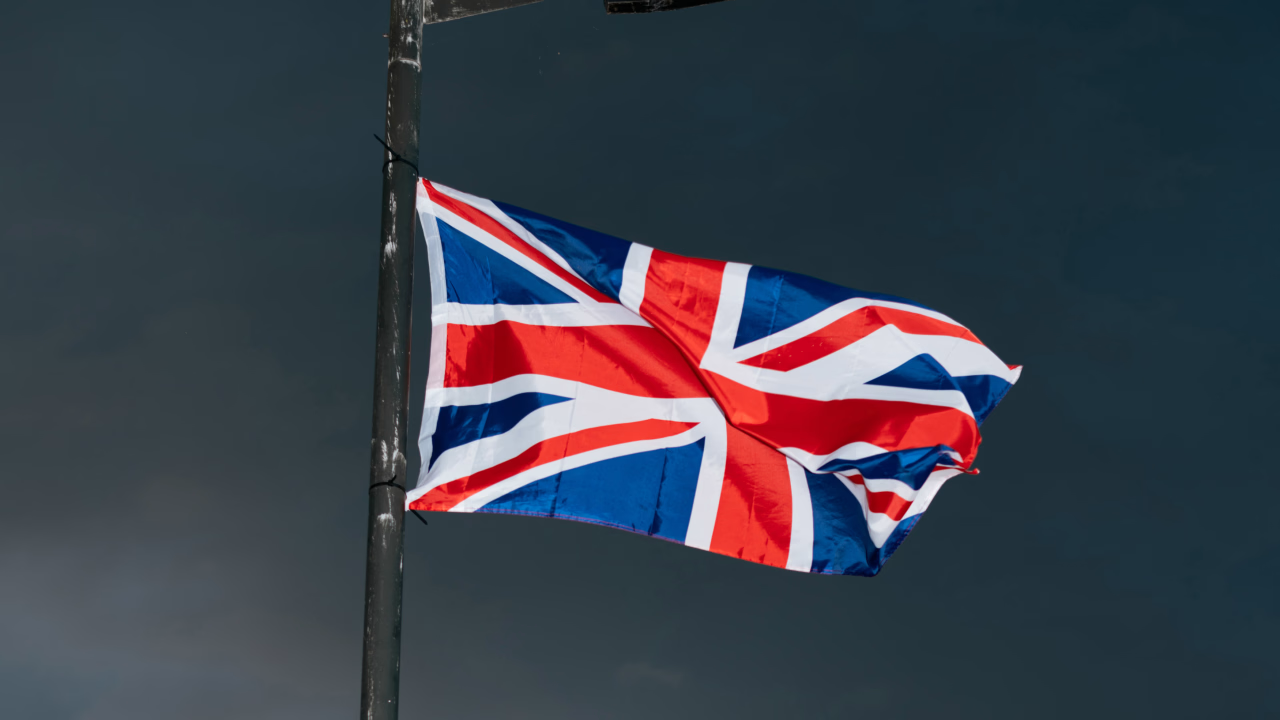
More than eight in ten Caribbean people believe the UK and other former colonial countries should commit to long-term sustainable investments which help develop affected nations, according to research by The Repair Campaign.
The Repair Campaign is highlighting this significant level of support as it calls on the Governments of all 15 CARICOM Member States to seek apologies from former colonising countries including the UK, France and the Netherlands. Acknowledgement and apology are seen as crucial first steps towards achieving reparatory justice for the Caribbean.
The call comes as the Campaign today (02.12.25) launches a report on its impact since it was set up in 2022. Over the past three years, The Repair Campaign has engaged with 280 civil society and Government groups across the Caribbean and Europe; and held more than 100 meetings with political leaders in 20 countries. The Campaign has reached more than 5 million people on social media.
The Repair Campaign has also conducted research into public attitudes towards reparations on both sides of the Atlantic. Key findings from 2025 include:
- 83% of Jamaicans and Barbadians surveyed agree that, given the history of resources being extracted from the Caribbean during colonialism, long-term sustainable investments should be made to help develop the Caribbean. Only 41% of those surveyed reported having learned about the history of chattel slavery in primary school, while only 35% recalled learning about it in secondary school.
- 89% of Caribbean respondents agreed that more education about this history is needed within Caribbean schools.
- 85% of people in the UK did not know that more than 3 million people were forcibly shipped from Africa to the Caribbean by Britain during the transatlantic slave trade.
Impact Statistics
The report published today, the UN’s International Day for the Abolition of Slavery, highlights the impact The Repair Campaign has had in bridging this education gap and encouraging Governments to commit to reparatory justice. Key achievements include:
- More than 100 meetings with leading political figures in 20 countries across the Caribbean and Europe. This includes high-level briefings with MEPs in Brussels and British MPs in Westminster this summer; a meeting with French President Emmanuel Macron in September and Minister Delegate for Francophonie, International Partnerships and French Citizens Abroad, Éléonore Caroit in November; and meetings with multiple Caribbean Heads of Government.
- Engagement with more than 280 grassroots civil society and Government groups and expert academics – and 13 National Reparations Committees in Caribbean States – to develop tailored Socioeconomic Reparatory Justice Plans for each CARICOM member state. The plans include between 20-60 projects per country on issues identified by local communities as most essential for repair.
- The recruitment of community organisers in St Kitts and Nevis, Trinidad and Tobago, Guyana and St Lucia to build support for reparatory justice across local Caribbean communities.
- Over 20,000 signatures on The Repair Campaign’s petition calling for reparatory justice and an official apology from the UK Government.
- More than five million interactions through The Repair Campaign’s social media channels.
Commenting on the launch of the impact report, Denis O’Brien, Founder of The Repair Campaign, said: “The legacy of transatlantic enslavement, colonialism, and Indigenous genocide continues to profoundly shape the social, economic, and political realities of the Caribbean today.
“Historical injustices persist through structural inequalities, economic vulnerabilities, and social disparities in areas such as health, education and employment, as well as greatly reducing the region’s climate resilience. Addressing these challenges requires a conscious and collective commitment to reparatory justice as a fundamental pathway toward genuine healing and sustainable development.”
The Repair Campaign was set up in 2022 as a movement for reparatory justice in the Caribbean. It is informed by CARICOM’s 10-Point Plan for Reparatory Justice and aims to amplify Caribbean voices to progress reparatory justice.
Mr O’Brien continued: “The Repair Campaign has laid the groundwork in the past couple of years for making real progress on reparatory justice. Now is the time to take this work and double down on our calls for an apology and reparations, not only as a matter of righting historical wrongs but as a critical step in ensuring social and economic equity across the Caribbean.”
Brian Royes, Campaign Manager for The Repair Campaign, said: “Growing up and living in Jamaica, I see every day the ongoing legacies of chattel slavery. So many of our family members struggle with diabetes and hypertension, while parents in the community struggle to make ends meet to provide for their families. And we are yet to truly repair the colonial legacies of racism and colourism which continue to oppress and divide our people.
“Our work so far alongside a number of excellent partners has helped to cultivate the conversation in the Caribbean and in Europe and has laid the foundations for real and lasting change. In 2026, we will place a renewed focus on energising Caribbean Governments to call on the UK and other European Governments to formally apologise for their role in chattel slavery. This is long overdue and a critical first step in bringing deep, long-lasting improvement to the lives of millions across the Caribbean.”