


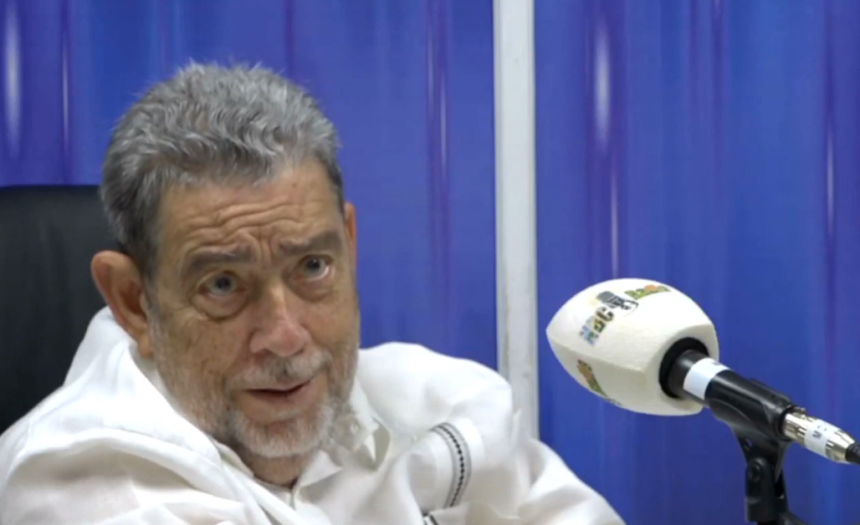
Former St Vincent prime minister Ralph Gonsalves describes the emerging “New World Order” as a “topsyturvy” global environment that has become less safe and more susceptible to the use of “capricious hegemonic power”. He asserts that this order has been “enthroned” both in the Western Hemisphere and globally, fundamentally altering international relations.
Gonsalves argues that the previous system, grounded in multilateralism, international law, and the United Nations Charter, has been dramatically upended. In its place, a “pristine unilateralism” has emerged, where the United States acts according to its own interests, often defined as a struggle between “good” (America) and “evil” (everything un-American),. He characterizes the core principle of this era as “America first”, motivated by what works for the U.S. rather than traditional political ideology,.
A central feature of this order is what Gonsalves calls the “Donro Doctrine,” which is the Trump administration’s corollary to the Monroe Doctrine,. This strategy aims to:
• Reassert American preeminence in the Western Hemisphere, viewing the region as America’s “front yard”,.
• Checkmate global competitors, specifically the People’s Republic of China, which Gonsalves describes as the “elephant in the room”,
• Deny competitors access to “strategic vital assets” such as oil, gold, lithium, and other earth metals, particularly in countries like Venezuela, Bolivia, Chile, and Ecuador.
Gonsalves suggests that the U.S. is not alone in its desire for a new arrangement; other powerful entities like the European Union, China, and Russia are also calling for a new world order based on their own perceived material interests.
He notes that while some “wannabe hegemons” may vociferously denounce American actions, they are “quietly on the sidelines applauding” because they see the breakdown of international law as an opening to act similarly in their own spheres of influence and describes this dynamic as “hypocrisy and asymmetrical power riding in tandem with the horsemen of the apocalypse”.
For the Caribbean, Gonsalves views this historical juncture as a choice between two paths:
Subjugation or absorption by the USA, which he warns would turn independent parliaments into “local government assemblies” and lead to a form of “neo-colonialism” and the pursuance of an independent path through deeper regional unity and “creative resistance,” which he admits is “grievously threatened” by the redefined Trumpian order.
Gonsalves posits that the new order requires the Caribbean to answer three critical questions: “What’s new? Which world? And who gives the orders?”