


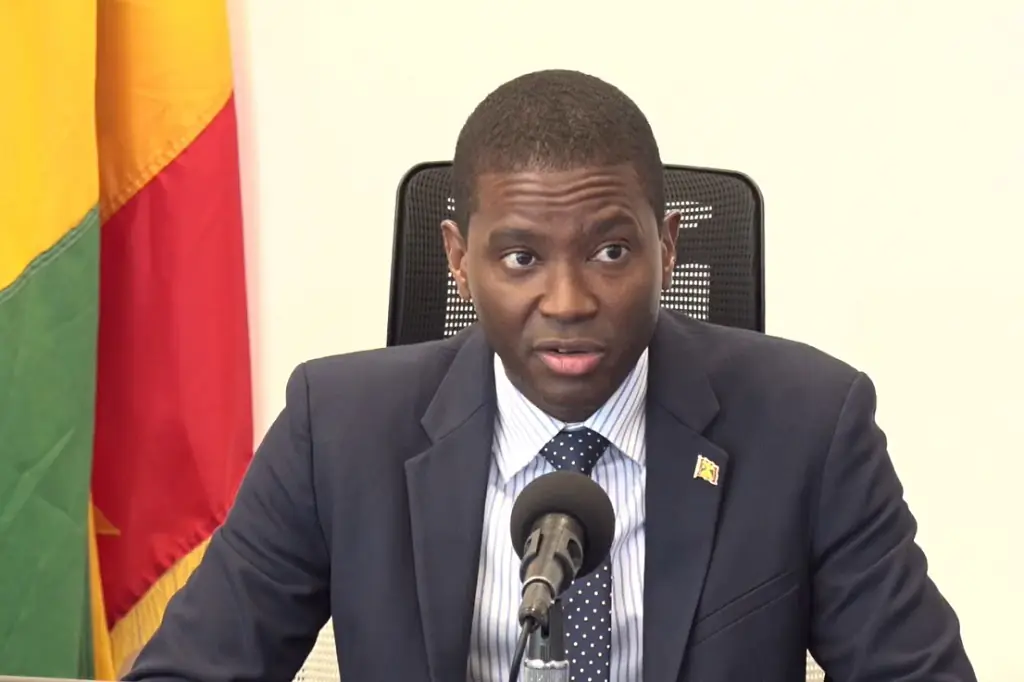
The Government of Grenada asserts that any cooperation on international repatriation is contingent upon a strict, non-negotiable alignment with our national development goals and security protocols. By entering an exploratory phase regarding third-country deportees, the administration is leveraging international cooperation to sharpen its national workforce while insulating the treasury from any external financial burden.
Prime Minister Dickon Mitchell has formally announced the government’s intent to engage in a non-binding Memorandum of Understanding (MOU) with the United States. The Prime Minister has established a definitive “firm line”: no agreement will proceed without the United States providing full financial coverage for the entire operation.
Minister of Foreign Affairs Joseph Andal emphasized that the nation is currently in an exploratory phase, utilizing the non-binding nature of the MOU to scrutinize the “nitty-gritty” of the proposal without legal commitment. This strategic caution ensures that Grenada remains the sole architect of its border policy.
Fiscal sovereignty serves as the essential shield for Grenada’s national interest. The government refuses to allow external repatriation efforts to strain the local economy or divert precious domestic resources from Grenadian citizens.
Because the nation currently lacks the surplus capacity to fund housing and integration for relocatees, the mandate for the United States to “foot the bill” is an absolute prerequisite. If the U.S. is unable or unwilling to provide total financial backing, the proposal is a deal-breaker.
The Government of Grenada will not subsidize the administrative challenges of foreign powers. To protect the national treasury, the following financial obligations are mandatory:
The U.S. must provide total coverage for all transportation costs, specifically utilizing direct flights to Grenada for third-country individuals.
The U.S. is required to provide full, upfront funding for the accommodation and long-term integration of these individuals to ensure zero cost to the Grenadian taxpayer.
If the fiscal shield protects the treasury, the human capital strategy serves as the sword, cutting through labor shortages to drive economic growth. The Government of Grenada views the acceptance of specific third-country deportees—individuals who are “closer to home” and regionally compatible—as a targeted talent acquisition strategy.
The selection process is designed to bolster critical infrastructure. The government is not merely accepting relocatees; it is recruiting a workforce. To be considered for entry, candidates must meet the following mandatory criteria:
Physical and Legal Fitness: Individuals must be able-bodied, fit, and possess a verified clean criminal record with no history of criminal background.
Strategic Skill Sets: The government will explicitly prioritize individuals trained in essential service sectors, specifically those with expertise in nursing and elderly care.
At no stage does this MOU constitute a legal surrender of Grenadian autonomy. The administration maintains the absolute sovereign right to vet, approve, or reject any individual. The “non-binding” status of these discussions and the “no obligation” clause are critical legal levers that ensure no individual can be “forced” onto the country.
Minister Joseph Andal has clarified that Grenada remains under no legal commitment to accept anyone who fails to meet our stringent standards. Prime Minister Mitchell has reiterated that the logistics of housing and associated expenses remain under the absolute control of the Grenadian government. We are exploring a regional solution that benefits our labor market, but we will not be pressured into a lopsided agreement.
The Government of Grenada remains steadfast in its refusal to incur expenses or compromise national security to solve somebody else’s problem at our own expense.