

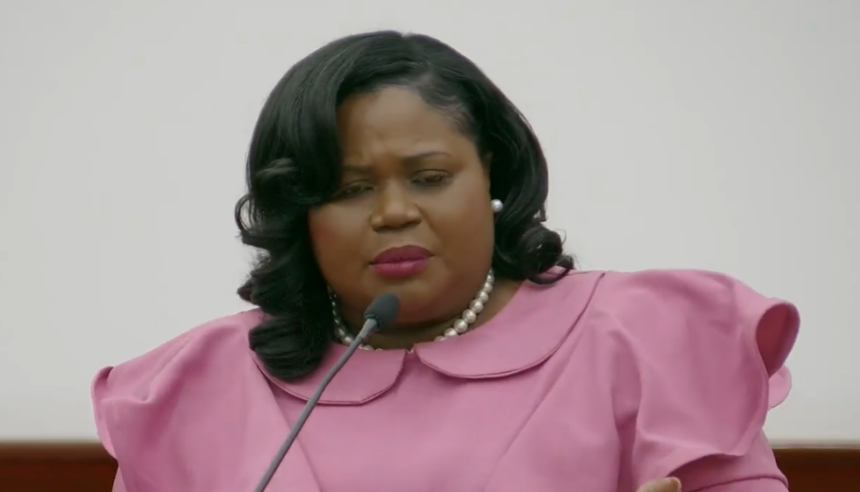
Regarding foreign policy, Opposition Senator Keisal Peters expresses significant disappointment with the current administration, characterizing its approach as lacking the “vigor” and “courage” necessary for these volatile times.
During her contribution to the 2026 budget, Peters argued that the government must adopt a more robust posture on the international stage to prevent larger countries from treating the nation like a “washcloth”. She emphasized that leadership requires the courage to plant one’s foot firmly in global affairs.
She contrasts current perceived weaknesses with past “bold steps,” such as the James Mitchell administration’s decision to establish formal ties with Cuba and the country’s early recognition of Palestine.
The Senator labelled the government’s response to the kidnapping of Maduro as a “non-statement” that lacked authority. Additionally, she criticizes the lack of clarity regarding the United States’ request for the country to accept third-party refugees, noting that almost no one in the administration has addressed the issue publicly.
Peters disputes the Prime Minister’s claim that the country lacks a permanent presence at the World Trade Organization (WTO). She points out that there is an OECS mission in Geneva accredited to the WTO and highlighted her own experience as a spokesperson at the WTO level, where she represented the OECS regarding sustainable development goals—specifically efforts to end illegal, unregulated, and unreported fishing.
Senator Peters expressed support for the new diaspora department and the ongoing work of Invest SVG. She notes that under the previous administration, a diaspora policy was initiated that included investment consultations in major cities such as New York, London, Washington, and Toronto to encourage citizens abroad to invest back home.
In relation to SIDS, Peters spoke to the inherent vulnerability of the country as a SIDS, describing the nation as an “unwilling participant” in the hurricane season due to its geography.
She highlighted the importance of the contingency fund, which she claims was the first of its kind in the OECS. This fund which was established under the ULP government, allows the country to draw on its own resources to provide immediate assistance following a disaster before seeking further international financing.