

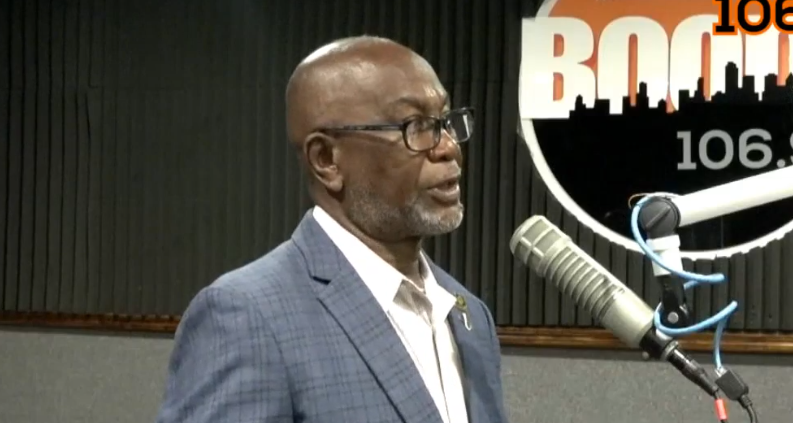
In a recent, highly charged radio broadcast on Boom FM 106.9, Minister of National Security and Deputy Prime Minister St. Clair Leacock addressed the fierce public debate surrounding St. Vincent and the Grenadines’ (SVG) national sovereignty after the United States military unilaterally destroyed a boat in SVG’s sovereign waters.
The military action, which took place just off the coast of Bequia, was executed without any prior consultation or subsequent follow-up from the U.S. State Department. Addressing the stark departure from historical diplomatic norms, Leacock was reminded by the radio host of the “Lucky Star” incident, a past event where the U.S. government formally sought the SVG Prime Minister’s permission to board a Vincentian-flagged ship suspected of carrying drugs in international waters. When pressed on why the current administration allowed such an unprecedented military operation to occur in its own backyard without a fight, Leacock pointed to the shifting geopolitical landscape.
Leacock defined sovereignty not merely as territorial control, but as the ability to function with self-respect within an international, “rules-driven” world order governed by institutions like the United Nations. However, he argued that this global order is deteriorating. “If the people who are supposed to superintend the rules of the world themselves derogate from that and do their own thing, then the world has a problem,” Leacock stated, emphasizing that when major powers bypass international norms, small island nations are left with very few mechanisms to enforce their sovereignty.
While acknowledging that regional bodies like CARICOM and the Regional Security System (RSS) have formally objected to the U.S.’s actions, the National Security Minister stressed the need for “significant realism and pragmatism”.
He warned that aggressively demanding apologies or retaliating diplomatically could trigger catastrophic economic consequences for Vincentians, such as the revocation of U.S. visas, the disruption of correspondent banking relationships, and the blocking of vital remittances. Leacock argued that the same citizens calling for aggressive retaliation would immediately blame the government if such economic hardships were brought upon the nation due to a lack of diplomacy.
This pragmatic approach drew sharp criticism from some members of the public. One caller, identifying as “Bones,” accused the administration of acting like a “bunch of chickens” for refusing to stand up to the United States.
Leacock swiftly dismissed the insult, noting the vast difference between the “passionate idealism” of a civilian and the harsh realities of governance. He stated that critics do not bear the responsibility of paying the state’s bills, managing civil services, or maintaining the nation’s economic survival.
Despite the controversy over the Bequia operation, Leacock made it clear that the government is still exercising its sovereign rights where possible. Specifically, he confirmed that the SVG administration, guided by the Prime Minister, does not intend to open its borders to accept U.S. deportees or refugees, asserting the nation’s policy position despite broader geopolitical pressures.
