

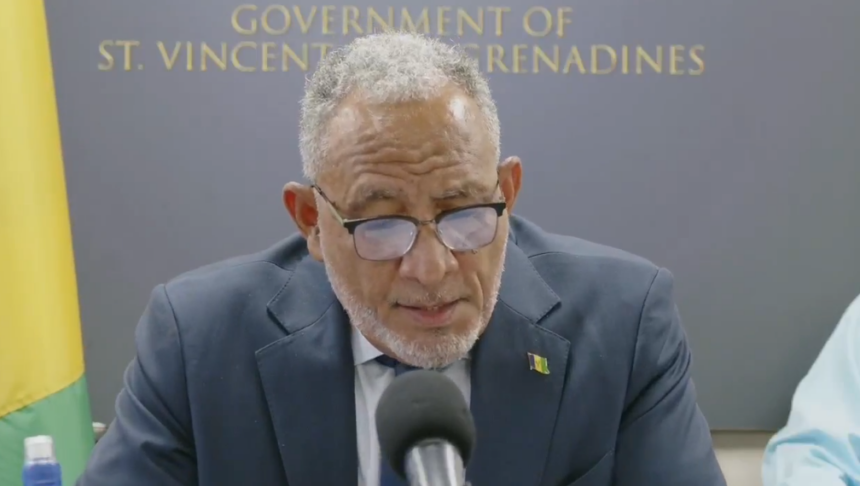
Following the conclusion of the 2026 International Monetary Fund (IMF) Article IV consultation, Prime Minister Dr. Godwin Friday announced a decisive pivot toward fiscal responsibility, outlining a “homegrown economic stabilization program” to tackle the nation’s mounting debt crisis.
In a press conference, Friday acknowledged the severe financial realities facing St. Vincent and the Grenadines, noting that the national debt-to-GDP ratio reached 113% in 2025 and could soar to 145% by 2031 if current trends continue. “We understand that we cannot continue on the course that we have been going for the past several years and expect that somehow the challenges will resolve themselves,” Friday stated, pointing to compounded shocks from recent natural disasters and rising oil prices linked to the Gulf War.
To reverse this trajectory, the Prime Minister committed to aligning the nation with the Eastern Caribbean Central Bank (ECCB) benchmark of a 60% debt-to-GDP ratio.
The government has set an ambitious target of achieving a 3% primary surplus by 2029. Because the government currently lacks the fiscal space for direct investments, Friday emphasized that the recovery must rely heavily on private sector leadership and foreign direct investment, specifically targeting the agriculture, tourism, and blue economy sectors.
A central pillar of the new revenue strategy is a planned Citizenship by Investment (CBI) program. Friday confirmed that revenues generated from this initiative will not be used to fund day-to-day government operations, but will be strictly prioritized for paying down sovereign debt and funding capital projects. The administration is also actively negotiating with bilateral partners to swap expensive debt for cheaper alternatives to free up fiscal space.
To spur economic growth beyond the modest 2.7% forecast, Friday promised a comprehensive overhaul of the country’s bureaucratic landscape, which he criticized for obstructing business. He pledged to slash bureaucratic red tape, including reducing the time it takes to incorporate a company to just five days and improving the resolution of commercial disputes. The government is also initiating a review of statutory enterprises to make public services more nimble and efficient.
The Prime Minister highlighted two other major structural transformations:
Energy Transition: The government will modernize legislation to accelerate a shift toward solar energy, reducing the nation’s reliance on imported petroleum and insulating the economy from volatile global oil prices.
Labor Market Reform: To address a critical “skills alignment problem,” educational and training sectors will be revamped. Dr. Friday noted the unacceptability of having an 18% to 19% youth unemployment rate while simultaneously having to import foreign labor to complete local projects.
