


Across the Caribbean, communities are confronting the impacts of climate change: stronger hurricanes, prolonged droughts, heavier rainfall, and increasingly unpredictable weather events. While emergency response will always be essential, true resilience comes from designing infrastructure and institutions that can withstand climate shocks before they strike.
From reactive response to proactive resilience
For decades, Caribbean governments have been caught in a cycle of building and then rebuilding after disasters, which is costly and deeply disruptive to communities and livelihoods. The experience of Hurricane Melissa in Jamaicalast year showed us that this cycle can, and must, change. Among the devastation caused by Melissa, there were also positive examples of resilience in action.
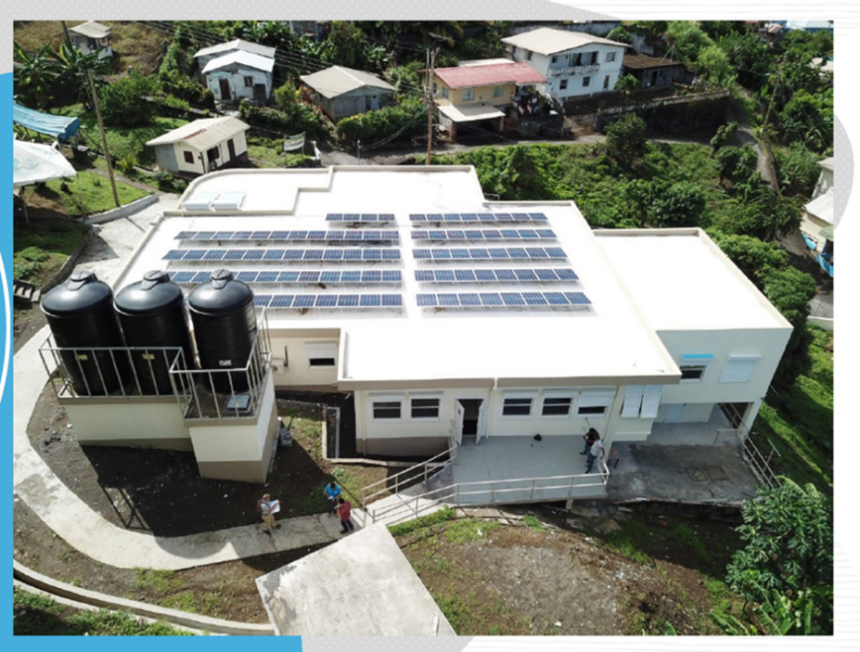
The UK supported ‘Smart hospitals’ in Santa Cruz and Mandeville, remained operational in the aftermath of the Hurricane, providing critical health services at a time when roughly 75% of the hospitals and clinics in the affected areas sustained major damage and were rendered unusable.
At the UK funded Essex Valley and Southern Plains Agriculture Development Projects, the core infrastructure withstood Melissa’s Category 5 winds and rains. The solar panels remained intact and undamaged; drainage systems functioned effectively; and upgraded farm roads largely stayed in good condition. Crucially, lessons learned from the impact of Hurricane Beryl on the Essex Valley project in 2024 informed design improvements to increase the resilience of the solar panels.
The partnership between the UK and Caribbean helped to build tangible climate-resilient infrastructure in Jamaica which has been replicated across the region.
The UK Caribbean Infrastructure Fund (UKCIF) – a £350 million UK programme, implemented in partnership with the Caribbean Development Bank (CDB) – supports transformational, climate-resilient infrastructure investments across eight Caribbean countries and one UK Overseas Territory.
Climate-resilient road upgrades in Antigua, Belize, Dominica, Saint Lucia and Guyana will help keep communities connected after extreme weather. Modernised water systems in Grenada and Dominica will safeguard water supply in case of droughts and extreme rainfall. The new port in Saint Vincent and the Grenadines – officially opened in October last year – will boost long-term sustainability and disaster preparedness.
Each UKCIF-funded project demonstrates that resilience is important for everyday lives: it must be built into the roads people travel, the water they depend on, the farms that sustain communities and the ports that keep islands connected.
Climate-resilient infrastructure is not only about roads, water pipes and ports. It is also about health services remaining available when people need them most. The ‘Smart’ Hospitals Initiative – supported by the UK and Pan American Health Organization (PAHO) in partnership with Ministries of Health – has upgraded healthcare facilities across the Caribbean with hurricane proofing, improved drainage, cooling and fire management, more efficient water systems, and reliable solar and backup power.
These upgrades ensure that hospitals, and the doctors, nurses, and emergency teams within them, can continue providing lifesaving care even during the most extreme weather events. The model has proven to work in the Caribbean through earthquakes, volcanoes, pandemics and storms, and has become so successful that other countries, sectors and partners are now adopting the ‘SMART’ model.
In moments when communications fail, roads flood, and communities are cut off, a functioning hospital can mean the difference between crisis and catastrophe.
Resilience matters – and now is the time to act
The UK’s investment in Caribbean infrastructure is a partnership rooted in shared priorities and a commitment to long-term resilience. Together, we recognise that resilience is not just an abstract concept – it is a community asset. It is mothers being able to reach a clinic after a storm. It is farmers harvesting crops despite drought. It is ports that keep food, medicine and supplies flowing. It is young people accessing jobs because roads remain intact.
The Caribbean cannot control the global forces driving climate change. But with the right investments, built with local collaboration and financed through long-term partnership, communities can strengthen their resilience.
Author: Mark Anderson, Team Leader, UK Caribbean Infrastructure Fund | British High Commission, Bridgetown