

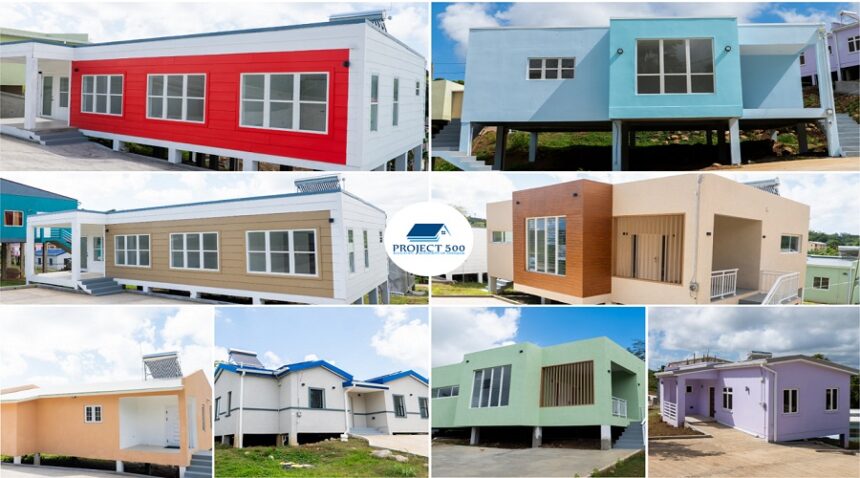
Project 500 Officially Announces the Sale of Homes in First Phase
Grenada: Project 500 announces the sale of homes within the first phase of its flagship housing development in Dunfermline, marking a major milestone in Grenada’s effort to deliver affordable, climate-smart and resilient housing solutions for Grenadian families.
Project Sponsor, Randall Dolland, described the launch as one of the most important phases of the pilot initiative, as the programme now moves into the critical stage of assessing market demand and accessibility for qualifying homeowners.
“We are proud to officially announce the sale of homes within the first phase of the Project 500 Housing Programme in Dunfermline,” Dolland stated. “This phase allows us to evaluate the viability of these homes for hardworking Grenadian families who have increasingly found themselves priced out of the traditional housing market, but still deserve the opportunity to own a modern, desirable, climate-smart home within a properly planned community.”
Interested applicants are encouraged to review the eligibility requirements and complete the online application process. Following submission, the Housing Authority of Grenada (HAG) will guide applicants through the next steps, including the documentation required for mortgage financing through their preferred financial institution.
Project 500 officials emphasized that the eligibility criteria were specifically developed to ensure the homes benefit the programme’s intended target group of first-time property owners and middle income Grenadian families seeking a realistic pathway to homeownership.
To qualify, applicants must:
- Be Grenadian citizens residing in Grenada
- Be 18 years or older
- Have a total household gross monthly income not exceeding EC$7,500
- Demonstrate a stable and verifiable source of income
- Not currently own or co-own residential property locally or abroad
- Use the home as their primary and permanent residence
- Additionally, married applicants must apply jointly and successful applicants must remain the sole approved deed holders under the programme.
As part of the pilot allocation framework, 50% of the homes in the first phase will be reserved for families currently residing in St. Andrew, while the remaining homes will be distributed equally between public servants and private sector employees.
The homes were built with the future in mind, incorporating climate-smart features such as enhanced insulation, low-flow plumbing fixtures and solar energy systems to reduce long-term utility costs and improve sustainability.
The wider development was intentionally designed to provide families with safe, modern and attractive living environments. The neighborhood includes lot sizes of no less than 4,700 square feet, newly built roads, sidewalks, drainage infrastructure, utility connections, green spaces and a minimum of two parking spaces per home.
“Our intention was not simply to place a roof over someone’s head,” Dolland added. “Our goal was to create homes and communities that families can truly be proud of, places of comfort, dignity, security and opportunity. Places where children can grow, families can thrive, and generational wealth can become attainable for many Grenadians who once believed home-ownership was beyond their reach.”
Project 500 officials noted that the future expansion and direction of the programme will be guided by the lessons learned during this pilot phase as the initiative continues to scale affordable, resilient and sustainable housing solutions across Grenada.