

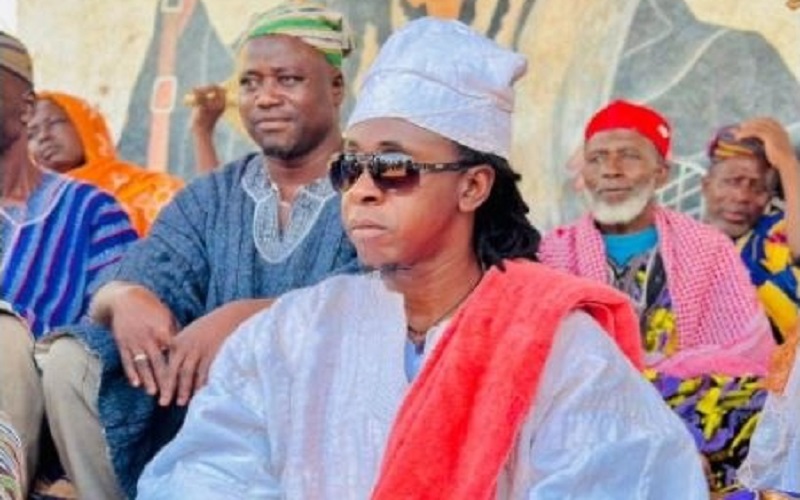
In an unprecedented geopolitical and cultural milestone for the entire Caribbean basin, Chief Mba Naa Nobiri a Trinidadian industrial visionary, has been formally enskinned and installed as a Chief within the ancient Mumprugu Kingdom of Ghana’s Northern Region.
He makes history as the first Trinidad and Tobago national, and the first member of the Caribbean diaspora, to secure a constitutional traditional authority seat in West Africa.
While the Caribbean has traditionally looked North for economic expansion, this installation signals a strategic shift eastward, redefining CARICOM’s commercial reach into the African continent. This is not an honorary diplomatic title; it is legally grounded in Ghana’s Chieftaincy Act of 2008 and constitutionally embedded in Ghana’s 1992 Constitution, conferring actual sovereign leverage and authority.
The Mumprugu Kingdom is the oldest in Ghana, founded by Naa Gbewaa, a descendant of the legendary Tohazie (the Red Hunter). Ruled by its King, the Nayiri, from the capital of Nalerigu, traditional authority here governs a population of approximately 5.8 million Mamprusi people across the Northern Region. In West Africa, such traditional authority serves as the ultimate gateway to large-scale economic mobilization and land development.
For business leaders, investors, and exporters across St. Vincent and the Grenadines and the wider Caribbean, this historic enskinment translates directly into actionable economic opportunity.
Chief Mba Naa Nobiri serves as the Founding Principal of the Kpa Kpii Ya Heritage and Development Foundation (T&T) and North East Development Holdings Limited (in formation, Ghana). Through these entities, he is currently spearheading a massive industrial development platform in Northern Ghana.
This initiative features the development of:
- A sprawling, modern agro-industrial complex.
- A licensed bonded warehouse.
The creation of this infrastructure establishes a legally anchored, highly recognized entry point into one of West Africa’s fastest-growing agro-processing regions.
The theoretical policy of a “Caribbean-Africa Trade Corridor” now possesses a concrete operational structure. Regional entrepreneurs and investors now have a representative “Human Bridge” a leader who concurrently holds a Caribbean passport and a Ghanaian traditional authority seat, effectively mitigating the friction of foreign market entry
