
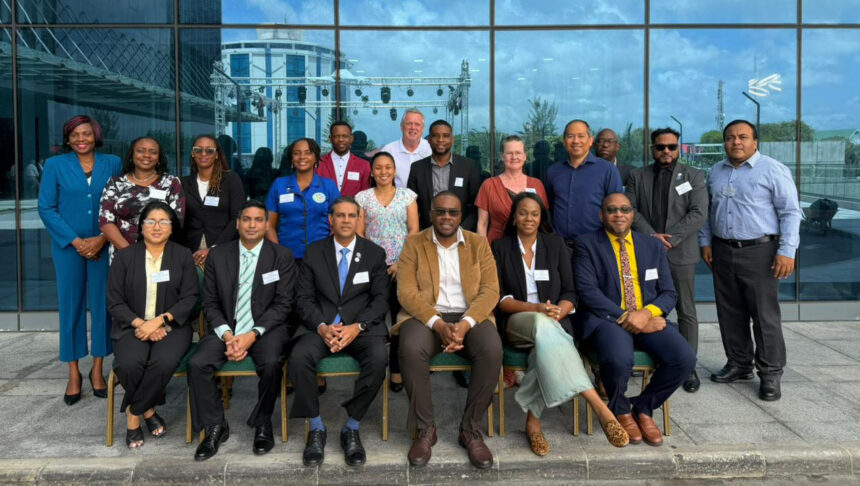
A regional multisectoral workshop on Advancing Regional Vector-Borne Disease Surveillance through Technology and harmonization took place from april 27-28, 2026 at the Pegasus Hotel Exhibition Centre in Georgetown Guyana.
This was part of a series of capacity building workshops organized by carpha as part of its year-long initiative to strengthen vector borne disease surveillance across Member States.
The previous two workshops held in Barbados in August 2025 and Trinidad and Tobago in December 2025 focused on Integrated Vector Management, insecticide resistance testing and geographical information systems.
This third workshop was to standardize regional dataset validate early warning indicators and to integrate new tools that would provide data driven decision making for timely response to threats within epilogical, entomological and climatological domains.
Carpha’s executive director, dr. Lisa Indar stated that “vector borne diseases continue to be a major health issue in the caribbean for both communities and health systems. We are working with Member States to improve their ability to detect these risks earlier and respond more effectively.” She also stated that “through carpha’s pandemic fund project, we are advancing integrated early warning systems, developing technical capacity and supporting use of data and new technologies to guide public health action in a timely manner across the region.”
Carpha’s director of Surveillance, Disease Prevention and Control, dr Horace Cox added that “surveillance is essential to public health preparedness. By improving how countries collect analyse and share vector borne disease data, we can improve the caribbean’s ability to detect threats earlier and coordinate timely responses across the region.”
Carpha’s head of vector born disease, dr rohan parasram also commented that “we are here today because the caribbean deserves a public health system that can see threats coming before they become crisis’. He also addressed three pillars under which carpha has approached this problem:
1. Integrated Vector Management
2. Insecticide resistance testing
3. Geographical information systems.
He said that these are not just buzz words but operational backbone of modern vector control system.
Dr. Brian Armour, Technical Advisor of carpha’s pandemic fund project also provided his input on the subject when he said “regional integrated early warning and response system (riewss) is about connecting data systems people so that public health threats can be identified and acted upon quicker. The intergration of vector borne disease surveillance into this broader early warning framework will move towards a more coordinated data driven approach to pandemic preparedness and response in the caribbean”.
Both early warning indicators and core signals required from Member States were reviewed by participants during the workshop. Structured technical sessions also explained the use of DHIS2 workflows, insecticide resistance analytics, remote sensing artificial intelligence enabled risk mapping and social listening platforms to enhance situational awareness and accelerate decision making.