


On November 2025 the New Democratic Party (NDP) had won the elections ending after 25 years in office of former Prime Minister Ralph Gonsalves.
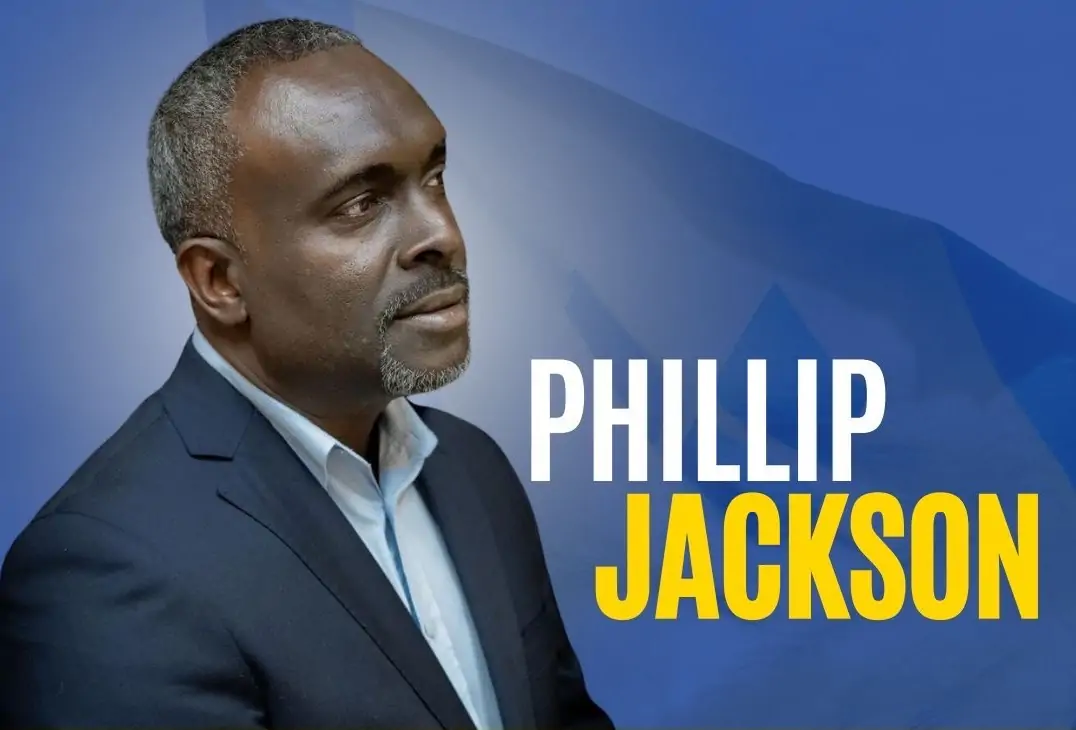
The new Minister of Education Phillip Jackson expressed a strong criticism of the former leader over social media.
Phillip Jackson posted on Facebook painting a dismal picture of the time under Gonsalves calling him the “most egotistical, self-absorbed and power-hungry politician in Saint Vincent’s History”.
He said the former PM left behind a legacy of “Social & Economic Devastation”, with a record number of poor people, “Failed Multi-Billion Dollar Projects”, a “Targeted Elimination of Civil Society”, and an economy in the “Worst State” due to possibly having one of the largest National Debts Worldwide”.
However, according to an independent review of the latest international economic and political reviews, Minister Jackson may have been disingenuous when he made those comments; leaving out important context and disagreeing with data collected from organizations like the International Monetary Fund (IMF), and Freedom House.
Minister Jackson stated that the economy was in the “worst shape ever” during the last term of the Gonsalves Administration, while ignoring two successive shock events (COVID-19 Pandemic and La Soufriere Volcanic Eruption) that affected St. Vincent and the Grenadines, and how it recovered.
Contrary to Minister Jackson’s statements about the collapse of the economy during Gonsalves’ last term of government, the IMF in their 2024 Article IV Consultation stated that St. Vincent and the Grenadines experienced a “Robust Recovery” from both COVID-19 and the devastating 2021 La Soufriere volcanic eruption.
As per the IMF, the overall economic expansion reached 3.1% in 2022, followed by an estimated 5.8% in 2023. Thus, output returned to pre-pandemic levels.
Moreover, even though there are still issues related to inflation and unemployment amongst young people, the IMF did highlight that the overall economic forecast for St. Vincent and the Grenadines is favorable, exceeding previous pre-pandemic trends.
Minister Jackson also criticized several multi-billion dollar development projects undertaken by the previous administration saying they were “failing miserably”. However, macroeconomic data clearly shows otherwise.
The IMF specifically states that these major projects including the massive port modernization project and construction of new resorts like Sandals drove much of St. Vincent and the Grenadines’ post-pandemic economic rebound, and will contribute to future growth possibilities.
Additionally, Minister Jackson cited the Argyle International Airport which was a long-time advocate of Gonsalves’ administration and currently contributes to a surge in tourism. With expected increases in stay-over tourists reaching 120% of pre-pandemic levels in 2024, rather than failing these airport and resort developments are expanding the island’s capacity and producing significant contributions to national GDP.
Perhaps Minister Jackson’s most egregious statement was that SVG has “one of the largest national debts in the world.”
Although it is true that public debt is high and declined slightly from its 2021 peak level but remained at approximately 87% of GDP in 2023, no context was provided by Minister Jackson to explain why this occurred.
A joint World Bank-International Monetary Fund Debt Sustainability Assessment determined that the increased debt accumulation was primarily a result of “a once-in-a-generation natural disaster following a once-in-a-century global pandemic”.
The 2021 volcanic eruptions alone required evacuation of twenty percent of the population and destroyed massive amounts of critical infrastructure.
Also, although debt levels are elevated, both the IMF and World Bank consider public debt in St. Vincent and the Grenadines sustainable going forward based upon current economic conditions.
Additionally, because much of the increased post-pandemic debt was incurred via multilateral and bilateral donations at extremely low cost long-term interest rates, contrary to Minister Jackson’s narrative of excessive irresponsible lending, it appears that Minister Jackson was being deceitful when he made his claims.
Jackson also charged Gonsalves with creating a climate of fear against civil society groups who would be eliminated; while critics were victimized and economically ruined.
This characterization by Minister Jackson of Gonsalves as a totalitarian type dictator who systematically silenced opposition or created an atmosphere where others could do so is vigorously challenged by various international monitors.
According to Freedom House in their 2025 Country Report , St. Vincent and the Grenadines received a perfect global freedom score rating of 90/100 indicating it is completely “Free”.
Indeed, the very fact that Gonsalves ceded power following his sweeping electoral defeat to Dr. Godwin Friday in 2025 is a testament to the strength of the nation’s democratic institutions.
Without doubt, the new NDP government has significant problems ahead of it. Most importantly, the new government needs to take action to reduce the large public debt inherited from the past administration in order to get the economy back on track.
Minister Jackson’s social media outburst seems to be just a case of over-the-top political posturing rather than fact-based assessment.
By downplaying the devastating economic impact that both a global pandemic and volcanic eruptions have had on the country, as well as by omitting reference to recent successful international economic recoveries and infrastructure developments, Jackson’s comments represent a grossly inaccurate picture of St. Vincent, and the Grenadines.