


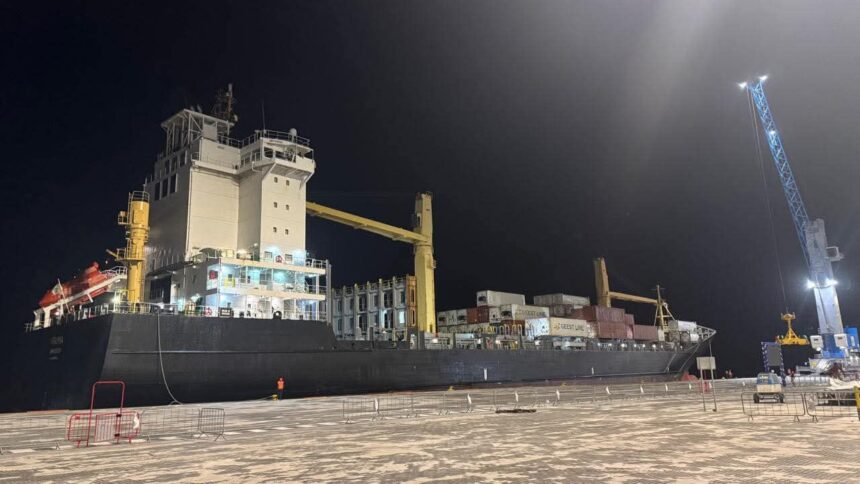
Prime Minister Godwin Friday has stated that his government put will put into place targeted government programs to separate the nation’s internal taxing mechanism from the volatile nature of global shipping.
The purpose behind this is to mitigate “imported inflation”, which results from an international shipping company raising their pricing structures causing a direct spike in the prices of food and other basic commodities on store shelves.
The Prime Minister pointed out that the current state of affairs with respect to the disruption of global shipping patterns has resulted in significant increases in the cost of shipping a typical 20 foot container of essential goods from the U.S. to Kingstown.
In earlier 2015 (Jan), it was estimated that the cost to ship such a container to St. Vincent was between $2200-$3000. As of recent times, however, estimates suggest that shipping costs have increased dramatically; the cost to ship a similar size container to St. Vincent is now estimated to be between $3300-$4800.
To offer quick and effective solutions and thus decrease the landed costs of imports, the Prime Minister provided details regarding two modifications to tax calculation methods he has ordered implemented. First, the government has indicated that they will eliminate both surcharge and fee components associated with shipping costs (fuel and congestion) for purposes of calculating taxes domestically. Second, the government will set freight rates utilized in calculating their portion of taxes to reflect those noted in January 2015.
As an example of how this plan will work, even though a shipping company may charge a business $4800 to transport a container into the country; the government will determine what taxes are owed based upon freight charges being at the same January 2015 rate.
This strategy is expected to minimize imported inflation by essentially “freezing” the freight rate charged by shipping companies for tax purposes and removing surcharges from the equation.
Friday further emphasized that this program would allow local businesses to pass fewer international shipping price hikes onto consumers thereby keeping the cost of necessary products affordable to the general public.
Under the current tax structure, domestic taxes are assessed against items transported within containers (and therefore subject to the full weight of freight rates) as well as against those freight rates themselves. Therefore, when an international shipping company raises their prices, so too do the taxes assessed against local importers as their own taxes rise in tandem.