
In several countries across the Caribbean, a student can leave school in uniform, walk into a nearby shop, or send a quick Instagram message to an online vendor and purchase a vape with little difficulty. Some are drawn in by flavours like cherry, bubble gum and cotton candy, while others see them promoted online as sleek, harmless or stress relieving. What many young people are not being told is that vapes are not all the same. Some contain nicotine, especially many disposable devices and pod systems, while others are labelled “nicotine-free” or “0% nicotine” but still contain flavours that appeal to children and adolescents. Nicotine is highly addictive and can seriously affect young people’s mental health, learning, physical wellbeing and long-term development, while even nicotine-free vapes can help normalise vaping and make it seem harmless.
That should concern all of us, especially under this year’s World No Tobacco Day theme: “Unmasking the appeal – countering nicotine and tobacco addiction.”
For years, conversations around tobacco in the Caribbean have focused heavily on traditional cigarettes and smoking related diseases in adulthood. But a new nicotine crisis is quietly unfolding among young people, and Caribbean policy is struggling to keep pace with how quickly vaping products are entering youth spaces.
This conversation feels especially urgent as World No Tobacco Day falls during Mental Health Awareness Month. Nicotine is often marketed socially as relief, coping, a quick dopamine hit or focus. Yet for developing brains, nicotine can worsen anxiety, substance dependence, mood instability and stress cycles. Young people across the region are already navigating academic pressure, violence, economic uncertainty, social expectations and mental health struggles. Many are turning to vaping believing it offers comfort, while being exposed to products intentionally designed to keep them addicted.
The Caribbean cannot afford to dismiss this issue simply because the numbers are not yet as high as more traditional drugs.
According to the World Health Organization’s 2018 Global Youth Tobacco Survey, youth vaping rates in the Caribbean among 13 to 15 year olds ranged from 4% in Antigua and Barbuda to 17.2% in Trinidad and Tobago, one of the highest rates in the region. Of note is that the e-cigarette rates are higher than traditional cigarette use in some of these countries. In Jamaica, the same survey found that 11.7% of adolescents in that age group were current e-cigarette users. By 2022, the National Council on Drug Abuse reported that 15% of Jamaican adolescents aged 13 to 15 had used e-cigarettes, while 80% of youth who had used tobacco products reported first using them before age 14. These are not just statistics. They represent thousands of Caribbean students being exposed to nicotine addiction during critical stages of brain development. And this rise in youth vaping is no coincidence.
Regional public health bodies including CARPHA, PAHO and the Healthy Caribbean Coalition (HCC) have repeatedly warned that flavours, packaging and advertising strategies are specifically designed to attract younger users. Across the region, vapes are sold in bright colours and sweet flavours, placed near snacks and sweets in stores, promoted through social media and influencer culture, and often marketed as cleaner or safer alternatives to cigarettes. In some countries, products are still easily accessible near schools despite age restrictions, with little accountability for vendors who sell these harmful products to minors.
Young people are uniquely vulnerable to nicotine addiction because the brain continues developing until around age 25. Nicotine can interfere with attention, memory, learning and impulse control by altering brain chemistry and affecting areas linked to concentration and emotional regulation. Students may experience difficulty focusing in class, shorter attention spans, increased anxiety and mood related challenges that affect school performance, relationships and overall wellbeing. Nicotine dependence can also normalize substance use behaviours at an early age and increase vulnerability to long-term addiction patterns.
At the same time, vaping is far from harmless physically. Aerosols from e-cigarettes can contain carcinogens, heavy metals and fine particles linked to inflammation and respiratory illness. Young users may experience chronic cough, wheezing, asthma flare ups and lung irritation, while long-term risks tied to cardiovascular disease and other non-communicable diseases continue to emerge.
Despite these growing concerns, major legislative and policy gaps remain across the Caribbean.
Most CARICOM countries have ratified the WHO Framework Convention on Tobacco Control (WHO FCTC), the world’s leading tobacco control treaty. However, implementation across the region remains inconsistent. The HCC has highlighted weak restrictions on advertising and promotion, insufficient taxation policies, incomplete smoke-free protections and slow action on regulating electronic nicotine delivery systems such as vapes.
Jamaica’s Public Health Tobacco Control Regulations of 2013 only address aspects of Articles 8, 10 and 11 of the FCTC, which relate to smoke exposure, disclosures and packaging requirements respectively. Significant gaps remain in areas such as Article 13 on advertising bans and Article 5.3 on protecting public health policy from tobacco industry interference. While calls have been made for stronger legislation to regulate e-cigarettes and vaping products more comprehensively, progress has been extremely slow while youth use continues rising.
The tobacco conversation must therefore become more than awareness. It must become action.
If Caribbean governments are serious about protecting children and young people, nicotine products cannot continue slipping through legislative gaps while being packaged and promoted in ways that clearly appeal to youth. Across the region, conversations about restricting the marketing of unhealthy foods and drinks to children took 10 to 15 years to gain serious policy attention. We cannot afford to wait another decade for nicotine products, especially when the harm is already reaching young people.
We need stronger enforcement against underage sales and penalties for vendors who violate these laws, tighter regulation of vape advertising and online promotion, restrictions on flavours and packaging designed to attract children, and greater public education about the mental and physical harms associated with vaping. Schools also need support to address vaping through prevention and early intervention efforts.
Most importantly, we must actively challenge the misinformation that paints vaping as harmless simply because it looks different from traditional cigarettes. Addiction does not become less dangerous because it comes in bright colours or fruity flavours.
Addressing this issue will require all hands on deck. Governments, policymakers, schools, parents, youth advocates, civil society organisations and public health agencies all have a role to play in limiting easy access to vapes, strengthening protections for children and educating young people honestly about the risks.
The tobacco industry is evolving quickly. Caribbean policy and public awareness must evolve faster.
This World No Tobacco Day, protecting Caribbean youth means looking beyond traditional cigarettes and confronting the growing accessibility and normalization of nicotine addiction in a new form. If we fail to act now, an entire generation could pay the price for policies that moved too slowly while the industry moved fast.
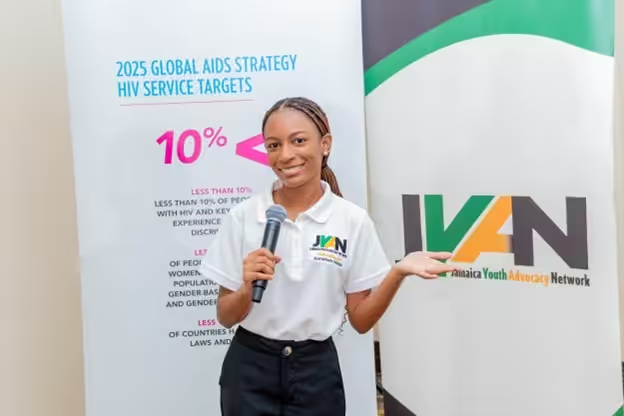
Natalia Burton is an advocate with the Jamaica Youth Advocacy Network (JYAN), Healthy Caribbean Coalition/Youth (HCC/HCY), and UNICEF, focusing on public health and wellbeing.