


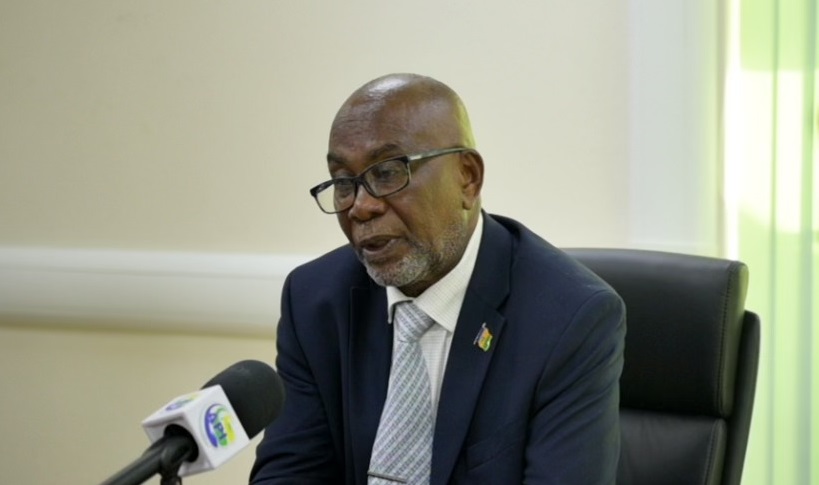
Faced with crippling national debt and an urgent need for economic revitalization, the administration of St. Vincent and the Grenadines is officially pivoting toward a model of Private-Public Partnerships (PPP). During a recent radio broadcast, Deputy Prime Minister Major St. Clair Leacock, alongside his cabinet colleagues, laid out the stark economic realities driving this shift and detailed how new investment strategies will empower Vincentians rather than rely on massive government borrowing.
Speaking on the New Times radio program, Deputy Prime Minister Leacock painted a sobering picture of the nation’s finances, providing the core rationale for the government’s shift toward outside investment. Leacock emphasized that the country is currently operating with a staggering 113% debt-to-GDP ratio.
“What it say is that any and everything you want to do for yourself, you have to borrow to do it. You have no money of your own,” Leacock explained to listeners.
Because of this severe financial constraint, Leacock stressed the necessity of avoiding further massive loans—such as borrowing upwards of $300 million—and instead utilizing the nation’s natural resources and attracting foreign capital. To achieve this, Leacock noted his ongoing efforts to project St. Vincent and the Grenadines as an attractive destination for foreign capital, stating his goal is to encourage investors to “bring your money and come”. He also noted that discussions surrounding a Citizens by Investment (CBI) program remain close to the heart of the Prime Minister’s economic development plans.
This desperate need for capital without compounding the national debt is the driving force behind the administration’s new Private-Public Partnership initiatives. Speaking earlier on the same broadcast, Minister King (referred to as Sister Lavon) confirmed that this approach is a cornerstone of the New Democratic Party (NDP) government’s strategy.
“We have always maintained that we believe in private public partnership and that we believe in advancing St. Vincent and the Grenadines through four pillars,” she stated.
The most prominent example of this new PPP strategy is the recently signed deal for the management of the local cruise port. By bringing in an experienced port management company—one that already successfully operates ports in destinations like St. Lucia and the Bahamas—the government aims to drastically improve tourism infrastructure without relying on empty public coffers.
A critical component of this new PPP model is its structural focus on keeping wealth within the country. Unlike past foreign investments where profits entirely left the island, the new port agreement mandates that 30% of the managing company must be locally owned by Vincentians.
Government officials noted that this unprecedented arrangement in the Organization of Eastern Caribbean States (OECS) allows local citizens to buy shares and earn direct profits from the port’s success. Furthermore, the PPP guarantees that top management roles will be filled by Vincentians, ensuring that the local workforce is upskilled and new jobs are created.
The government is also protecting national assets by structuring these deals as long-term leases rather than permanent sales. Callers and hosts on the program celebrated that the port is being managed under a 30-year lease. Once the lease expires, the significantly more valuable infrastructure will revert entirely back to St. Vincent and the Grenadines, allowing for highly profitable renegotiations in the future.
As Deputy Prime Minister Leacock and his colleagues work “around the clock” to clean up the inherited economic situation, this shift toward Private-Public Partnerships is being heralded as a responsible, innovative path forward. By leveraging private capital while demanding local ownership, the administration aims to build a thriving economy without sinking the nation further into debt.