

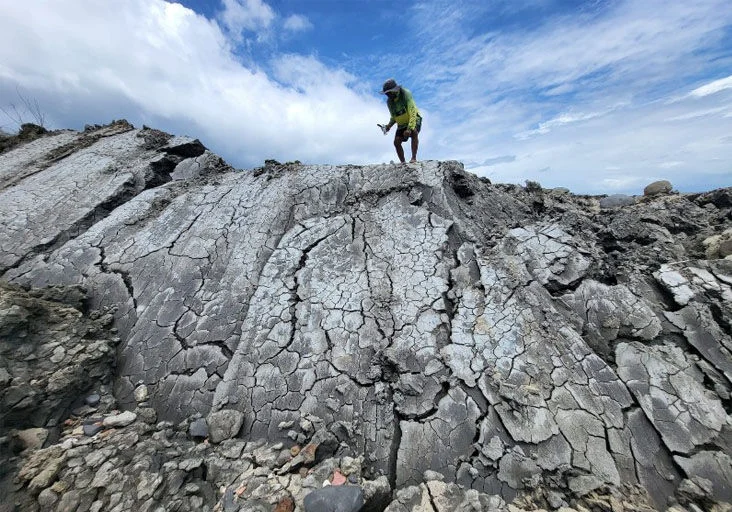
In the aftermath of the catastrophic twin earthquakes that struck Venezuela last week, a section of Trinidad’s south-western Galfa coastline was violently thrust upward by nearly 20 feet. The sudden geological shift trapped hundreds of marine animals in the rubble in a matter of seconds.
The massive upheaval was triggered by 7.2- and 7.5-magnitude earthquakes that devastated Venezuela’s northern coast, claiming at least 1,400 lives and generating over 400 aftershocks. Along the isolated Galfa coast in Cedros, residents discovered the raised seabed the morning after the initial tremors. The elevated shoreline was left littered with dead and dying marine life, including fish, clams, crabs, and stingrays. Small, bubbling pools of water also formed along the displaced beach, with some seeping natural oil.
Local residents were shocked by the sudden transformation. Kamal, a local who visited the site, described the surreal sight: “I felt delusional because it looked like it was raised. The whole area was supposed to be flat… Within a split second, everything rose. If it was something gradual, the fish would have escaped”. Neil Sookram, a Cedros resident who runs the YouTube channel “South West Adventures,” ventured into the area and found the beach completely lifted, noting that dead fish were trapped beneath the rubble.
Geologist Xavier Moonan explained that the violent uplift was likely a “reactivated slump” caused by the shaking and physical shifting of saturated soil and rocks. “When it slumped downward, it lifted the coast, part of the beach and the seabed,” Moonan stated. He explained that the hillside tilting downward forced the beach upward so rapidly that it caught marine life completely off guard, crushing stingrays with rolling boulders before they could escape.
According to Moonan, the local fault lines and weaker zones make the area highly susceptible to movement when tremors from Venezuela translate across the region. Similar land movement occurred in the area following a 6.9-magnitude earthquake in 2018, and another up-thrust was observed last year due to activity at the nearby Los Iros mud volcano.
While there were no homes or farms in the immediate vicinity, a building associated with an oil company did sustain some damage from the event. Moonan warned that the area remains dangerously unstable, noting that the shifting faults have opened up and allowed oil to seep to the surface.
“The Los Iros area and this area are slipping—they are nowhere near stable anymore,” Moonan cautioned, urging visitors to exercise extreme care because the cliffs will eventually collapse regardless of any preventative measures