

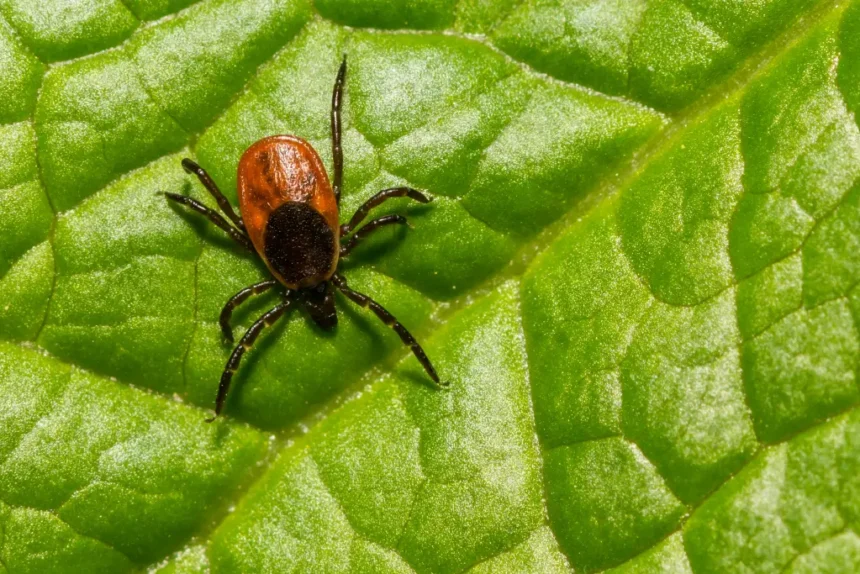
A rare and potentially fatal tick-borne illness known as the Powassan virus has reached historic highs in the United States, prompting urgent warnings from public health experts.
According to the Centers for Disease Control and Prevention (CDC), an unprecedented 76 Americans were diagnosed with the Powassan virus in 2025, marking the highest annual total on record. Historically, the U.S. has averaged only seven to eight diagnoses per year.
The virus is primarily spread through the bites of infected deer or woodchuck ticks, and is most prevalent between late spring and mid-fall when outdoor activity and tick populations peak. What makes Powassan uniquely dangerous is its rapid rate of transmission. Dr. Jorge P. Parada, a medical advisor at the National Pest Management Association, warned that the virus can be transmitted in as little as 15 minutes after a bite from an infected tick. In contrast, Lyme disease typically requires the tick to be attached for 36 to 48 hours to transmit.
After an incubation period of one to four weeks, infected individuals may begin to manifest initial symptoms such as fever, headache, vomiting, and weakness, though some remain entirely asymptomatic. However, the illness can escalate quickly to severe neurological complications. These include encephalitis (inflammation of the brain) and meningitis (inflammation of the membranes surrounding the spinal cord). In these severe cases, patients might experience confusion, loss of coordination, speech difficulties, and seizures.
The stakes are incredibly high: approximately 10% of severe Powassan cases that involve neurological disease are fatal, and many of those who survive are left with long-term neurological deficits. Currently, there are no specific vaccines or medications available to treat or prevent the virus. Medical care is strictly limited to supportive therapies, such as intravenous fluids and respiratory support. While the disease can affect anyone, children, older adults, and immunocompromised individuals are considered at the highest risk for severe illness.
The virus was originally named after Powassan, a town in Ontario, Canada, near where it was first discovered. The medical community traced the disease back to 1958 following the unexplained illness and death of Lincoln Byers, a 4-year-old boy living on a farm. Researchers later identified a tick harboring the exact same virus on a dead squirrel. This discovery provided answers for the tragedy but foreshadowed the growing, modern-day public health challenge currently spreading across the U.S.