

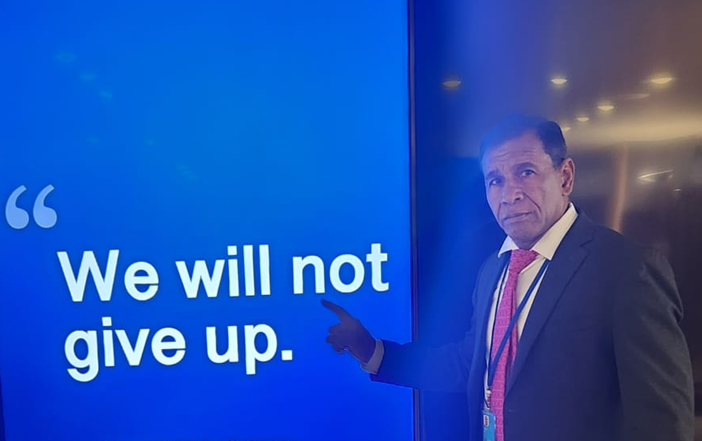
James Finies, founder of the Bonaire Human Rights Organization (BHRO), has launched a formal challenge against the Dutch government following its decision to implement strict new counter-terrorism measures in the Caribbean Netherlands.
In an open letter addressed to the Prime Minister, the Minister of Justice and Security, and the Dutch Parliament, Finies expressed “grave concern” over legislation approved on June 19, 2026. The new laws seek to criminalize the glorification of terrorism and public expressions of support for designated terrorist organizations on the islands of Bonaire, Sint Eustatius, and Saba.
Finies argues that the Dutch Cabinet has failed to provide public evidence of any terrorist networks or significant activity on the islands, which he describes as peaceful and hospitable communities. He warns that the broad and subjective nature of terms like “glorification” could trigger a wave of self-censorship, threatening the work of journalists, academics, and human rights advocates.
“The issue is not whether terrorism should be condemned—it must be,” Finies stated in the letter. “The issue is whether new criminal laws affecting fundamental freedoms can continue to be imposed on the people of Bonaire”.
The challenge highlights the unique demographics of the “BES” islands—Bonaire (approx. 20,000 inhabitants), Sint Eustatius (approx. 3,000), and Saba (approx. 2,000)—questioning if such far-reaching criminal measures are necessary or proportionate for these small populations.
Finies further contends that the Dutch government is prioritizing the expansion of state authority over public expression rather than addressing critical local issues such as self-governance, democratic representation, and socio-economic rights.
The BHRO’s challenge relies heavily on international law, citing Articles 19 and 25 of the International Covenant on Civil and Political Rights, as well as the Universal Declaration of Human Rights. Finies noted that the United Nations has repeatedly warned that counter-terrorism efforts must remain consistent with international human rights obligations.
The letter calls on the Dutch Parliament to:
- Conduct a comprehensive human rights assessment of the proposed laws.
- Narrowly define criminal provisions to prevent arbitrary application.
- Protect legitimate public debate and investigative journalism.
- Consider less restrictive measures to achieve security goals.
As of now, the Dutch Cabinet has not issued a formal response to the letter, but the move marks a significant escalation in the ongoing tension between the European Netherlands and its Caribbean territories over sovereign expression and legislative autonomy.