
Opposition leader Ralph Gonsalves has called for urgent national action on disaster preparedness, warning that the current hurricane season and looming climatic shifts could push St. Vincent and the Grenadines into a state of “calamity” if the government continues its path of “ineptitude.”
Speaking on a Star FM broadcast, Gonsalves emphasized that the country must move beyond complacency, noting that the start of the hurricane season on June 1st and the recent anniversary of Hurricane Beryl on July 1st serve as stark reminders of the region’s vulnerability.
Gonsalves cautioned citizens against the old saying that the danger passes after October. He recalled the 2013 Christmas Eve disaster, which resulted in significant damage and the loss of nine lives, as proof that preparedness must be maintained through December. Furthermore, he predicted that the early part of next year will likely be the driest period on record due to the El Niño phenomenon, requiring long-term planning for water security and agriculture.
“We have national work to do in respect of disaster preparedness,” Gonsalves stated, urging every household to develop and review family disaster plans.
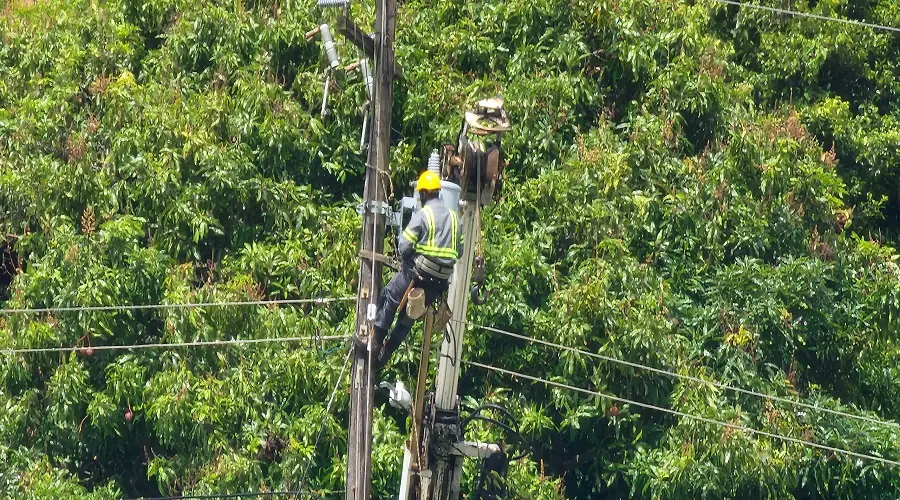
Turning to the nation’s utility infrastructure, Gonsalves raised serious concerns regarding the reliability of the state electricity provider, Vinlec. He highlighted a recent incident in Chester Cottage where a pole fire caused a massive power outage across the entire northeast side of the island from Colonarie to Fancy lasting from 5:00 PM until 3:00 AM.
While he congratulated the Vinlec team for their late-night work in replacing the pole, he noted that the outage occurred without even “hurricane force winds.” He observed that interruptions on the eastern side of the island have become “too frequent” and questioned whether current maintenance is rigorous enough.
Gonsalves specifically questioned the quality of materials being used for grid maintenance, asking if they are capable of withstanding the “sea blast” and salt spray from the Atlantic trade winds. He warned that if the mainland were to experience the level of infrastructure collapse recently seen in Union Island and Canouan, the economic results would be devastating.
Gonsalves also critiqued the government’s fiscal approach to infrastructure, arguing that the administration is prioritizing “bad debt” and “pet projects” over essential services. He pointed out that while the government has spent $600,000 on vehicles and significant sums on the Prime Minister’s residence, the national social safety nets are “falling apart.”
He explained that the government is increasingly relying on domestic loans with high interest rates (up to 7.25%) and short repayment periods (as little as 6 years), which he characterised as “bad debt” that places an undue burden on local revenue. This stands in contrast to the long-term, concessional “good debt” his administration typically secured for major national developments.
Concluding his address, Gonsalves urged the public to “work harder and smarter” during these “perilous times.” He specifically appealed to the young male population to exercise restraint and avoid violence, noting that social instability only compounds the challenges posed by natural disasters and economic austerity.