
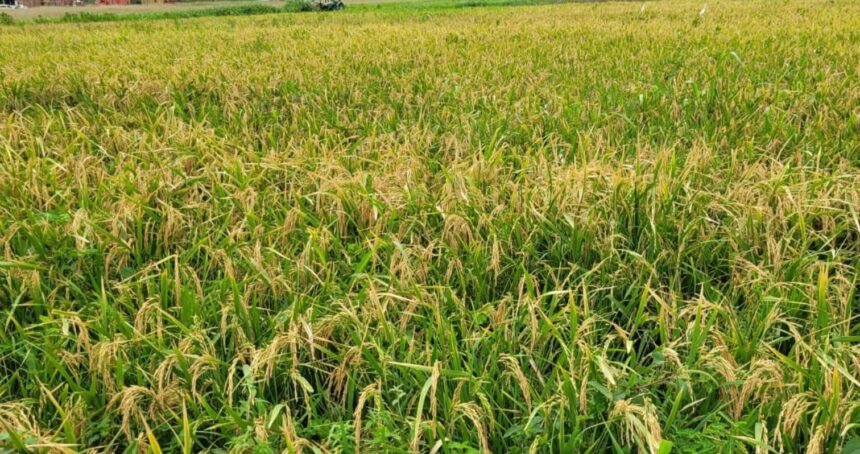
The government of Barbados is moving to scale up domestic food production by expanding upland rice cultivation to ten acres at Pine Basin. This initiative follows the successful completion of the third phase of a joint agricultural project between Barbados and China, which officials believe will reduce the island’s reliance on imported staples.
The project is a partnership involving the Ministry of Agriculture, the Barbados Agricultural Development and Marketing Corporation (BADMC), and China’s Hunan Lingshi Agricultural Service Company Limited. Frederick Inniss, the acting CEO of the BADMC, explained that the current two-acre plot at Pine Basin will serve as a starting point for full-scale commercial rice production. He noted that the collaboration has evolved into a strategic alliance that strengthens technical capacity and introduces innovative production systems to the island.
Demonstration trials have shown that upland rice can be successfully grown under local conditions. One of the key advancements is the use of automated mechanized strip drilling technology. This system achieves a seedling uniformity rate of at least 95 per cent and can seed a three-acre plot in five hours, representing a significant improvement over traditional manual methods. Compared to manual broadcasting, this mechanized approach increases operational efficiency by five to eight times and reduces labor input by over 80 per cent.
Environmental sustainability is a core feature of the project. The upland rice variety used depends primarily on rainfall and requires 50 to 70 per cent less irrigation water than conventional flooded paddy rice farming. This makes the crop highly suitable for the water-scarce environment of Barbados. To support the expanded acreage, specialized equipment for both field work and milling has been imported to prepare the rice for the table.
In addition to rice, the program has trialled various other specialty crops, including sweet corn, pumpkin, eggplant, and tomatoes, all of which showed high production potential. The initiative has also focused on capacity building, with more than 100 farmers and agricultural professionals receiving training in greenhouse production, irrigation management, and pest control.
Mr. Inniss expressed commitment to adopting sustainable practices and innovative technologies to improve productivity. He stated that these efforts are intended to strengthen national food security and position Barbados as a leader in agricultural innovation within the Caribbean region.