

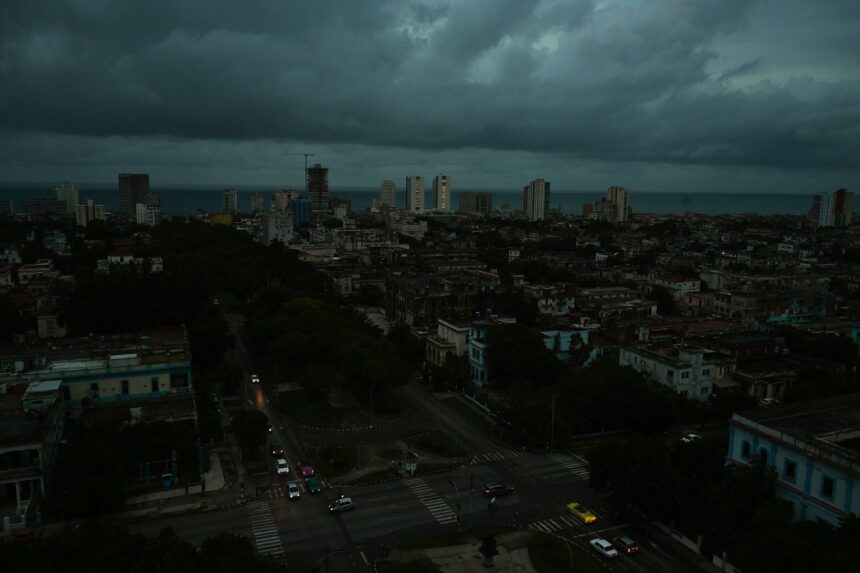
For seven long months, millions of Cuban families have endured a daily struggle that no ordinary people should ever have to face. Their lives have been marked by prolonged blackouts, shortages of essential goods, interrupted public services, and growing uncertainty. Behind every statistic is a human story: a child trying to study by candlelight, an elderly person unable to sleep through sweltering tropical nights, a mother worrying whether food in the refrigerator will spoil before morning.
This is not the result of a natural disaster or a mismanagement by the Cuban Government. It is the consequence of deliberate policies that have severely restricted Cuba’s ability to acquire fuel and maintain its electrical system.
The United States has intensified economic pressure by targeting shipping companies, fuel suppliers, and financial transactions related to Cuba’s energy sector. The impact has been devastating. With reduced access to fuel imports, electricity generation has suffered dramatically, forcing rolling blackouts that in many communities last between 12 and 20 hours a day, and sometimes even longer. Entire neighborhoods have spent days with only a few hours of electricity.
The humanitarian consequences are impossible to ignore.
Hospitals continue to provide care thanks to the extraordinary commitment of healthcare workers and emergency generators, but operating under these conditions places enormous strain on the health system. Schools have repeatedly adjusted schedules. Small businesses have seen their livelihoods threatened. Farmers struggle to preserve their harvests. Workers lose productive hours. Families must constantly adapt every aspect of daily life around the uncertainty of electricity.
Food security has also been affected. Without reliable refrigeration, preserving meat, dairy products, medicines, and other essential supplies becomes a daily challenge. Water distribution systems are frequently disrupted because many pumping stations depend on electricity. Internet and telecommunications services are also affected during prolonged outages, further isolating communities.
According to available estimates, Cuba normally requires several million barrels of imported fuel annually to sustain electricity generation, transportation, healthcare, industry, and agriculture. The restrictions imposed on companies involved in supplying fuel have significantly reduced deliveries, aggravating an already difficult economic situation. At the same time, the decades-old U.S. economic blockade continues to limit Cuba’s access to international credit, technology, spare parts, and investment, making recovery even more difficult.
The numbers tell only part of the story.
Nearly ten million people are living with the consequences of this energy crisis. Every outage affects children, pregnant women, patients requiring refrigerated medicines, university students preparing for exams, retirees living on fixed incomes, and workers trying to provide for their families. They are not responsible for geopolitical disputes, yet they bear the heaviest burden.
International humanitarian principles are founded on a simple moral truth: civilian populations should never become instruments of political pressure. Policies that intentionally deepen shortages of fuel and electricity inevitably affect the most vulnerable members of society first and most severely.
No family should have to wonder whether there will be electricity to cook dinner. No student should have to rely on the light of a cellphone to finish homework. No elderly person should have to endure unbearable heat without a fan because fuel shipments were prevented from reaching the country.
For seven months, Cuban families have shown extraordinary resilience, solidarity, and dignity in the face of adversity. Neighbors help one another. Communities share resources. Doctors, teachers, engineers, and utility workers continue serving despite immense difficulties. Their perseverance deserves admiration.
But resilience should never be mistaken for acceptance.
Human suffering should never be normalized or used as a political tool. Regardless of political differences, the well-being of ordinary people must always come first. The international community cannot remain indifferent while millions of civilians continue to endure prolonged hardship caused by measures that restrict access to one of the most basic necessities of modern life: energy.
The lights that go out across Cuba each night illuminate a much larger truth. They remind us that behind every sanction, every restriction, and every political decision are real human beings—families who simply want to live with dignity, security, and hope.
Their voices deserve to be heard. Their suffering deserves to end.
By Carlos Ernesto RodrÃguez Etcheverry….Cuban Ambassador to St. Vincent and the Grenadines
