

As the 2026-2027 academic year approaches, the Ministry of Education has unleashed a torrent of explanations for a last-minute one-week delay in reopening schools across the nation.
While officials have spoken at length about “administrative arrangements” and “aggressive” work, the detailed rhetoric has left many questioning why these issues were not resolved during the two-month summer break.
In a circular released on July 31, 2026, Chief Education Officer Mrs. Mavis Findlay-Joseph announced that the start of the school year would be pushed from August 31 to Monday, September 7, 2026. The official reason provided was to “facilitate the final preparations” and ensure a “smooth start to the term”.
The Ministry’s directive instructed school leaders to use the extra time for tasks such as finalizing staff assignments, completing classroom preparations, and conducting orientation activities.
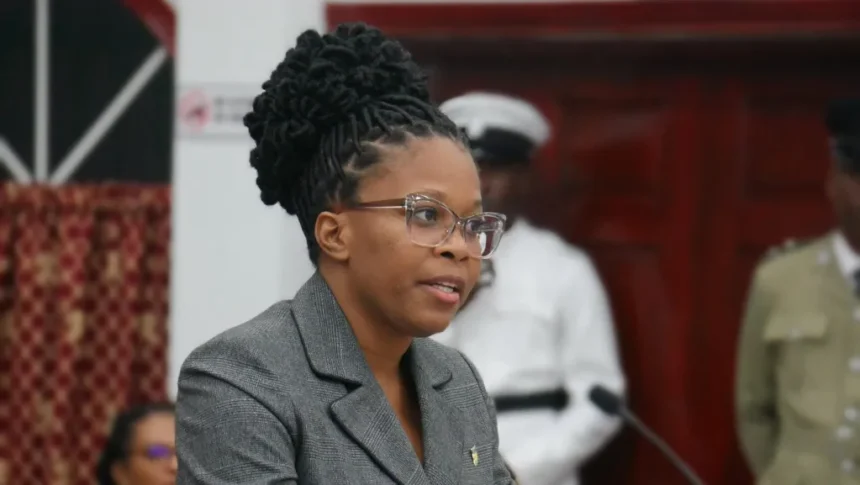
In a recent interview, on Monday Senator Lavern King offered a more descriptive and at times emotional defense of the delay. King cited the “heart-breaking” state of some facilities, describing schools with caving roofs, missing furniture, and empty water tanks.
Among the more specific “many things” mentioned was a discovery regarding school sanitation. King noted that most schools currently use “regular home toilets” that are not designed for a student population, leading to a plan to replace them with “commercial scale” units.
Furthermore, the Ministry revealed a shift in strategy: they are now using the additional week to onboard private contractors to decentralize the workload from BRAGSA, the state-owned company. King argued that this move is “aggressive” and necessary to avoid a situation where schools simply would not open at all.
Despite the abundance of explanations, the Ministry has provided little clarity on why these extensive assessments and contractor hirings were not finalized earlier in the summer. When asked directly why two months were not sufficient, King stated that “sometimes our job determines more than the exact two months” and acknowledged that the administration is “recognizing things as we go along”.
Critics might argue that while the Ministry spoke of “extensive consultation” and being “nimble,” the late-stage realization that schools required total rebuilding or commercial toilets suggests a lack of foresight. King admitted that many schools were “inherited… in a very terrible” condition, yet the decision to delay was only communicated weeks before the original start date.
The Ministry maintains that instructional time will not be lost despite the delay. For now, parents and students are left with a week of uncertainty and a long list of government justifications, hoping that the promised “good learning conditions” will finally materialize by September 7.
