

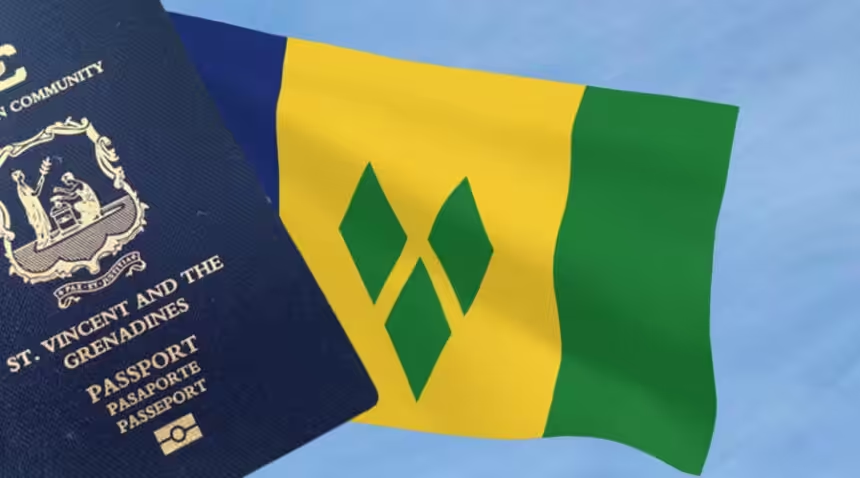
For citizens of St. Vincent and the Grenadines, holding a passport is both a privilege and a key that unlocks global opportunities. However, many travelers do not fully understand the legal foundations of passport ownership, the rigorous eligibility rules, or the precise pathways to citizenship.
Senior immigration officials have recently clarified these procedures, highlighting how citizenship is established, the application requirements, and the regional rights guaranteed to holders of the “Vincy” passport.
The absolute foundation of passport eligibility is straightforward: to hold any type of St. Vincent and the Grenadines passport, an individual must first be a legal citizen. It is also a common misconception that individuals own their passports because they paid for them.
In reality, a passport remains the sole property of the Government of St. Vincent and the Grenadines; the individual named on the data page is merely the holder.
Under Vincentian law, citizenship—and the subsequent eligibility for a passport—is established through four distinct legal pathways: birth, descent, registration, or naturalization.
This is the most direct and automatic form of citizenship. Anyone born within the territory of St. Vincent and the Grenadines is automatically a citizen. To claim a passport under this category, applicants must present an original, untampered birth certificate.
Citizenship by descent applies to individuals born outside of St. Vincent and the Grenadines to Vincentian parentage. It is categorized into two tiers:
- Direct (First-Generation) Descent: This applies when an applicant’s mother or father was born in St. Vincent and the Grenadines. Applicants can apply directly to the Passport and Immigration Department by providing their own birth certificate alongside the original birth certificate of the Vincentian parent.
- Second-Generation Descent: This pathway extends to grandchildren, allowing an applicant to claim citizenship if they can prove a grandparent was Vincentian by birth or registration at the time of the applicant’s birth. Unlike direct descent, second-generation applicants must first acquire a Citizenship Certificate through the Ministry of National Security before they can apply for a passport.
Citizenship by Registration (including Marriage)
Registration is a process for foreign nationals born outside of St. Vincent and the Grenadines to become legal citizens.
- By Marriage: A Vincentian citizen has the legal right to register their foreign spouse as a citizen. This requires filling out specific application forms and undergoing a formal procedure through the Ministry of National Security.
- By Residency (Naturalization/Registration): Foreign nationals who have resided and worked legally in St. Vincent and the Grenadines for a minimum of seven years—holding valid work and residency permits throughout that period—are eligible to apply for citizenship. Officials emphasize that meeting the seven-year residency mark does not guarantee approval; each application is thoroughly investigated by the Ministry of National Security.
Securing a passport requires strict adherence to documentation standards. First-time applicants and those applying under descent must present themselves in person. The standard requirements include:
- An official application form (Form A for adults, Form B for children under 16).
- Revenue stamps valued at $15 for adults and $10 for children.
- An original birth certificate in prime condition (unaltered, with no torn edges or missing parts).
- Two passport-sized photographs, which must be notarized if applying in the Grenadines or abroad.
- Two valid forms of identification, such as a local or overseas driver’s license or national ID card.
Immigration officials warn that clerical errors on older documents are a frequent source of delay and frustration. Discrepancies often emerge for individuals born before 2000, where a father’s name was omitted from the birth certificate, but the child grew up using the father’s surname. In such cases, applicants must resolve the inconsistency before a passport can be issued. This is typically done through a Deed Poll to legally change the name or a statutory declaration executed at the Legal Affairs Department or through a private attorney.
Furthermore, first-time applicants under descent must be accompanied in person by their Vincentian parent to verify their identity. If the parent is unavailable, a formal declaration must be made by a close relative or family member.
Regional Mobility and the Rights of Passport Holders
A Vincentian passport is highly valued because of the extensive international treaties and agreements negotiated by the government.
A valid St. Vincent and the Grenadines passport guarantees the right to move freely within the Organisation of Eastern Caribbean States (OECS). Beyond the general OECS agreements, St. Vincent and the Grenadines is a signatory to a special “full free movement” agreement within CARICOM alongside Barbados, Belize, and Dominica. This unique sub-treaty allows Vincentian citizens to travel, live, and work in any of these four signatory nations completely hassle-free, provided they hold a valid passport.
Dual Nationality Permitted
Vincentian law fully recognizes and permits dual and multiple nationalities. Citizens are not required to renounce their Vincentian citizenship when acquiring citizenship in other countries. It is entirely legal for a citizen to hold an SVG passport alongside Canadian, British, American, or other Caribbean passports.
Rare Conditions for Revocation
Once citizenship is established, a passport cannot be arbitrarily denied to a citizen. However, a passport can be revoked if a citizen chooses to formally renounce their Vincentian nationality. This rare legal process is typically initiated by individuals acquiring citizenship in foreign jurisdictions that strictly forbid dual nationality, such as the Dutch islands. To revoke their citizenship, individuals must submit a formal legal application through a law firm to the Governor General.
Protecting the Integrity of the Vincy Passport
The Passport and Immigration Department enforces rigorous compliance checks to preserve the global credibility and security of Vincentian travel documents.
Officials defend the department’s strict policies—such as requiring original birth certificates for every single renewal rather than relying on prior database entries—as vital safeguards.
By ensuring that every document is meticulously verified by multiple officers throughout the printing process, the department protects the passport against identity theft and fraudulent applications.
Immigration authorities encourage all citizens, even those with no immediate travel plans, to secure their passports early, noting that having a valid passport ready guarantees that unexpected medical, professional, or educational opportunities are never missed.
