
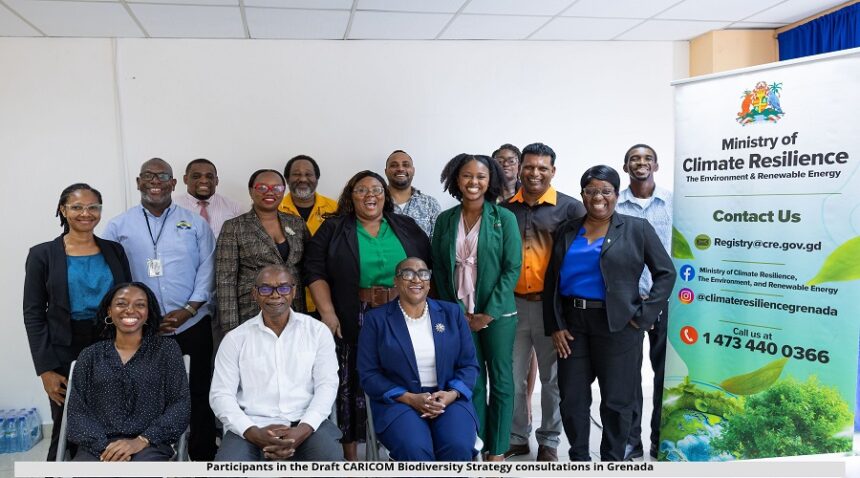
Consultations underway on Draft CARICOM Biodiversity Strategy
The CARICOM Secretariat has started a series of national consultations aimed at advancing endorsement of the Draft CARICOM Biodiversity Strategy and its accompanying Resource Mobilisation and Implementation Strategy (RMIS).
The consultations bring together a broad cross-section of national stakeholders, including representatives from environment, finance, economic development, tourism, agriculture, fisheries and marine sectors, biodiversity focal points and other key stakeholders.
The engagements will review the updated Draft CARICOM Biodiversity Strategy, validate its priorities, and identify practical approaches for biodiversity implementation, financing, monitoring, reporting, and strengthened regional collaboration.
Consultations held to date have highlighted the importance of aligning regional initiatives with national priorities while building synergies with ongoing programmes.
In opening remarks at a recent consultation in Grenada, Ms. Peron Johnson, Permanent Secretary Ministry of Climate Resilience, the Environment and Renewable Energy, highlighted the importance of biodiversity to the country’s sustainable development agenda.
“Climate resilience cannot be separated from biodiversity conservation, and biodiversity conservation cannot be separated from sustainable development. Our task is therefore to ensure that the policies, investments and actions we pursue reinforce one another,” she said.
Representative of the CARICOM Secretariat, Ms Teshia JnBaptiste, Senior Project Officer, Sustainable Development, emphasized the importance of engagement with stakeholders to shape the final outcome.
“The Draft CARICOM Biodiversity Strategy is intended to complement, not replace, national biodiversity strategies and action plans. It seeks to provide a regional framework through which Member States can address common challenges, leverage partnerships, mobilise resources and advance biodiversity objectives that are often best addressed through collective regional action,” Jn Baptiste said.
The accompanying Resource Mobilisation and Implementation Strategy is being developed to support implementation of the Biodiversity Strategy by identifying financing opportunities, strengthening regional coordination, and enhancing technical cooperation. It is expected to guide regional biodiversity investments through 2030 and beyond.
The consultations are being conducted with support from the Deutsche Gesellschaft für Internationale Zusammenarbeit (GIZ), the main development agency of Germany, through the Promotion of Regionally Harmonised Approaches to the Protection and Sustainable Use of Biodiversity in CARICOM Member States (CARIBIO) Project.