

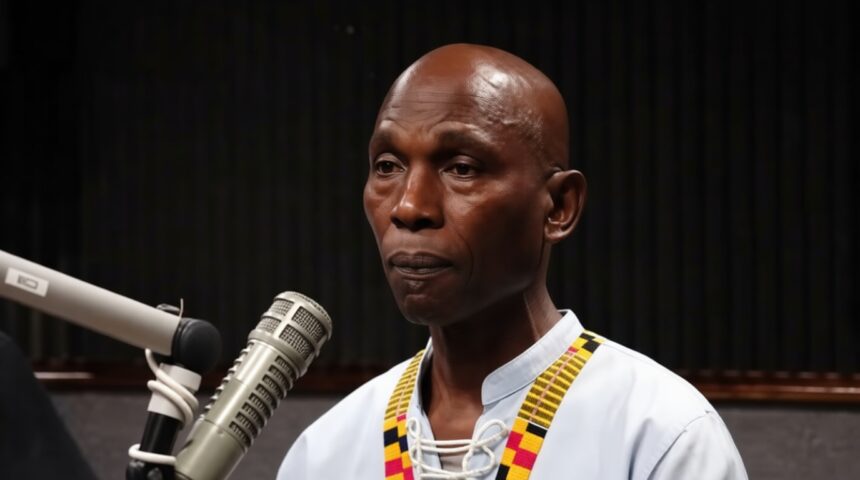
Speaking on the radio program Plain Talk, legal practitioner Jomo Thomas called out systemic inequality in criminal prosecution, arguing that the justice system aggressively punishes low-level offenders while turning a blind eye to high-level financial misconduct.
Thomas highlighted a stark disparity in how accused individuals are treated in public reporting based on their socioeconomic standing.
According to Thomas, individuals from lower-class backgrounds frequently have their names and mugshots published by news outlets upon being charged. Conversely, middle- and upper-class figures rarely face public exposure before trial, with media outlets typically withholding names and photos unless an acquittal occurs—such as in a case involving a pharmacy professional cleared on self-defense grounds.
Thomas argued that this selective reporting reinforces social hierarchies, signaling to working-class citizens to “stay in your place”.
The attorney pointed to significant structural imbalances between corporate non-compliance and minor street offenses. He noted that parliament recently moved to reduce financial penalties for corporate non-compliance to foster a better business environment, whereas minor offenses committed by impoverished individuals continue to carry harsh custodial sentences.
Drawing on his legal experience in the United States, Thomas noted that minor misdemeanors are often resolved through adjournments in contemplation of dismissal to avoid clogging courts. In contrast, local courts routinely send impoverished defendants to prison simply because they lack the financial means to pay fines.
He cited the case of a teenager struggling with crack addiction who was sentenced to six months in prison for breaking glass at a public facility, arguing that the system chooses incarceration over rehabilitation.
Simultaneously, Thomas raised concerns over missing or unaccounted state funds exceeding $12 million—an amount equivalent to roughly 40% of the government’s monthly salary bill—noting that public inquiries into the matter are routinely met with calls to “leave the past alone”. He criticized the complete absence of sting operations or formal investigations targeting tax evasion, value-added tax (VAT) skimming, or money laundering among high-ranking figures, contrasting this with prosecutions targeted at low-level post office workers.
Contrasting local enforcement with regional neighbors, Thomas observed that Trinidad and Tobago has prosecuted top-tier public figures, including a former prime minister, a chief justice, and members of prominent wealthy families.
By comparison, St. Vincent’s last major prosecution of a public official for financial misconduct occurred nearly four decades ago in 1986, when a parliamentarian was convicted of misbehavior in public office involving $40,000.
Thomas also challenged knee-jerk calls for harsher sentences—such as mandatory 20-year terms for firearm possession or references to the death penalty—arguing that severe penalties fail to act as effective crime deterrents. He explained that society heavily projects images of “the good life” across media and public spaces without offering equal economic opportunities for most citizens, creating severe dislocation and frustration that fuels criminal behavior.
To illustrate this disconnect, he shared an anecdote from New York where a starving man stole a purse calculating he might find $10 for food, resulting in an accidental fatality and a murder conviction while the underlying starvation was ignored.
To address these disparities, Thomas urged the government to move beyond political self-preservation and retain independent, competent professionals to investigate financial wrongdoing. He warned against political tenure focused on short-term personal gain and called on civil society to demand genuine accountability detached from partisan politics.
