
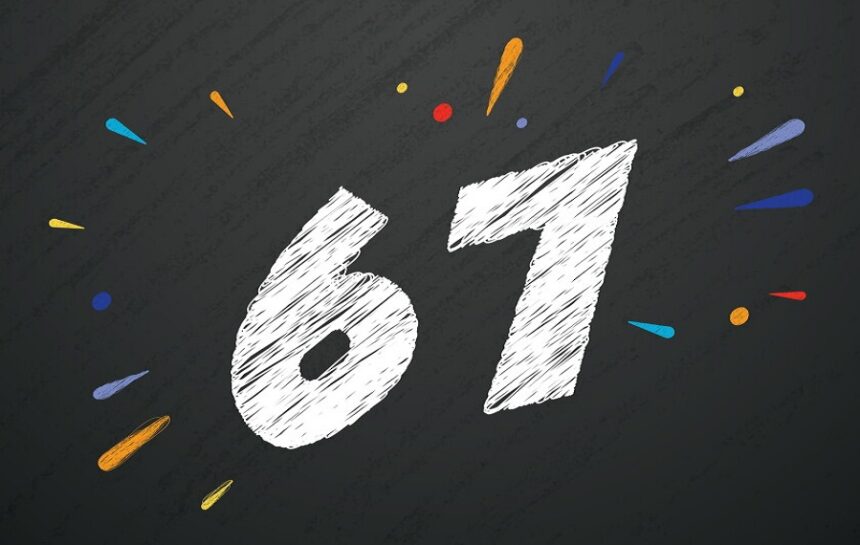
Analysis of Google search data for 2026 reveals the most searched slang words in America.
America’s most searched slang words (monthly searches):
1. 6-7 (1 602 200 searches) – There is no literal meaning to six seven. Its absurdity is the point, making it a prime example of “brainrot” internet humor where the randomness itself becomes funny. It originates from the song “Doot Doot (6 7)” by Skrilla. LaMelo Ball a basketball player created a trending video about being 6 feet 7 inches tall using the song. Kids and teens scream and chant it often paired with exaggerated hand gestures.
2. Chud (184 900 searches) – a fool, troll or jerk. Often used to insult internet trolls and describe an obnoxious person who is unlikable or rude.
3. Rizz (171 100 searches) – style, charm or attractiveness. The ability to attract a romantic partner and make others like you.
4. Gooning (158 700 searches) – primarily used in certain online communities to describe a prolonged session of self-stimulation. The term has evolved to casually refer to becoming overly obsessed about something. Essentially losing oneself in enthusiasm for an activity or interest.
5. Cap, No cap (96 600 searches) – a lie, a fake claim or an exaggeration. Whereas no cap is means the opposite: I’m telling the truth, seriously, no lie.
6. Mogging, Mogged, Mog, Framemog (82 800 searches) – outclassing someone else by appearing more attractive, skillful or successful.
7. Bop (78 300 searches) – a person with many sexual partners(bops around from person to person). Someone who presents oneself online in a way that is thought of as immodest. A derogatory word often used in cyberbullying.
8. Larping, Larper (74 400 searches) – a synonym to poser, fraud and try-hard. Someone who pretends to be something they are not. Faking a lifestyle. Acting for attention.
9. Aura, aura points, aura farming (66 400 searches) – a person’s cool factor, swagger or presence. Aura points are essentially coolness points that you can gain or lose by doing cool or cringe worthy actions. Aura farming refers to a behavior (often referencing anime characters) where a person does something for the sake of looking cool.
10. Sigma (65 400 searches) – refers to an independent, self-reliant person who operates outside traditional social hierarchies, often described as a “lone wolf”.
11. Crash out (60 500 searches) – losing total emotional control and throwing a major tantrum. An extreme an reckless destructive outburst. A synonym for snapping or freaking out.
12. Glazing (59 600 searches) – praising someone excessively and insincerely(sucking up). The term is often used as a way to call out behavior where excessive flattery is used.
13. Huzz (57 300 searches) – refers to attractive girl or a group of girls. A replacement for “boo” and “pookie”. Somebody you want to impress. This slang had a more derogatory meaning “h–s”, but that has changed.
14. Chopped (53 600 searches) – this term has become a synonym for something that is ugly, undesirable or unattractive. Looking very rough.
15. Based (51 400 searches) – being unapologetically yourself. An authentic person who is confident in their beliefs. Someone who does not care how others feel about their actions and opinions.
16. Clanker (42 300 searches) – is a derogatory term for robots, bots, chat and AI technology. An example would be “having to talk to a clanker” would mean talking with a chat bot.
17. Maxxing (41 100 searches) – to maximize and optimize. Go all in on improving a specific part of your life. Doing something to an extreme and obsessive degree. This slang words has become a flexible suffix you can add to any noun. Common examples are: looks maxxing, fibermaxxing, friction maxxing, cortisol maxxing, chud maxxing, nonna maxxing, mogging maxxing, jestermaxxing, melt maxxing, sleep maxxing, token maxxing.
18. Unc (37 400 searches) – short for uncle. Used humorously to indicate old age(unc status). Anyone perceived as old, out of touch or past their prime.
19. Ate (35 100 searches) – expressing admiration for someone who just did something like a boss. Looking amazing while winning.
20. Cheugy (33 100 searches) – outdated and uncool. Trying too hard to follow past trends.
21. Foid (31 200 searches) – short for “femoid” (a blend of “female” and “humanoid”). A derogatory and misogynistic slang term for women. Used to express resentment, insult women and reduce individuals to objects.
22. Mid (29 200 searches) – short for mediocre or that something is of disappointing quality.
23. Crine, son im crine (27 600 searches) – laughing so hard I am crying. A short and fun way to say that something is very funny.
24. Delulu (25 800 searches) – short for delusional. It describes someone with unrealistic expectations, especially about crushes, relationships, or fantasies (thinking a celebrity will date them).
25. Quiet on the creek (14 600 searches) – a fun way to tell somebody to not be so loud or to keep a secret. The phrase originating from a Saucy Santana TikTok Live stream, where he recalled childhood fishing advice: “I used to go fishing when I was a little girl, you got to be real quiet on the creek.”
Randoh Sallihall a spokesperson for Word Unscrambler (Unscramblerer.com) commented on the findings: “The most searched slang words of 2026 give insight into the cultural conversations happening in America. Using slang is a social signal. What people search for can tell us something about what they are trying to understand and participate in culturally. Slang may look like a collection of throwaway jokes from the internet, but psychology suggests it is doing something much more interesting. Using slang helps people navigate identity and belong to a community. Research highlighted by the American Psychological Association, including the work of psychologist Ryan Boyd, shows that our language choices can act as signals of who we are, who we identify with and how we relate to other people. Research by Alice Damirjian (post-doctoral Department of Philosophy) similarly describes slang as a way of identifying group affiliation, distinguishing insiders from outsiders and reinforcing social cohesion. Today new slang terms can spread like wildfire around the world thanks to big online communities on social media like TikTok, Instagram, gaming chats, streaming and so on. The popularity of trending slang words can change quickly, but the psychological need behind them stays the same. People want to understand one another and belong.”