

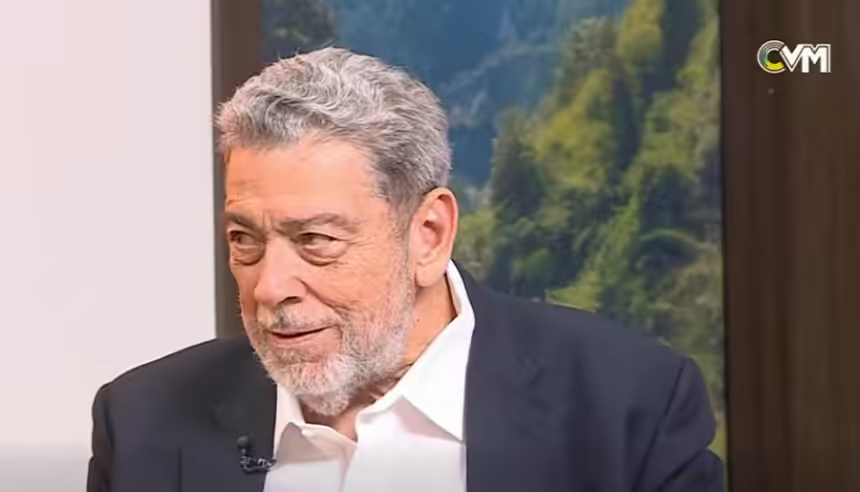
Leader of the Opposition Dr. Ralph Gonsalves has called out Minister of National Security Sinclair Leacock for stepping back from his early tough-talking crime posture, noting that the minister was forced to retreat from political bravado to publicly acknowledge the country’s crime crisis as a “nightmare”.
Speaking on national radio, Dr. Gonsalves emphasized that the word “nightmare” was not his own term, but rather the explicit wording used by Minister Leacock as violent crime continues to surge across the nation.
Gonsalves recalled that upon taking office, Minister Leacock adopted a stance of swagger and “braggadocio,” publicly boasting that he was the “new sheriff in town” who would clean up the country. During those early statements, the minister warned young people on “the block” not to embarrass him by disturbing the peace.
Gonsalves noted that he had cautioned the minister from the very beginning against trivializing the complex nature of crime and painting youth with a broad brush.
However, following recent mass shootings and brazen public acts of violence, Gonsalves observed that the government’s tough talk has collapsed under the weight of escalating homicides. He stated that Minister Leacock had to “descend from his earlier braggadocio” and “fire and brimstone” rhetoric to confront the reality that the security situation has deteriorated into a national nightmare.
While Dr. Gonsalves noted that the minister now concedes that an “all-of-society” approach is required rather than relying solely on police arrests and prosecutions, he argued that the government still lacks a clear execution strategy.
According to Gonsalves, while the administration has adopted the language of broad social intervention, it has failed to answer fundamental operational questions regarding implementation—specifically what actions will be taken, when they will occur, where they will be deployed, and who will be engaged.
Gonsalves reiterated that addressing gun violence requires sustained, heavy-lifting work across state and civil institutions rather than political chest-thumping. He stressed that true solutions require:
Strengthening family structures and parental guidance.
Expanding community and youth initiatives, such as police youth clubs and sports programs.
Maintaining professional, non-politicized law enforcement leadership.
Addressing the root causes of crime, including the influx of illegal firearms, illicit drug trades, and psychological feelings of powerlessness among youth.
