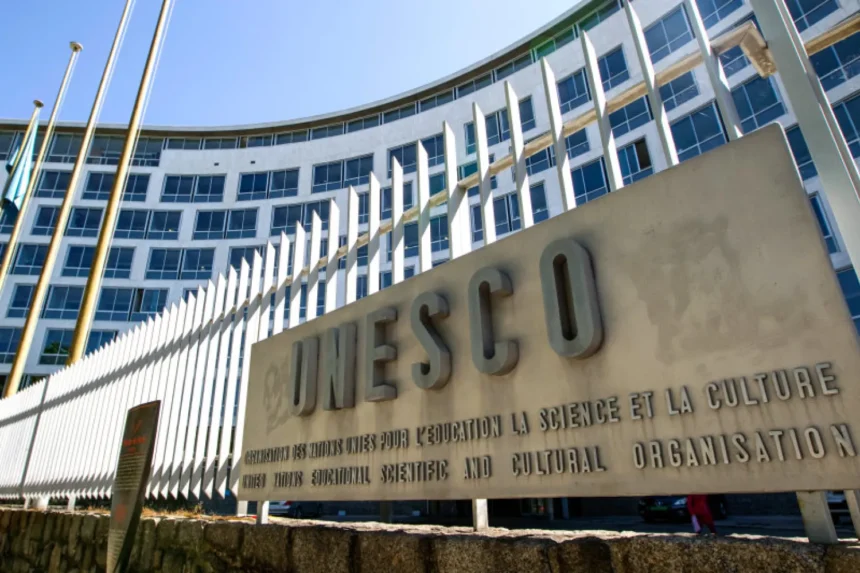
The Media Institute of the Caribbean (MIC) has been officially approved as a non-governmental organization in partnership with UNESCO, with consultative status, marking an important milestone in MIC’s work to strengthen independent, professional and sustainable media across the Caribbean.
This recognition, decided during the 225th session of UNESCO’s Executive Board in Paris, marks the second time an NGO from the English- and Dutch-speaking Caribbean has achieved this distinction. The new consultative status formally recognizes MIC’s continuing contribution to UNESCO’s objectives in the fields of media development, media viability, access to information, media and information literacy, and freedom of expression while creating expanded opportunities to deepen cooperation and collaboration in emerging and priority areas. This shows a joint commitment to cooperate in UNESCO’s fields of education, sciences, culture, and communication and information.

Eric Falt, Regional Director and Representative of UNESCO commented, ‘MIC knows the Caribbean media landscape from the inside. This new status allows us to turn that knowledge into action, strengthening media resilience, innovation and access to information across the region.”
MIC’s work includes the production of research, assessments and policy recommendations on media-related issues; capacity-building through training, workshops, fellowships and mentoring programmes for journalists, media professionals, educators and other stakeholders; and the convening of regional dialogue and knowledge-sharing among media actors, civil society organizations and development partners. To date MIC has trained over 800 journalists in the region and contributed over 4,000 hours of mentorship over its seven-year history
MIC and has maintained regular and substantive cooperation with UNESCO since 2020, working on initiatives designed to promote access to information and stronger media ecosystems throughout the Caribbean. This cooperation has included the implementation of the regional project “Strengthening Information Integrity and Media Resilience in the Caribbean,” together with regional capacity-building programmes, research and policy dialogue. In 2022 MIC did the Media Viability Indicators Study on Jamaica as the global pilot project. In 2025 MIC also released “Disasters and Crises in the Caribbean Region: A Review of Experiences in Seven Countries” supported by UNESCO.
President of MIC, Ms. Kiran Maharaj said, “This recognition represents an important milestone for the Media Institute of the Caribbean and, more importantly, an opportunity to amplify Caribbean perspectives within the global conversation by contributing Caribbean expertise and experience to some of the most pressing issues confronting media today, from information integrity and artificial intelligence to media viability and disaster resilience.”