

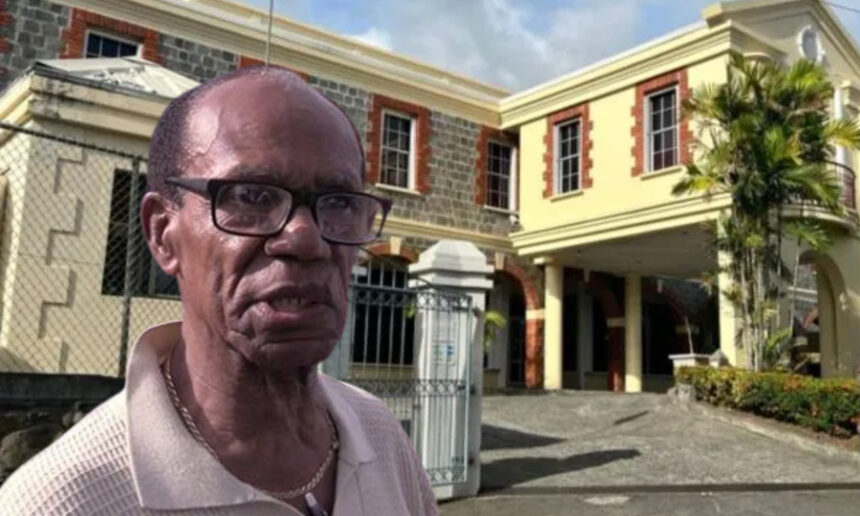
Political commentator Frank Da Silva delivered a wide-ranging critique on Nice Radio’s Keeping It Real interactive talk show, targeting escalating electricity fuel surcharges, state utility profitability, Value Added Tax (VAT) on essential services.
Da Silva directed strong criticism at St. Vincent Electricity Services Limited (VINLEC) and official explanations regarding smart meters and alleged “electricity leaks” into the ground. Questioning the rationale offered by official representatives, Da Silva challenged the notion that widespread bill increases were driven by internal household wiring leaks.
Highlighting his own domestic utility bills to illustrate the financial pressure on consumers, Da Silva noted that his household energy consumption habits have remained unchanged for a decade. Despite consistent usage, his monthly statements revealed fuel surcharges significantly outpacing actual electricity consumption.
January 2025: Fuel surcharge exceeded the $343 base electricity charge.
August: Electricity usage of $400+ yielded a fuel surcharge exceeding $700.
Subsequent Month: Electricity usage of $700+ resulted in a fuel surcharge exceeding $1,100.
Latest Bill: Base electricity usage stood at $740+, while the fuel surcharge climbed to $1,201.
VAT Impact: Value Added Tax on his latest bill alone reached $94.
Da Silva recalled pre-election assurances from Prime Minister Dr. Godwin Friday that fuel surcharges would not be allowed to exceed base electricity usage, contrasting those commitments with current billing realities.
Contrasting St. Vincent’s energy costs with neighboring St. Lucia, Da Silva pointed out that St. Lucia’s fuel surcharge ranges between 35 and 41 cents per kilowatt-hour, compared to surcharges exceeding 87 cents per kilowatt-hour in St. Vincent.
Da Silva strongly criticized the imposition of VAT on electricity, arguing that power is an essential service. He highlighted that St. Lucia levies zero VAT on electricity alongside a lower overall national VAT rate of 12%, whereas St. Vincent charges a 16% VAT on electricity bills.
He dismissed the New Democratic Party (NDP) government’s proposed 3% VAT reduction as insufficient, advocating instead for the complete removal of VAT from utility bills.
Addressing VINLEC’s financial position, Da Silva raised questions regarding the utility’s annual balance sheets. Disclosures during the broadcast confirmed that VINLEC recorded net profits of $13.2 million in 2024 and $6.65 million in 2023.
Da Silva argued that as a state-owned corporation, VINLEC should not be “wallowing in profit” while consumers face severe financial strain, asserting that operational surpluses should be returned to the public in the form of rate relief.
He further criticized VINLEC for relying on a basic tariff structure established in 1973 and questioned the size of the company’s vehicle fleet.
