
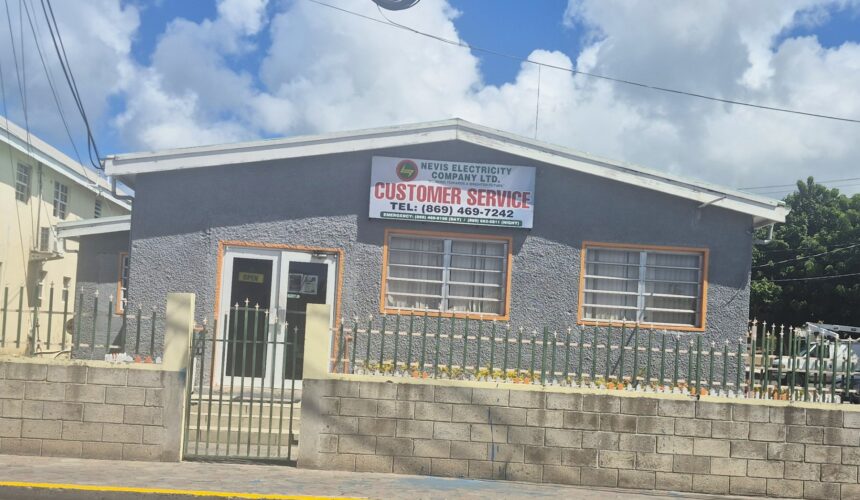
Demonstrating its commitment to the welfare of the people, the Nevis Island Administration (NIA) Cabinet continues to explore possible electricity relief measures to ease the financial burden on consumers amid rising global fuel costs
Speaking at his monthly press conference on October 27, Premier of Nevis and Minister of Finance, Public Utilities, and Energy et al. in the Nevis Island Administration, the Honourable Mark Brantley, explained that the high cost of electricity stems from external factors beyond the government’s control. The surge in fuel prices has contributed to significant increases in energy costs across the globe, in some cases, resulting in increases of more than 60 percent.
Premier Brantley disclosed that the government is examining a proposal developed by the Nevis Electricity Company Limited (NEVLEC) to determine what temporary relief could be provided to consumers as the island’s finances stabilise with the start of the tourism season.
“The high cost of electricity in Nevis is due to external circumstances, but I’ve made the commitment that as we hope our finances stabilize as the tourism season kicks off, that we will see what is possible. Already I know that we have a proposal that NEVLEC has developed so that we can work out what relief we can bring on a temporary basis. I want to emphasize that -on a temporary basis- to the people of Nevis.”
The Premier acknowledged the financial pressures facing households and expressed sympathy for residents struggling to meet basic needs, including those forced to choose between paying their electricity bills and purchasing food.
“To see the electricity bill double has really created significant difficulty. I don’t want the public at any point to think that I am somehow unaware of or immune to that. I live in my community. I talk to people in my community. I understand the pain that people are enduring. We need to do something about it. The problem that we have had is our capacity to do something about it, because the government simply could not continue to swallow the fuel surcharge as we had done for the last four years. The Strait of Hormuz situation which even now continues, that has been our reality and that is our lived reality and we now have to deal with it. But we must fashion a solution and we must find some way to provide some relief and I give that commitment that we are working on it.”
Premier Brantley further explained that any relief measures would be designed to prioritise the welfare of the most vulnerable members of society, with particular consideration for low-energy users, including pensioners and persons on fixed incomes who are struggling financially.
Before the fuel surcharge was reintroduced in July 2026, the NIA had absorbed millions of dollars in fuel costs by removing the surcharge from consumers’ electricity bills for four years. However, the continued rise in global fuel prices and the government’s financial constraints have made it necessary to reassess how best to support consumers while meeting its financial obligations.