
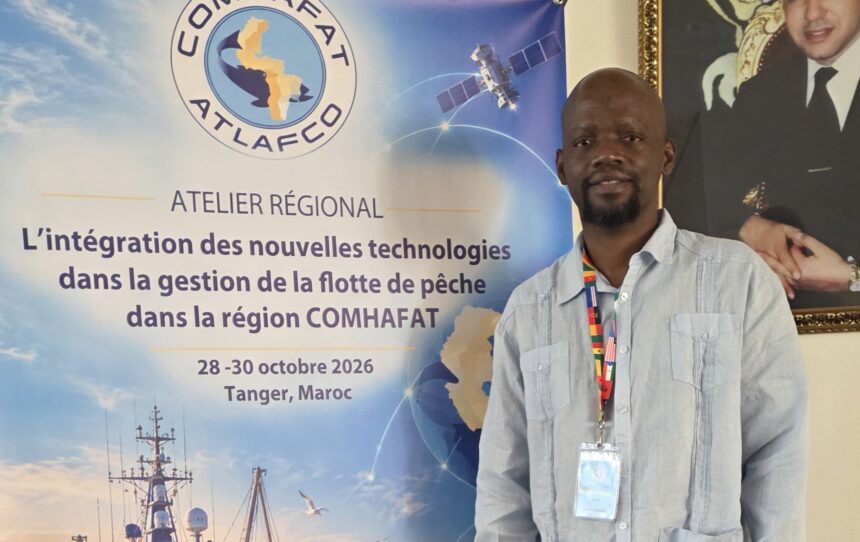
Affordable digital tools, stronger institutions, and meaningful participation by fisherfolk are central to the vision of the Caribbean Regional Fisheries Mechanism (CRFM) for modern fisheries management, as outlined in its contribution to the ATLAFCO/COMHAFAT workshop in Tangier, Morocco, being convened from 28 to 30 October 2026.
CRFM Executive Director, Dr. Marc Williams’ presentation, “Digital Transformation of Fisheries Management in the Caribbean,” outlines how enhanced vessel information, electronic catch reporting, and seafood traceability can support responsible fishing, coastal livelihoods, and food security. It also highlights opportunities for practical cooperation between Africa and the Caribbean, drawing on the experience and priorities of both regions.
“Assess their value by whether they improve decisions, support compliance, and serve fishing communities,” Dr. Williams stated.
The message comes as fisheries administrations confront climate pressures, illegal, unreported, and unregulated (IUU) fishing, limited surveillance resources, and growing demands for evidence of seafood origin and legality. Connecting reliable information can help authorities to direct scarce resources where they are most needed and support legitimate operators.
Putting fisherfolk at the center
For Caribbean fisherfolk, practical priorities include simple reporting tools, affordable equipment, offline functionality, and ongoing support. Electronic logbooks and mobile applications can reduce reporting delays, and when systems are connected, it eliminates the need to re-enter the same information. Fishers’ participation in design and testing is essential to ensure that requirements work under real-world conditions at sea and at landing sites.
Traceability begins with reliable vessel identity and fishing authorization, linked to catch and landing records. Maintaining that link through processing, transport, and trade can strengthen confidence in legal supply chains and help producers meet food safety and market requirements. Small operators will need proportionate requirements and support to participate; digital records alone cannot guarantee higher prices or market access.
Turning information into effective management
Vessel monitoring systems, automatic identification technologies, and satellite services can help authorities understand fishing activity and target patrols and inspections. When combined with licensing and catch information, these tools can support risk assessment and Port State measures. Unusual vessel movements require assessment and, where necessary, corroboration; they do not automatically establish a violation.
For the CRFM Ministerial Council, national administrations, and the Secretariat, the presentation underscores the need to invest in people and institutions alongside technology. Priorities include trained officers, effective enforcement coordination, clear responsibilities, and sustainable operating budgets. Common data standards and secure connections between authorized systems can reduce duplication while respecting national control over information, confidentiality, and cybersecurity.
Dr. Williams proposes exploring a CRFM–ATLAFCO Digital Fisheries and Blue Economy Cooperation Program. The proposal is offered for discussion and does not constitute an agreed undertaking or a commitment of resources. Its scope would depend on participating countries’ interests, institutional capacity, and the appropriate decision-making processes.
Eight areas are identified for dialogue: digital fisheries information systems, fleet monitoring and surveillance, electronic reporting, digital traceability, IUU fishing detection and enforcement, capacity development, technology transfer including data standards and interoperability, and innovation and knowledge exchange.
Possible initial activities include joint training, technical exchanges, and a limited number of demonstrations with willing national partners. Electronic reporting for small-scale fisheries and interoperable traceability are potential pilot areas. Shared technical guidance and an Africa–Caribbean fisheries innovation network could help retain and disseminate lessons learned from this work.
For development partners, the presentation outlines practical opportunities to support locally sustainable systems, accessible training, and carefully evaluated pilots. Joint financing approaches could be considered once priorities, responsibilities, and a credible program of work are established through the appropriate channels. Longer-term cooperation could extend to sustainable aquaculture, climate resilience, and ocean governance.
The CRFM’s central ambition is to support fisheries management with timely, reliable information, make vessels more visible to competent authorities, make catches more accountable, and make seafood origins easier to establish. Achieving this will require capable institutions and fishers who can participate without unreasonable difficulty or cost, supported by partnerships that remain useful beyond the initial project period.