

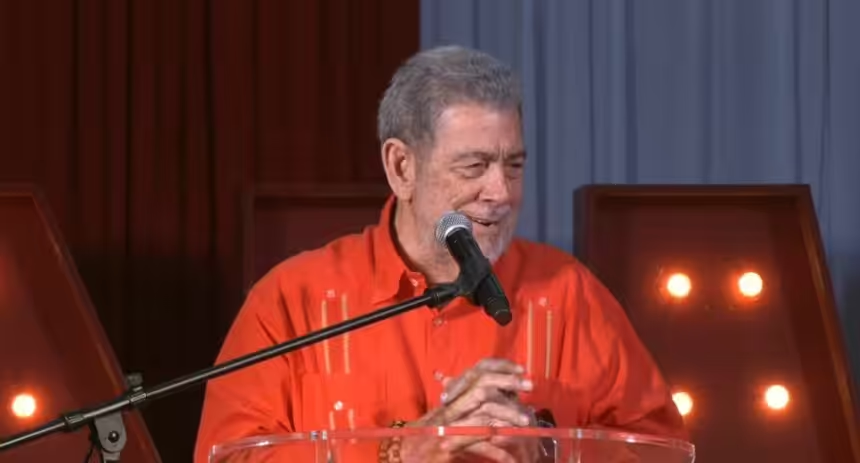
The Unity Labour Party’s 2025 defeat was a major turning point in Saint Vincent and the Grenadines. It ended a period of government that began in 2001, when Ralph Gonsalves became prime minister, and demonstrated that voters were prepared to transfer power after more than two decades. Such a result matters not only as a change of administration but also as a clear electoral assessment of the governing party’s record and its appeal at that moment. It should not, however, be mistaken for the immediate disappearance of the political presence built around Gonsalves over many years.
A long tenure creates forms of political influence that do not vanish on election night. Gonsalves is widely recognized, has extensive experience in national government, and has been a central figure in public debate across successive generations. His years in office give voters a substantial record to evaluate, including policies and decisions they may support, question, or reject. They have also provided opportunities to establish working relationships and personal connections across communities. These factors can sustain public relevance even when the party associated with a leader loses office.
The distinction is between choosing a new government and declaring that a former prime minister has no further role in public life. The 2025 result gave the electorate’s mandate to a different administration; it did not, by itself, settle every question about Gonsalves’s future participation in politics or civic discussion. He may remain a prominent voice, a source of advice for supporters, or a subject of scrutiny for opponents. None of those possibilities guarantees renewed authority. His legacy may shape how the ULP responds to defeat, but rebuilding confidence will depend on choices made by the party and on voters’ judgments in future contests. A historic loss marks a break in political control, while the influence of a long-serving leader is more likely to change gradually, through public debate and changing electoral priorities.
Ralph Gonsalves retains political significance partly because he is a highly recognizable voice in St. Vincent and the Grenadines. His forceful public speaking, confidence in policy debates, and long experience in national politics allow him to frame issues in terms familiar to many voters. Supporters may value his ability to explain government choices, challenge opponents, and connect subjects such as public services, employment, infrastructure, and the cost of living to daily experience. That communication style can preserve attention and trust even when electoral circumstances change.
His standing also rests on relationships built over decades. Established supporters, party activists, and community contacts form networks through which political ideas and local concerns continue to circulate. The ULP’s existing organization can provide a platform for meetings, outreach, and debate, while people who identify with Gonsalves or his political principles may remain engaged between elections. A party’s defeat does not immediately dissolve its local connections, remove its capacity to organize, or erase the loyalty of voters who continue to see its leader as a credible representative. Such ties can sustain influence without determining the result of the next contest.
However, durable support should not be confused with majority backing. The 2025 outcome is an important measure of voters’ choices, and it signals that established loyalties alone are insufficient to secure power. Gonsalves and the ULP face the task of understanding why some voters turned elsewhere, stayed home, or no longer felt represented. That requires listening beyond familiar supporters and engaging with concerns that may not be captured by party activists or long-standing community relationships. His public profile and political networks remain assets, but their future value will depend on how effectively they respond to changing expectations. In this sense, his continued relevance is not proof that the defeat can be set aside; it is a reason to examine how his experience and visibility might be used to rebuild trust and broaden the party’s appeal.
After a lengthy period in government, Ralph Gonsalves may remain an influential voice in St. Vincent and the Grenadines, but the form of that influence depends on the responsibilities he holds after the election. If he retains a parliamentary role, he can question ministers directly and test the new administration’s proposals against its promises. If he remains active in the United Labour Party, his influence may instead be expressed through its strategy, candidate development, and public response. He could also contribute as an elder statesman or commentator without occupying a formal leadership position. These possibilities should not be treated as interchangeable, or assumed without confirmation.
His experience governing the country gives him practical knowledge that can sharpen opposition scrutiny. He can draw attention to the costs, implementation demands, and institutional consequences of policy choices, while also explaining where the new government’s plans differ from earlier approaches. That experience is most useful when it supports evidence-based debate rather than simply defending the previous administration. On matters such as public finances, social services, infrastructure, and external relations, a credible opposition can identify risks, acknowledge sound decisions, and offer workable alternatives. Gonsalves’s familiarity with these issues may help the ULP contribute to national discussion even as voters assess the performance of the new administration.
The defeat also raises strategic questions for the party and for Gonsalves personally. He may choose to lead a period of renewal, or make room for newer voices to build visibility and take responsibility. Either course requires the ULP to examine why some voters changed sides and what concerns shaped their decision. Rebuilding trust will depend on listening to those voters, addressing criticism directly, and showing that the party has learned from the result. Dismissing dissatisfaction as misunderstanding could deepen the distance between the ULP and the electorate. Whether Gonsalves leads that reflection or supports it from another role, his choices will affect how the party balances experience with renewal. His continuing significance will therefore depend not only on his prominence, but on whether he helps the opposition scrutinize power, improve its proposals, and respond constructively to national challenges.
The 2025 defeat has changed the terms of Ralph Gonsalves’s political relevance, but it has not erased it. His long experience in public life, familiarity with national issues, loyal supporters, and ability to command attention in public debate remain significant assets. Political influence does not end automatically when a party leaves office: an experienced opposition figure can shape scrutiny of the government, represent voters who remain committed to his party, and influence arguments about the country’s direction. Gonsalves is therefore still a force in St. Vincent and the Grenadines, even as the election has placed clear limits on what that influence can achieve.
Those limits matter. A substantial political profile cannot substitute for public confidence, and previous victories do not guarantee another. The result indicates that enough voters chose change, making it essential for Gonsalves and the ULP to understand why. That means listening carefully to concerns about governance and leadership, rather than treating the outcome as a temporary setback or relying on established loyalties. It also means presenting credible, specific policies that address people’s priorities and demonstrate how the party would respond differently. Without that work, visibility may keep Gonsalves central to political discussion while leaving the ULP unable to broaden its appeal.
The party’s future will also depend on whether it can make meaningful space for a new generation. Renewal need not dismiss Gonsalves’s experience; it can place that experience within a wider team and offer voters a convincing sense of direction beyond one leader. His next test is to help the ULP adapt while remaining responsive to the electorate that rejected it in 2025. The result did not make his influence irrelevant, but it did make its limits unmistakable. How he and his party interpret the vote, address public concerns, and share leadership will determine whether that influence becomes a foundation for renewed support or remains a prominent presence without electoral momentum.
