

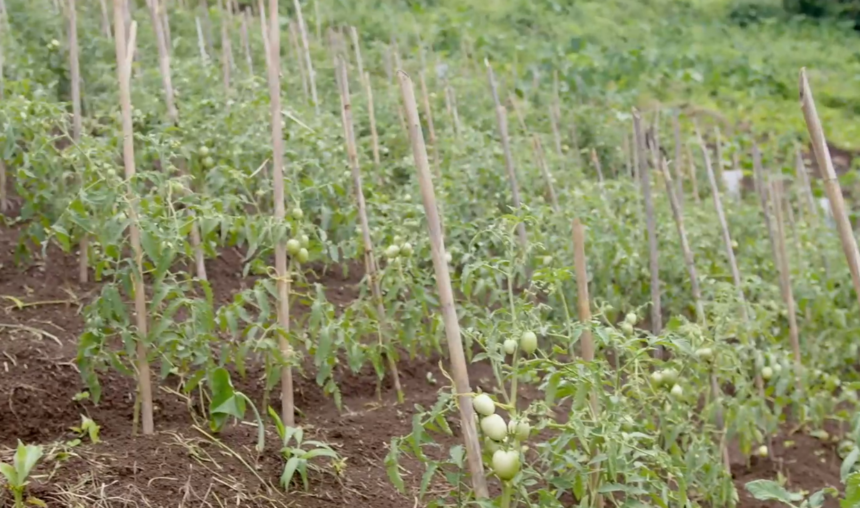
The Caribbean Agricultural Research and Development Institute (CARDI) has reported highly successful field trials of new drought-resistant and disease-tolerant tomato varieties at an evaluation plot in Belair. The initiative, conducted in close collaboration with the World Vegetable Center (WorldVeg) in Taiwan, the Ministry of Agriculture, and the Taiwan International Cooperation and Development Fund (Taiwan ICDF), aims to safeguard tomato production against escalating climate pressures while boosting income security for Vincentian farmers.
Tomato production across St. Vincent and the Grenadines and the wider Caribbean has faced severe threats in recent years from rising temperatures, prolonged dry spells, and devastating plant afflictions, including the Tomato Yellow Leaf Curl Virus, bacterial wilt, and late blight.
To combat these challenges, researchers evaluated a total of 15 selected tomato lines—narrowed down from an initial pool of 30 to 40 candidate lines bred at the World Vegetable Center in Taiwan specifically for tropical climate resilience. Eight of these top-performing lines were highlighted during a WorldVeg Tomato Field Day exhibition, demonstrating exceptional vigor, high yield potential, and robust disease resistance.
The multi-year evaluation process, initiated in 2024, tested the crop lines across both dry and rainy seasons to monitor their adaptability to high heat, shifting rainfall patterns, varying soil types, and humidity levels across different agro-ecological zones.
Among the tested varieties, two lines emerged as standout favorites. Line 2151 demonstrated early bearing, uniform fruit shape, and a clustering growth habit that produces significantly higher fruit counts per tree, translating directly into superior yields per acre. Line 2172 gained overwhelming praise from local commercial farmers, such as Valina Chance, due to its large, firm fruit profile ideally suited for slicing and meeting exact domestic market demands.
Beyond agronomy, the project carries a profound economic benefit for smallholders. Unlike expensive commercial hybrid seeds that require continuous repurchasing, these newly introduced lines are open-pollinated. This empowers local farmers to harvest, select, and multiply their own seeds from season to season, drastically lowering production costs while maintaining crop quality comparable to high-cost commercial hybrids.
Representatives from WorldVeg and Taiwan ICDF emphasized that these trials represent a crucial step toward long-term food security, with plans to expand similar climate-resilient trials to peppers, pumpkins, okra, and callaloo across St. Vincent and the Grenadines.
