
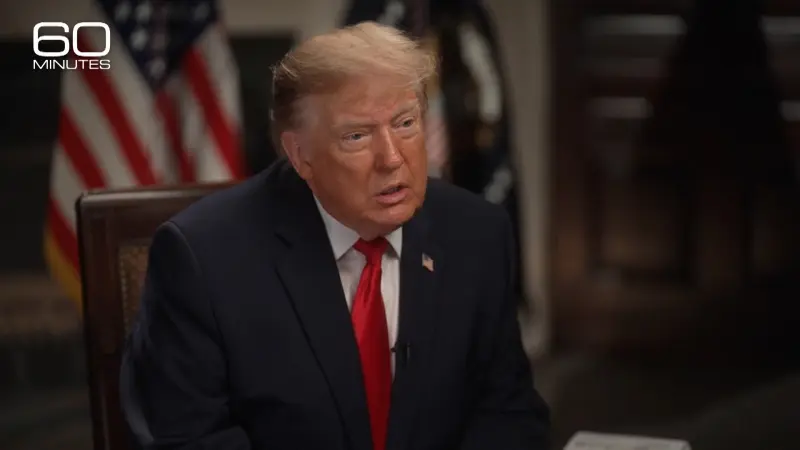
President Trump declared that he “cannot” forgive his political enemies and never would, acknowledging that his stance could hypothetically deny him entry into Heaven. In a wide-ranging interview broadcast on CBS News’ “60 Minutes” with correspondent Ross Douthat, the commander-in-chief insisted he would rather face purgatory than reconcile with those he believes have wronged him, delivering an unyielding stance on political hostility and personal retribution.
The discussion regarding faith and the afterlife began when Douthat asked the president whether he expected to go to Heaven upon his death. Trump expressed hope about his spiritual standing, stating that as a religious person, he believes in theory he will reach Heaven, adding plainly that he does not want to go to Hell.
However, the exchange pivoted sharply when Douthat brought up remarks Trump had delivered during the funeral for slain right-wing political activist Charlie Kirk. At that memorial, Trump had remarked in a half-joking tone that he hated his opponents and did not want the best for them—a sentiment that stood in stark contrast to the message of forgiveness offered by Kirk’s widow, Erika Kirk.
Building on that contrast, Douthat presented a hypothetical scenario to the president: if entering paradise strictly required feeling love and forgiveness toward individuals he has denounced over the years—specifically citing figures such as former FBI Director James Comey and former Speaker of the House Nancy Pelosi—whether he could bring himself to fulfill that condition.
Trump immediately rejected the premise of reconciliation, labeling the named individuals as extremely dishonest and harmful to the nation. When pressed directly by Douthat on whether his answer to the hypothetical was a definitive no, Trump confirmed his refusal, explaining that he wished to remain honest about his feelings.
Douthat further raised the stakes of the hypothetical, asking if Trump would maintain his refusal even before the judgment throne of God. Trump doubled down, asserting that even before divine judgment, his position would remain unchanged. He cited his political legal battles, impeachments, and indictments as justification for his ongoing hostility, arguing that his opponents had subjected him to weaponization and had behaved terribly toward him.
When Douthat questioned how a figure who has led what he described as the most charmed and remarkable life of any contemporary American could remain incapable of extending forgiveness, the president remained entirely unfazed. Trump concluded that he probably could not forgive his foes, reiterating that he harbors genuine hatred for certain enemies and expects that sentiment to endure permanently.