
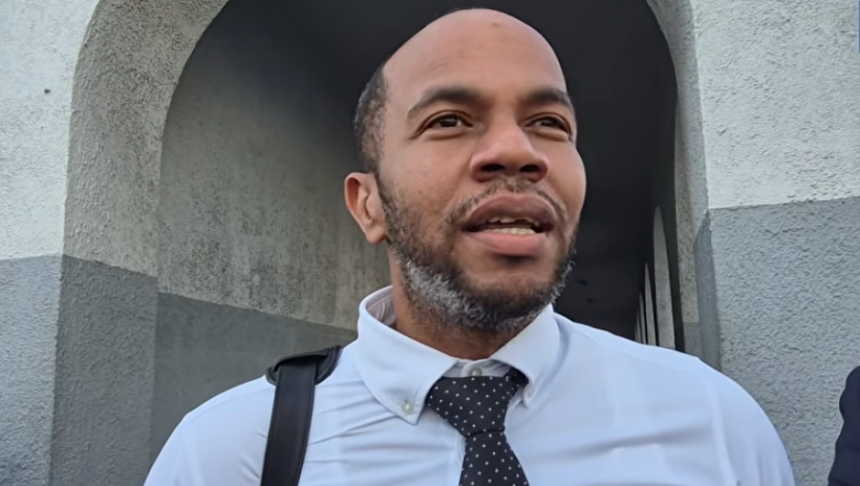
Oral and written submissions have officially concluded in the high-profile St. Vincent and the Grenadines election petition case, with petitioner Luke Browne characterizing the decisions of Prime Minister Dr. Godwin Friday and Minister Bramble to maintain their naturalized Canadian citizenship as a reckless disregard for public trust and constitutional order. Speaking outside the courtroom following the final arguments, Browne argued that the central issue before the court strikes at the fundamental requirement of undivided allegiance, questioning whether public officials can attempt to serve two masters simultaneously while holding foreign passports.
The legal challenge, brought forward by Browne alongside co-petitioner Carlos Williams, seeks to test the constitutional qualifications of the top government officials to contest general elections and occupy parliamentary seats while retaining citizenship in a foreign power. Browne emphasized that both Dr. Friday and Minister Bramble had ample opportunity prior to nomination day to formally renounce their Canadian naturalization and demonstrate exclusive loyalty to St. Vincent and the Grenadines. By failing to take that step, Browne asserted, the respondents displayed clear recklessness and legal negligence regarding the trust placed in them by the electorate, forcing the matter into months of formal litigation before the court.
The petitioners’ legal team, led by Trinidad and Tobago Senior Counsel Stewart alongside attorneys Al Elliott and Carlos James, argued that the case turns on a narrow and pivotal interpretation of constitutional law—specifically defining what constitutes a foreign power or state. Drawing upon regional legal precedents, including the landmark Baldwin Spencer decision in Antigua and Barbuda where Canada was legally determined to be a foreign state, the legal team submitted that Canada cannot be treated as an extension of Vincentian territory. Counsel emphasized that the constitutional provisions regarding allegiance must be upheld to maintain legal clarity across the Commonwealth Caribbean.
Addressing public debate surrounding the potential outcome of the petition, Browne rejected arguments that the challenge is an effort to assume parliamentary seats by default. Drawing an analogy to an Olympic hundred-meter final, Browne noted that if a winning runner is subsequently disqualified for stepping out of line or failing compliance rules, the runner in second place automatically inherits the position. He maintained that enforcing established election regulations is a citizenship obligation rather than an attempt at default political victory, while also questioning why government members previously signaled interest in introducing self-serving legislation in parliament to address issues currently pending judicial determination.
Browne also raised concerns regarding the financial burden placed on Vincentian taxpayers to defend the government officials in court. He highlighted that a battery of five foreign attorneys alongside local legal counsel was assembled for the defense, noting that taxpayers should not be saddled with heavy legal expenses arising from individual actions rather than official state duties. Meanwhile, attorney Carlos James addressed narratives suggesting the petition was merely a reaction to election results, clarifying that formal objections were officially lodged with electoral authorities prior to nomination day and general voting, long before election outcomes were known.
With submissions fully delivered from both petitioner and respondent legal teams, the presiding judge has reserved judgment, which is anticipated early next year at the start of the new judicial term. Members of the legal team emphasized that the forthcoming ruling will extend far beyond the immediate political figures involved, establishing a crucial precedent for dual citizenship, foreign allegiance, and candidate qualification across St. Vincent and the Grenadines, the Eastern Caribbean Supreme Court jurisdiction, and wider Commonwealth member states.