
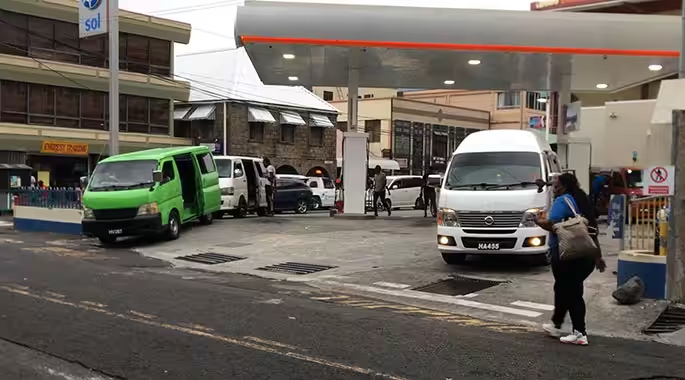
A sharp increase in domestic fuel prices has pushed public transport and taxi operators across Saint Vincent and the Grenadines into severe financial strain, prompting widespread calls for emergency government intervention, targeted subsidies, or a long-overdue revision of official fare structures. As pump rates jumped to over $17 per gallon for gasoline and nearly $20 per gallon for diesel, commercial drivers and industry stakeholders voiced growing frustration over their inability to absorb escalating operational overhead under static, regulated transport tariffs. The unfolding crisis has highlighted a deepening operational gap within the national transit network, where small-scale transport providers face mounting losses while delivering essential daily mobility.
During a public discussion broadcast on local radio station Hot 97.1 SVG, transport operators detailed the immediate financial shock caused by the latest price increases. Several drivers reported that their regular fuel expenses have more than doubled over recent months, escalating from roughly $100 to upwards of $200 per fill-up.
For minivan operators navigating primary commuter corridors, such as the route between Kingstown and surrounding communities, approved fares remain capped at standard rates—such as $8 for buses—even as vehicle maintenance and daily fuel outlays soar. In response to these margin compressions, some operators have begun shifting toward smaller, more fuel-efficient seven to nine-passenger vehicles or operating taxi-style arrangements at $10 per passenger to maintain solvency.
The pressure is acutely felt among airport taxi operators, who face unique structural inefficiencies inherent to their service model. Speaking on the radio broadcast, an active taxi driver operating out of Argyle International Airport explained that drivers frequently burn substantial amounts of fuel traveling from town to the airport, only to secure a single short fare—such as a $50 to $60 trip to nearby hotels—before returning empty-handed. Operators noted that after factoring in round-trip fuel consumption, daily earnings are frequently reduced to negligible amounts, forcing drivers to work at a net loss simply to keep their vehicles active.
A central point of contention raised by transport providers is the regulatory disparity between public transport operators and other energy-dependent service sectors. Industry representatives pointed out that state-backed energy utilities, such as electricity provider VINLEC, as well as commercial airlines, automatically apply sliding fuel surcharges to consumer bills whenever imported fuel costs escalate.
By contrast, public transport fares set by the national Transport Board have remained effectively frozen for years, with drivers recalling that the last minor tariff adjustment occurred half a decade ago. Operators argue it is inequitable to expect small transport entrepreneurs to unilaterally absorb macro energy shocks while larger entities pass fuel volatility directly to end users.
To avert a disruption in public transit services, operators and the SVG Taxi Association are appealing directly to the new administration and the Transport Board for formal consultative meetings. Transport providers are urging policy-makers to consider targeted relief measures, such as a direct fuel subsidy implemented through a dedicated cash-back or voucher system at designated gas stations. Beyond direct fuel relief, operators suggested that government assistance could take the form of import duty exemptions or tax reductions on critical vehicle consumables, including tires, engine oil, filters, and replacement parts, which have similarly surged in price.
The prospective fare adjustments have also stirred debate among the traveling public, illustrating the broader economic dilemma facing working-class commuters. While passengers express sympathy for drivers, many note that their own household budgets are stretched thin by stagnant wages and broader retail inflation.
Transport operators acknowledged these consumer pressures but stressed that private minibuses and taxis cannot continue to subsidize public travel at personal financial ruin. Drivers warned that without urgent policy intervention or temporary fare relief, many operators will be forced to park their vehicles, as continuing to operate for what they termed “peanut money” is no longer viable.