
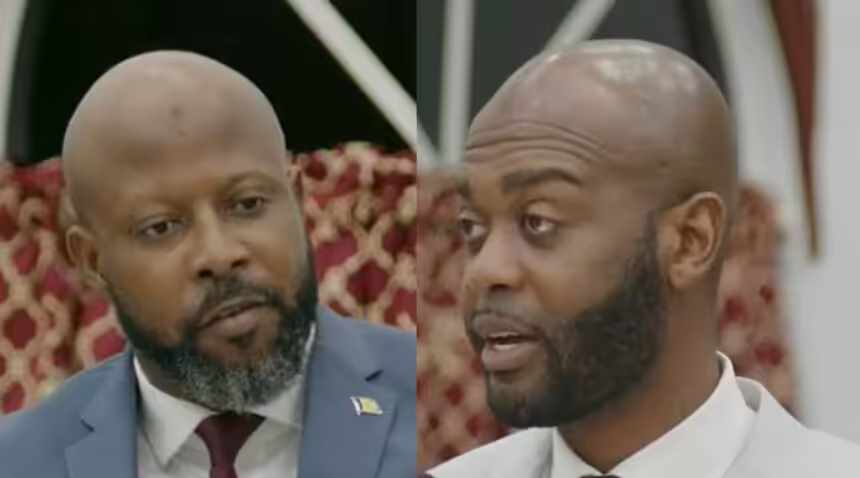
Minister of Tourism Dr. Kishore Shallow delivered a sharp critique of his predecessor, former tourism minister and current Opposition Senator Carlos James, telling Parliament that the nation’s tourism sector had previously suffered from a severe deficit of vision, fragmented leadership, and unfulfilled community promises. Addressing the House of Assembly during a ministerial reporting session marking the administration’s first year in office, Dr. Shallow drew a clear line between what he termed past administrative motion and actual economic progress, contrasting the former minister’s record with the current government’s operational turnaround.
Reflecting on the state of the Ministry of Tourism and the St. Vincent and the Grenadines Tourism Authority upon taking office, Dr. Shallow noted that while he encountered willing, capable, and committed public servants, they had been left without effective leadership or an overarching strategic framework.
He stated that while the former minister may have possessed genuine desire and goodwill to advance the sector, those attributes were no substitute for sound management, structured leadership, and disciplined execution. Dr. Shallow emphasized to lawmakers that under the previous administration, numerous fragmented ideas were pursued without strategic coherence, arguing that activity must never be mistaken for progress, nor mere motion for direction.
The Tourism Minister extended his critique beyond administrative management to specific infrastructure failures in North Leeward, the constituency previously represented by James. Dr. Shallow highlighted a long-awaited road construction project leading to one of the country’s premier beaches in the Troumaca and Chunka area, noting that local residents had spent years appealing to their former parliamentary representative to complete the access route. He pointed out that despite years of inaction under the former minister, the new administration successfully constructed and delivered the beach access road for the community in less than twelve months.
Delineating the difference between what he described as a low-budget approach and high-performing governance, Dr. Shallow outlined several strategic initiatives launched over the past year to reform national tourism operations. Key measures included the institutional restructuring of the SVG Tourism Authority, the recruitment of result-oriented management, and the execution of a landmark agreement with Global Ports Holding expected to inject over US$80 million into national cruise port infrastructure, including a dedicated new port facility for Union Island.
Dr. Shallow also credited the ministry’s renewed strategic direction with driving significant gains in cultural and sports tourism, citing the successful hosting of Caribbean Premier League matches at Arnos Vale, the influx of over US$500,000 during the NCL Global T20 tournament, and high-visibility international marketing campaigns featuring global streaming personalities and professional athletes. He concluded his presentation by promising to lay out further development projects for North Leeward during the upcoming annual budget debate, reiterating that national economic growth depends on retaining a significantly higher proportion of visitor expenditure within local communities.