
There are moments in the life of a legislature when a single vote transcends the parliamentary record and speaks to something deeper, like the moral character of a nation and its relationship with the world beyond its borders. This week, the United States House of Representatives provided one such moment.
In a 219–209 vote, the House passed legislation extending Temporary Protected Status for Haiti, a decision that will safeguard the lives and livelihoods of hundreds of thousands of people who fled one of the most troubled nations in our hemisphere. The bill would require the Trump administration to extend TPS for Haiti for three years, allowing qualifying immigrants to remain in the United States without fear of deportation. It is a victory not only for the Haitian diaspora, but for the conscience of the Caribbean as a whole.
This outcome did not come easily as Congresswoman Ayanna Pressley’s discharge petition, the legislative mechanism that forced this vote onto the House floor, only succeeded after reaching the 218-signature threshold needed to move forward with bipartisan support. Congresswoman Laura Gillen, who introduced the TPS extension as her very first bill in Congress, made this fight a personal promise to her Haitian-American constituents, and she kept it. That kind of political courage deserves recognition, especially in a House where the minority party rarely finds a way to force landmark votes, this was a rare and meaningful triumph of principle over partisanship.
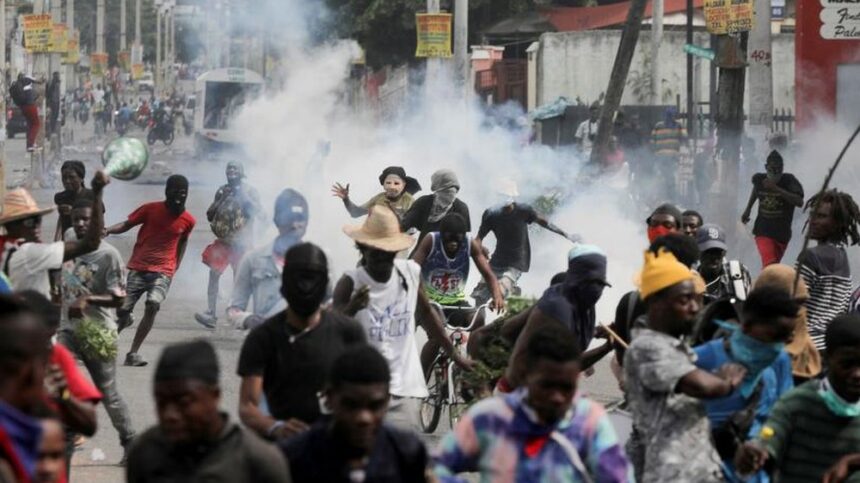
From a Caribbean perspective, this vote carries extraordinary weight, as Haiti is not merely a neighbor in the geographic sense it is the soul of the Caribbean story but it was the first Black republic in the world. It was the nation that proved, through blood and fire in 1804, that enslaved people could break their chains and govern themselves. The turmoil which has followed in the centuries since, including earthquakes, hurricanes, political assassination, gang violence, and the grinding weight of international indifference, has tested that spirit of Haiti beyond what any people should reasonably be asked to endure. Protections for Haitians were first granted in 2010 after a devastating earthquake that displaced more than one million people, and have been extended multiple times as the country has experienced continued violence and upheaval.
Those of us in the Caribbean who watch the Haitian situation closely know that the instability gripping that nation today is not the product of any failing of the Haitian people. It is the product of decades of exploitation, debt, and the deliberate undermining of Haitian sovereignty by more powerful nations. To deport over 350,000 Haitian TPS holders back to that environment would not be immigration enforcement but rather, it would be seen as cruelty dressed in bureaucratic clothing. As Congresswoman Pressley noted on the House floor, one in five Haitians in the United States works in healthcare, filling critical gaps in the caregiving workforce. These are nurses, aides, and caregivers who hold the hands of elderly Americans every single day.
What made this week’s vote particularly striking was not just its outcome, but the company it kept. In a deeply polarized political environment, a handful of Republican legislators chose conscience over caucus. Among them was Congressman Mario Díaz-Balart of Florida, a lawmaker with an established record on border security and a long-standing reputation as one of the more conservative voices on immigration. His vote was notable precisely because it was unexpected by those who reduce politics to tribal allegiance. In his own words, Díaz-Balart drew the line that too many politicians refuse to draw: *”We must recognize that conditions in Haiti are not conducive to safely returning individuals who have been living and working legally in the United States.”* That sentence alone is worth more than a hundred speeches. It is the kind of clear-eyed humanitarian reasoning that ought to be the baseline of all immigration policy, not the exception to it.
Congressman Díaz-Balart, and those of the other Republicans who crossed the aisle, remind us that principled governance is still possible. Border security and human compassion are not mutually exclusive values. One can believe in the rule of law and still recognize that forcing people back into a war zone is not law, it is abandonment.
The bill now moves to the Senate, where its path remains uncertain as the outcome there is far from assured. But what has been accomplished in the House this week must not be minimized. The U.S. Congress looked at vulnerable people, people who came legally, who work, who contribute, who pay taxes, and who care for the sick and the elderly, and chose to protect them. That is the kind of decision history remembers.
For the Caribbean, this is a reminder of what solidarity looks like in practice. We must continue to advocate loudly for Haiti in our regional institutions, in our bilateral relationships, and in the court of international opinion. The Haitian people are our people and their struggle is woven into the fabric of everything the Caribbean has ever been and everything we aspire to become.