
Antigua and Barbuda altered its intended position on a United Nations resolution calling for an end to the United States economic embargo against Cuba after Washington warned that supporting the measure could jeopardize ongoing negotiations over visa restrictions affecting its citizens, Prime Minister Gaston Browne has revealed.
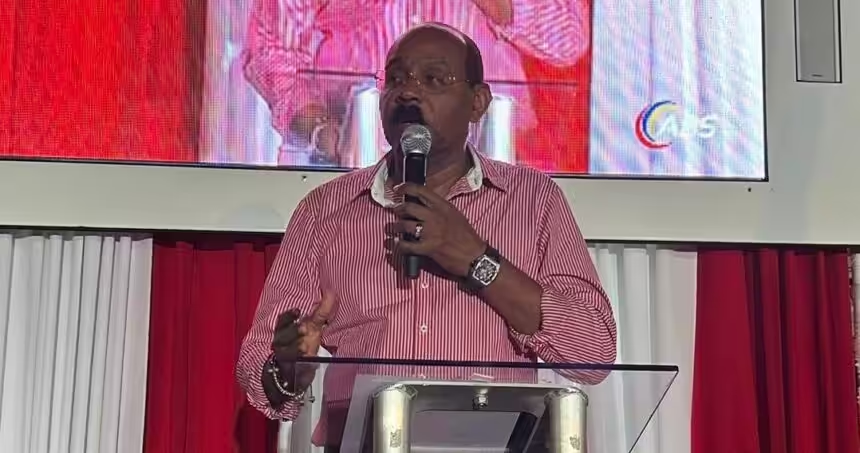
Speaking on his weekly radio program, Prime Minister Browne disclosed that his government had originally planned to vote in favor of Cuba’s long-standing resolution. However, the administration reconsidered its stance after receiving a direct call from the U.S. State Department. American officials advised that progress was being made in bilateral talks regarding visa access for Antiguan and Barbudan nationals, warning that a vote supporting Havana would undermine those delicate negotiations. Following the intervention, the government instructed its ambassador to the United Nations in New York to abstain from the vote. Ultimately, Antigua and Barbuda was recorded as absent during the October 28 roll call after the ambassador failed to attend the session.
The diplomatic maneuver highlights broader divisions across the Caribbean Community (CARICOM) regarding economic relations and human rights in the region. During the October 28 vote on the U.S. embargo, CARICOM member states took sharply contrasting positions. Jamaica, Haiti, and Guyana joined Antigua and Barbuda in abstaining or missing the vote, while Trinidad and Tobago voted against the resolution, with Prime Minister Kamla Persad-Bissessar arguing that her country could not remain silent on oppression in Cuba. Meanwhile, seven CARICOM nations—including the Bahamas, Barbados, Belize, Grenada, St. Kitts and Nevis, St. Vincent and the Grenadines, and Suriname—voted in favor of ending the embargo. Dominica and St. Lucia joined Antigua and Barbuda on the list of absent nations.
The government’s vote shift underscores the intense pressure surrounding U.S. non-immigrant visa restrictions, which have severely restricted travel for Antiguan and Barbudan citizens. Browne addressed the diplomatic dilemma after a female constituent called into his radio show explaining that she was unable to travel to the United States to visit her ailing mother due to an expired visa and ongoing administrative hurdles. Expressing deep frustration, Browne emphasized that Antigua and Barbuda has historically maintained strong, cooperative relations with Washington and has taken no action to justify travel sanctions against its population.
In an effort to address U.S. and European security concerns, the government has moved to dismantle its Citizenship by Investment (CBI) programme, which grants citizenship to foreign investors in exchange for financial contributions toward socio-economic development. Browne revealed that his administration formally agreed to suspend the CBI program and communicated its decision to the European Union, requesting a three-and-a-half-year phase-out period. Following an official agreement taking effect after November 12, the government intends to formally notify international partners of the program’s suspension in hopes of removing the primary pretext cited for visa restrictions.
Despite these concessions, the prime minister acknowledged ongoing uncertainty over whether the citizenship program is the sole driver of U.S. policy. Browne noted that the visa restrictions appear to have originated from a high-level determination within the White House rather than standard State Department channels, complicating efforts to achieve a quick reversal. Nevertheless, he affirmed that senior officials in his administration and supportive diplomats within the State Department continue to pursue active diplomatic engagements to resolve the restrictions and restore easy travel access for citizens.