


Why Mia Mottley Just Reset the Clock
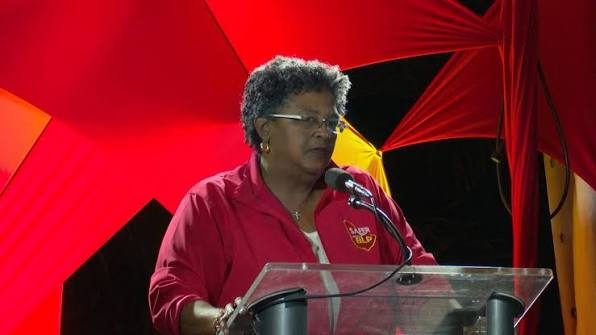
The atmosphere at Westbury Primary School this past Saturday was less like a standard nomination meeting and more like a tactical briefing. When Prime Minister Mia Amor Mottley stepped to the podium to announce a general election for February 11, 2026, she wasn’t just calling a vote; she was executing a calculated reveal of a plan months in the making.
While the constitutional clock didn’t require a poll until 2027, Mottley has once again reset the timeline, transforming a distant obligation into an immediate political sprint.
This marks the second consecutive time Prime Minister Mottley has dissolved Parliament a full year before her mandate expired. For a leader of Mottley’s stature, an early election is not a sign of insecurity, but a tool of asymmetric political warfare.
By pulling the date forward, she effectively decapitates any budding momentum the opposition might have hoped to foster over the next twelve months. This is a strategy of consolidation—a move to secure the Republic mandate while the government still dictates the national narrative.
To understand the weight of this call, one must look at the unprecedented “clean sweeps” of 2018 and 2022. Having twice cleared the opposition from the House of Assembly, Mottley now operates under the heavy burden of perfection. In the eyes of critics and the regional community, anything less than a 30-0 victory might be framed as a decline in her political hegemony, even if she maintains a comfortable majority.
This was no chaotic whim. As early as December 2025, Mottley was already signaling this “slow-burn” surprise, telling her “soldiers” to rest up and prepare for work in 2026. This level of foresight suggests a leader who has been measuring the political temperature for months, ensuring her base is energized and her rivals are caught flat-footed.
“When I start to call on you, I don’t want you to tell me that you are tired. I want you to tell me only, ‘Prime Minister, we are ready. We are red and ready.’”
Mottley’s decision is anchored in a formidable statistical shield. She has framed the early poll as a moment to validate the island’s fiscal discipline and recovery. By going to the people now, she is locking in a mandate based on current economic highs before global volatility can shift the numbers. Her justification rests on a trifecta of metrics:
• 17 Consecutive Quarters of Growth: A sustained expansion that serves as the bedrock of her administration’s credibility.
• Record-Low Unemployment: A tightening labor market that suggests the benefits of growth are reaching the household level.
• Historically High Foreign Reserves: A massive financial buffer that provides the island with unprecedented external stability.
The Prime Minister was explicit about the psychological relief this economic turnaround has provided the nation:
“We have seen it come from the economic doldrums. We no longer go to sleep worrying about foreign reserves; our foreign reserves are the highest they’ve ever been.”
The logistics of this announcement reveal a party that has been in high gear while others slept. With the confirmation of attorney-at-law Michael Lashley, KC, as the candidate for the City, the Barbados Labour Party (BLP) has already finalized its slate for all 30 seats.
The timeline is a breathless sprint: Parliament will be dissolved on January 19, Nomination Day follows on January 27, and the polls open on February 11. In just 25 days, the entire democratic process will be conducted and concluded. This rapid-fire sequence is designed to overwhelm an opposition that has been locked out of the House of Assembly for two terms and lacks the institutional machinery to match the BLP’s “Red and Ready” momentum.
This early election call is a definitive move to solidify the Republic’s trajectory for the remainder of the decade. Whether it is a show of ultimate confidence or a pragmatic maneuver to preempt shifting global conditions, it places the concept of the Barbadian “Opposition” under an intense microscope.
In the land of the 30-0 sweep, the question is no longer who will win, but whether the concept of an “Opposition” still exists in the Republic of Barbados.