

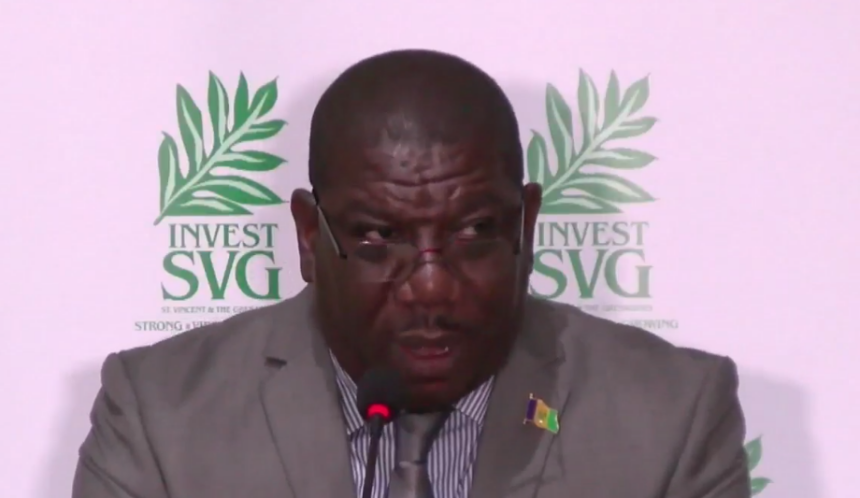
In a stirring address to the Vincentian diaspora, the Honorable Israel Bruce, Minister of Agriculture, Forestry, and Rural Transformation, declared that St. Vincent and the Grenadines is “ready for transformation” and urged nationals living in the British Virgin Islands (BVI) to transition from sending remittances to becoming primary shareholders in their homeland’s future.
Speaking under the theme “Home is Where the Heart Is,” Minister Bruce emphasized that while the diaspora has thrived in the BVI, their “hearts have never left” their roots. He challenged the audience to look beyond traditional financial support, stating that the future of the nation will be built on strategic and sustained investment rather than remittances alone.
The cornerstone of Minister Bruce’s address was the untapped potential of the agricultural sector. Highlighting that the global food industry is worth over US$8 trillion, he noted with concern that the Caribbean region still imports US$6 billion in food annually.
“St. Vincent and the Grenadines is underproducing compared to our potential,” the Minister stated, identifying several “gold mine” opportunities for investors:
- Large-Scale Poultry Production: Minister Bruce called for the establishment of broiler farms to meet local demand and eventually export to regional markets like the BVI.
- Processing and Manufacturing: He urged the diaspora to invest in plants that can juice, powder, or pulp local fruits like mangoes and golden apples, preventing them from going to waste.
- Aquaculture: He identified aquaculture as one of the fastest-growing sectors, citing ideal conditions in St. Vincent for tilapia, freshwater prawns, and aquaponics.
- Arrowroot Revival: Following the 2021 volcanic eruption that destroyed the national arrowroot factory, the Minister invited investors to partner in an $8 million EC project to outfit a new facility, noting that St. Vincent arrowroot remains highly sought after worldwide.
Minister Bruce proposed a “natural partnership” between the two territories, noting that the BVI has high tourism demand but limited agricultural land, while St. Vincent possesses fertile soil, abundant water, and skilled farmers.
He envisioned a future where “Vincy” products such as breadfruit, dasheen, and hot peppers are staples on BVI supermarket shelves and in luxury hotel kitchens. In a lighthearted but pointed suggestion, he even proposed “Madongo Mondays” in BVI restaurants to showcase St. Vincent’s traditional arrowroot-based Madongo bakes alongside local favorites.
Drawing on his own experience as a seasoned legal practitioner who once operated Bruce and Associates in Tortola, the Minister shared that he is himself an investor in the BVI. “I am invested in the British Virgin Islands… I am paying rent to landlords, I am paying telephone bills,” he said, using his personal history to illustrate that Caribbean integration is a two-way street.
He encouraged nationals with idle lands or locked homes in St. Vincent to put those assets to work through leases or “bed and breakfast” tourism initiatives.
The Minister’s call was supported by a broader government commitment to improving the ease of doing business. He highlighted ongoing reforms intended to slash the time it takes to set up a company from two months to just five business days.
“The timing for investment… right now is perfect,” Minister Bruce concluded. “We are not asking you to pack your suitcases and leave. We are asking you to make your money work… because home is where your heart is”.
