


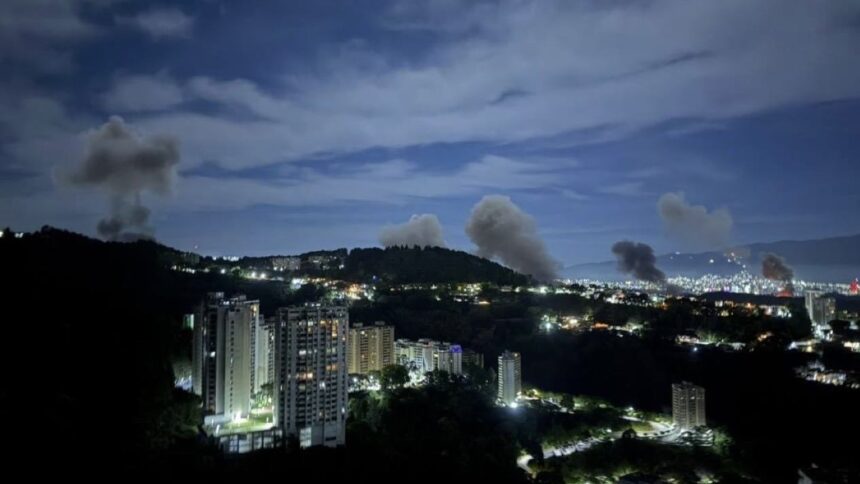
The removal of Nicolás Maduro, while a momentous event for the U.S, does not guarantee a peaceful or stable transition. On the contrary, it has uncorked years of suppressed conflict and created a complex political labyrinth.
Venezuela’s future now hinges on its ability to navigate three critical and interconnected challenges: the unresolved conflict over sovereign control, the resilience of Chavismo’s internal power structures, and the uncertain sentiment of the Venezuelan populace.
The most immediate challenge is the fundamental conflict between U.S. intentions and the opposition’s assertion of sovereignty.
President Trump’s declaration that the U.S. will “run the country” directly contradicts the opposition’s plan for Edmundo González to immediately assume the presidency.
This core disagreement over who holds ultimate authority risks undermining the legitimacy of a new Venezuelan government from its inception, potentially casting it as a puppet administration in the eyes of both domestic and international audiences.
Internally, the new government would face significant security threats from the remnants of the Chavista state apparatus. “Hardliners” such as Diosdado Cabello, Defense Minister Vladimir Padrino López, Vice President Delcy Rodríguez, and National Assembly President Jorge Rodríguez remain influential figures.
Furthermore, the risk of sustained, irregular resistance from armed civilian groups known as “colectivos”, which have long acted as enforcers for the regime, presents a formidable challenge to establishing state control and public order.
Finally, the sentiment of the Venezuelan people is complex and cannot be taken for granted. While the diaspora has largely celebrated Maduro’s removal, the view from within the country is more fractured.
A November 2025 poll indicated that 55% of Venezuelans opposed both foreign military intervention and economic sanctions. This suggests that a U.S.-led occupation, even a temporary one, may face significant popular resistance, complicating the opposition’s efforts to build a national consensus.
These deep-seated political and security challenges are magnified by the dire state of the Venezuelan economy, which remains the most critical factor in determining the country’s long-term trajectory.