

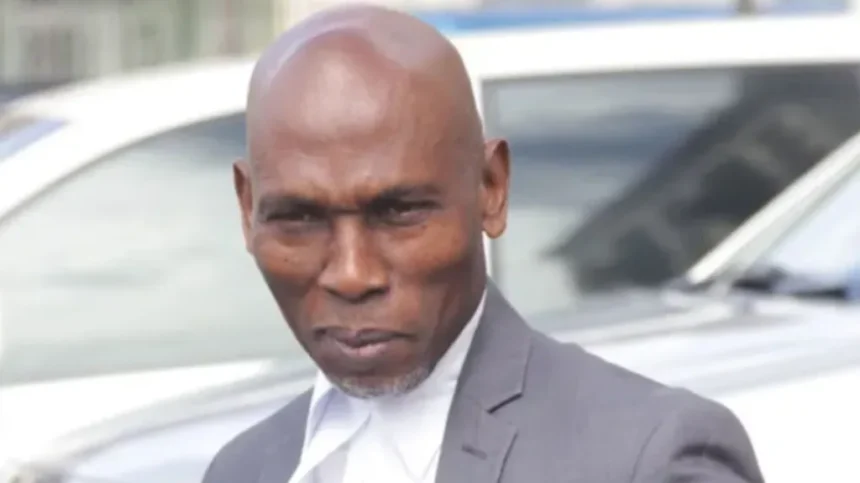
Attorney and legal analyst Jomo Thomas has blasted the stagnant status quo while conditionally backing a proposal to buy back the Canouan island lease, characterizing the current arrangement as an “absolute giveaway” of the nation’s patrimony.
Speaking on the “OMG in the Morning” program, Thomas voiced total support for reclaiming the land, yet he paired this endorsement with a scathing indictment of the political hypocrisy underlying the move. While Prime Minister Ralph Gonsalves has recently proposed a $40 million USD buy-back, Thomas argues this intervention is two decades too late and comes only after the government’s cozy relationship with foreign developers soured.
The roots of the Canouan crisis trace back to 1996–1997 under the New Democratic Party (NDP) administration led by James Mitchell. Under the dismissive narrative that Canouan was merely a “mosquito-infested island,” the Mitchell government leased approximately 1,800 acres—two-thirds of the island—to Italian developer Antonio Saladino.
Thomas highlights a staggering disparity in how national assets were treated versus personal ones. While Mitchell’s administration was liquidating state land for “peanuts,” the then-Prime Minister ensured that his own private island remained within his family’s possession. This personal safeguard stands in stark contrast to the unprecedented legal surrender of Canouan’s soil.
Thomas identified a devastating clause in the agreement: the developer was granted the right to sell land held only via a lease. To illustrate this absurdity, Thomas provided a hypothetical example: If a developer leases five acres for a set term but is permitted to sell that land, they could sell four acres by the final year of the lease.
Consequently, when the lease expires, the state receives only one acre back. Thomas describes this as a “brilliant” but predatory mechanism that effectively converts a temporary lease into a permanent loss of sovereign territory.
The transition of power to the Unity Labour Party (ULP) in 2001 failed to terminate the lease, despite Ralph Gonsalves’ previous fiery opposition. Thomas pointed to the “Gonsalves Paradox”—the sharp divide between the Prime Minister’s 1999 rhetoric as Opposition Leader and his 24-year tenure as the lease’s caretaker.
Rhetoric vs. Action
- 1999 Rhetoric: Gonsalves compared the situation in Canouan to “South Africa in the days of apartheid,” famously stating that locals were being robbed of “ancestral and historic rights” and required “passes” to access their own beaches.
- 24 Years of Action: Despite holding the power to challenge the lease as void or illegal, the Gonsalves administration took no legal steps to reclaim the land for over two decades. Instead of a rollback, the government reportedly sold an additional 20 acres to the developers and, according to Thomas, maintained a “nice arrangement” with the leaseholders until recently.
Evidence of this paradox reached a boiling point during the “Goodal Beach incident.” Despite the Prime Minister’s earlier anti-apartheid rhetoric, indigenous residents like Terry Bo and Miss Snag were detained for attempting to access the shore under his watch.
Thomas described a demographic reality on Canouan that remains segregated: billionaires control the north and south, while the indigenous population is relegated to a “central enclave.” He noted the stinging indignity of a system where black Vincentians must be “escorted” onto the land, while foreign interests are “fetted” without restriction.
Thomas presented financial evidence of an “absurd” economic imbalance, arguing SVG lacks the “intellectual firepower” to manage what is clearly a “gold mine.”
Economic Comparison: State Revenue vs. Private Profit
| Data Point | Value |
|---|---|
| Annual Lease Payment to Government | $20,000 (Fixed until 2089) |
| Private Land Sale Value | £5 million per acre |
| Property Tax for $166M USD Property | $1,400 per year |
| Nightly Rental Rate of Commercial Enterprise | $400 USD |
Thomas emphasized that while developers reap millions from land sales and high-end rentals, the state receives “peanuts,” failing to capture the true value of its own resources.
In 2017, the lease interest was transferred from Saladino to Italian billionaire Andrea Pignataro. The relationship between the Gonsalves administration and Pignataro soured by 2024, leading to the Prime Minister’s public complaints and the $40 million USD buy-back proposal.
However, Thomas pointed out a critical detail: Gonsalves’ proposal is not a total reclamation of sovereignty. The plan reportedly includes allowing the developers to keep the Mandarin Oriental hotel and restaurant. Thomas suggests the sudden urgency is politically motivated, particularly as Gonsalves has accused the current NDP Opposition of being “in bed” with Pignataro—ignoring the fact that the ULP administration oversaw the deal’s expansion for nearly a quarter-century.
Thomas urged the government to move beyond political posturing. He argued that whether the state buys back the lease or aggressively renegotiates terms that have been stagnant for 30 years, the current path is untenable.
He called on “wise persons” within the current ULP cabinet to recognize their duty to patriotic Vincentians, while simultaneously challenging the NDP to answer for the deal struck by their founding father, James Mitchell. To move forward, the state must finally abandon the shameful narrative of the “mosquito-infested island” and treat the Grenadines as the sovereign treasure they have always been.
