

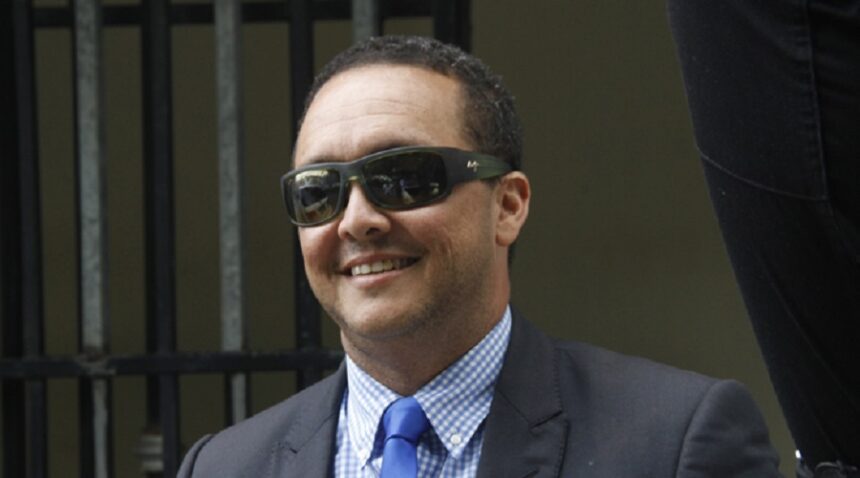
Prominent attorney Grant Connell is calling for a major overhaul in how the legal system handles licensed firearm holders, following the recent acquittal of his client, Esworth Lewis.
Lewis, a resident of Calder, was freed this week at the Calliaqua Magistrate’s Court on charges of wounding and unlawful use of a firearm. The case mirrors the December 2025 acquittal of popular DJ Christopher ‘2 Kool Chris’ Jones, who was also represented by Connell after a shooting incident involving a mentally ill man.
Connell argues that the current legal process forces responsible citizens through the “rigours of trial” and makes them look like “hardened criminals” for simply defending their lives. In the case of Lewis, the defendant was struck in the head with a beer bottle and faced continued aggression before using his weapon.
“What is the firearm holder supposed to do? Wait until his attacker delivers the fatal blow?” Connell questioned. He is now urging the government to implement legislation that clarifies a property owner’s right to defend themselves against intruders without the need for “extending courtesies” or engaging in a conversation that could lead to the owner becoming a victim.
The recent arguments made by Connell in August 2026 stand in stark contrast to the policy vision outlined by National Security Minister St. Clair Leacock in January 2026. While both address the “crime culture” in St. Vincent and the Grenadines, their solutions represent opposing sides of the citizen security debate.
In January, Minister Leacock took a firm stance against arming the general populace, arguing that possessing a gun “psychologically changes a person” and leads them to escalate rather than de-escalate conflicts. He famously stated that “when you have a gun, you’re always looking for a chance to use it”.
However, by August, Connell countered this narrative by highlighting specific cases where the firearm was used as a last resort against life-threatening violence, such as a beer bottle attack or a threat from a mentally ill individual. Connell argues that the law currently treats self-defense as a criminal act first, rather than assessing the justification of the case before laying charges.
Minister Leacock’s strategy for security emphasizes “soft power” and societal influence calling on churches, schools, and families to discourage crime collectively. He believes that “citizen security cannot be solved solely through ‘more boots and more hardware'”.
In contrast, Connell is pushing for hard legislative changes. He argues that property owners should not have to “seek clarity” from an intruder or hesitate when their lives are threatened on their own property. While Leacock wants to remove high-powered weaponry like M16s and M4s from civilian hands to maintain “law and order,” Connell is focused on the legal protections for the average licensed holder of standard firearms.
Leacock’s January remarks focused on the state’s duty to maintain territorial control, asserting that “no criminal element gangs must be allowed to own any square inch” of the country. He envisions a nation where people can sleep with windows “half open” due to a cultural shift in behavior.
Connell’s August position suggests that until that state of security is reached, the burden of defense falls on the individual. He argues that the current legal system’s approach which he characterizes as requiring owners to have a “conversation” with intruders actually endangers the public and unfairly penalizes those the state has already deemed fit to carry a licensed weapon.
