

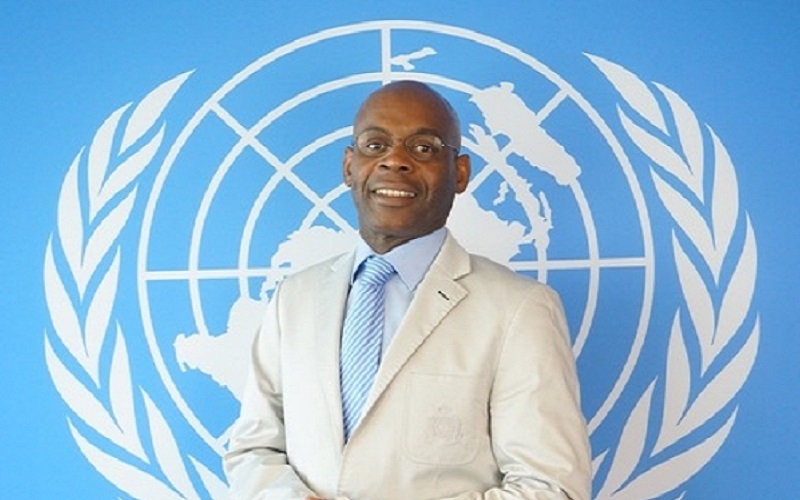
The UWI Global Campus was transformed into a “factory of ideas” recently as scholars, diplomats, and the public gathered for the launch of several works by Professor Byron Cox, including his 2025 publication, “Living in Wisdom: An Examination of Human Nature”. The event featured a rigorous intellectual discourse on Caribbean identity, colorism, and the complexities of human agency as depicted in Cox’s literary catalog.
The launch opened with a deep dive into Cox’s narrative style, specifically focusing on the character Sandy from his short stories. The audience reflected on a scene where Sandy celebrates the birth of his daughter, Claris, whom he views as a “special gift” because of her “brown skin” and “good hair”. This excerpt served as a springboard for discussing the “indelible roots of colorism” in Vincentian and Caribbean society.
The discourse also examined traditional constructs of manhood. Sandy’s “heroic status” among his peers, derived from his prolific “shooting” (the number of children he sired), was juxtaposed against the philosophical inquiries in Living in Wisdom, which asks whether individuals will “sail or drift” through life.
A significant portion of the evening was dedicated to a feminist literary analysis of Cox’s female characters, such as Mama from “Where Mama Stares in Vain” and Ines from “The Story of Pauline Bramble”.
- Mama: Described as “completely self-sacrificial,” Mama’s life was defined by her poverty and her reverence for patriarchal constructs, including her dependence on male patronage for housing. Her agency, the panel suggested, was deferred in the hope that her son, Boise, would eventually defend his own manhood against estate owners like Mr. Carson.
- Ines: In contrast to Mama, Ines was presented as a woman who exercised a “transactional” agency. After a childhood of horrendous sexual abuse, she entered into relationships with men for specific material outcomes. Her philosophy—”Better me do the deceiving”—highlighted a survivalist response to the “inevitable battle of the sexes”.
The dialogue shifted toward the intersection of religion and reason. Panelist Reynold challenged Professor Cox’s portrayal of faith, specifically disputing Cox’s interpretation of Matthew 19:21 and the nature of “randomness versus reality”. The discussion emphasized that while science and philosophy search for wisdom, faith provides the “anchors” against the “storms of life”.
Dr. Ralph Gonsalves added to the philosophical weight of the evening, discussing the concept of “self-alienation”. He suggested that all individuals are in a state of “exile” and must undertake a “homecoming” to themselves, a journey he compared to the “dangerous road to Jericho”.
Speakers throughout the night urged the Vincentian public to embrace their own stories. One attendee emphasized that young people in St. Vincent are hungry for sophisticated but accessible material that addresses Caribbean civilization rather than European philosophical frameworks. There was even a suggestion to bring book readings to the “ordinary people” in the local market to lift the national consciousness.
Professor Cox described Living in Wisdom as a “compendium of our own wisdom”. The book is unique in its structure, providing prompts for readers to record their own reasoning alongside the text, effectively making them co-authors of the philosophy.
Cox concluded the event by expressing his hope that the works would encourage citizens to live an “examined life”. The evening closed with acknowledgments to regional scholars from Barbados and the diplomats who helped shape what Cox called the “golden age of foreign policy” in St. Vincent and the Grenadines.