
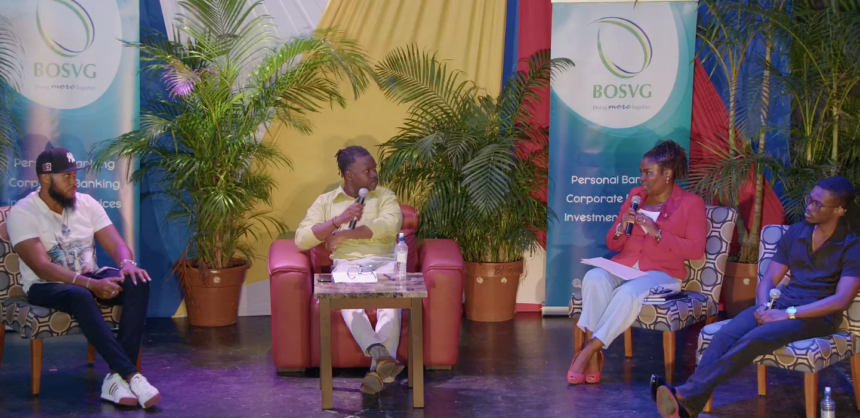
Creative practitioners, cultural advocates, and top government officials gathered at the historic Peace Memorial Hall for a high-stakes symposium examining the untapped potential and persistent bottlenecks facing St. Vincent and the Grenadines’ creative and cultural industries (CCI).
Convened under the banner of navigating the challenges of advancing the “Orange Economy,” the panel discussion sought to chart a viable pathway for local artists to tap into a global creative sector estimated by UNESCO and international financial bodies at between .25 trillion and .5 trillion annually.
Moderated by veteran creative Bomani, the panel brought together educator and policy advocate Nisha Hope, seasoned calypsonian and music educator Gary “Icon” John, and visual artist and entrepreneur Junard Ford. In attendance were key policymakers, including Director of Culture Maxine Browne and the Ministry’s Permanent Secretary.
Throughout the morning, panelists argued that while St. Vincent possesses extraordinary innate talent across music, literature, visual arts, fashion, and theater, the country’s institutional and regulatory framework lags severely behind. Panelist Nisha Hope highlighted that local creative ambition is constantly redirected because practitioners are forced to single-handedly construct the infrastructure required to sustain their craft—acting simultaneously as producers, marketers, shipping agents, and administrators.
Gary “Icon” John stressed that St. Vincent must understand its unique niche in the global market, noting recent growth in global music earnings to 1.7 billion and pointing to spin-off sectors like styling, catering, and event production that could thrive if properly integrated into the school curriculum. Meanwhile, Junard Ford called for an urgent cultural shift, demanding the same professional respect and remuneration for creatives as that accorded to doctors and lawyers.
Despite historical strides made in music copyright and royalty collection, the panel conceded that subsectors like publishing, visual arts, and fashion remain highly vulnerable to intellectual property theft and lack formal representation. The discussion culminated in an open floor session where members of the audience voiced raw, impassioned grievances regarding government neglect, commercial exploitation, and institutional paralysis.