

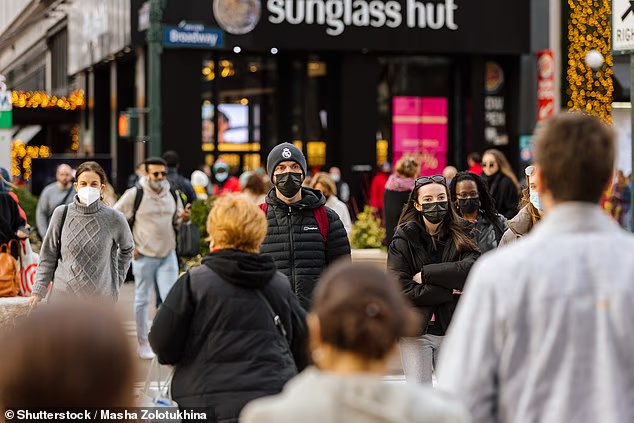
A deadly quad-demic is taking shape in the US as the months get colder and people gather indoors, threatening to overwhelm hospitals, disrupt children’s education and pose a deadly risk to vulnerable seniors.
Winter surges of Covid, respiratory syncytial virus (RSV), norovirus, commonly called the stomach flu, and influenza have become regular occurrences since the pandemic has waned. But this year, the US is contending with a dangerous superflu.
Cases of influenza are climbing in more than three dozen states. They are on track to overshadow last year’s particularly severe flu season, during which there were 560,000 hospitalizations and approximately 38,000 deaths between September last year and August.
The new influenza strain, H3N2 subclade K, is ripping through the UK, especially among seniors and people with compromised immune systems. This dominant strain does not match this year’s flu shot and has shown signs of causing more severe illness.
The CDC has reported that between 1.9 million and 3.3 million Americans have had the flu since October 1 and 19,000 to 38,000 have been hospitalized. The surge has led to a reinstatement of mask mandates across several states for everyone entering a hospital.
Several states have been hit particularly hard. Flu activity in Massachusetts is accelerating sharply, signaling an early and potentially deadly season. In just over two weeks, hospitalizations linked to flu more than doubled, reaching 0.4 percent of all admissions by mid-November.
The surge has been reflected in lab data, with confirmed cases jumping from 251 to 450 in a single week.
And in Iowa, the Moulton-Udell school district took the drastic step of canceling classes for two days due to an ‘extremely high percentage’ of illness among students and staff. The district has also called off athletic events. Nearly 30 percent of students and staff are sick.
This rising wave of illness has prompted hospitals in multiple states to reinstate universal mask mandates for anyone who walks through the doors (stock)
Iowa’s statewide burden of flu and COVID has been deemed low by the Iowa Department of Health and Human Services, though signs point to an imminent increase in case rates as the season progresses.
The rate of lab-confirmed flu tests in the state has been creeping up, mirroring the same track as last year’s gradual then abrupt rise.
About 3.5 percent of COVID PCR tests collected in Iowa came back positive in the second-to-last week of November, a 0.5 percent increase from the previous week.
At the same time, central Iowa’s Polk County Public Health’s communicable disease team has been seeing a rise in calls with questions regarding ‘stomach illnesses that are consistent with norovirus,’ according to Addie Olson, the department’s communications officer.
Public health officials at the CDC have said that while this year’s flu season has begun earlier than last year, it is still projected to follow a similar pattern and overall severity as last year.
The CDC’s models suggest the circulating viruses like H3N2 may behave similarly in terms of transmissibility and severity as last year’s strains, leading to a comparable total number of estimated illnesses and hospitalizations over the full season.
An earlier start does not necessarily mean a higher peak or worse outcome. It typically means the season will be longer and more drawn out.
No one has ever been exposed to this strain of influenza before, leaving immune systems vulnerable to potentially severe illness requiring hospitalization. It also arrived too late to include in this year’s shots.