


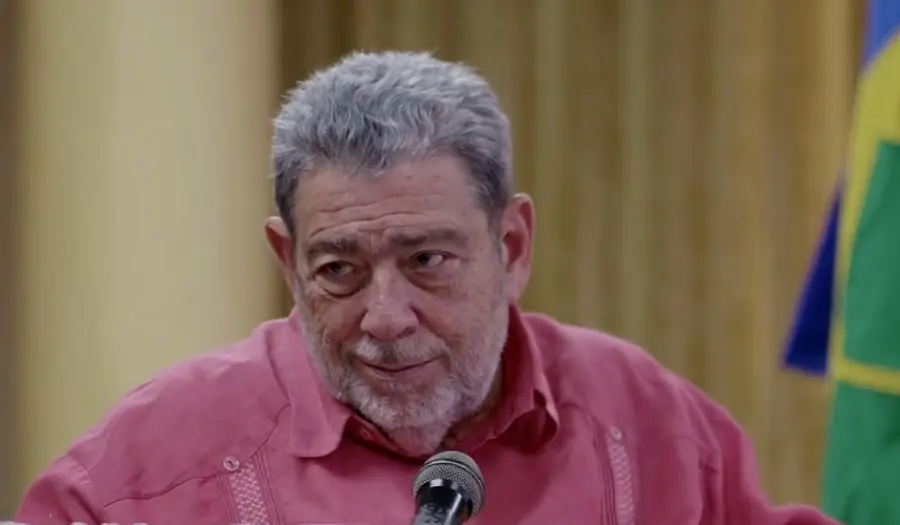
Former Prime Minister Ralph Gonsalves has raised severe alarms regarding the current socio-economic climate in St. Vincent and the Grenadines (SVG), describing a nation grappling with severe financial hardship, rising costs, and a failing social safety net.
Under the administration of the new NDP government, Gonsalves paints a picture of a stalled economy where ordinary citizens, workers, and small businesses are bearing the brunt of the crisis. According to Gonsalves, the consensus among everyday Vincentians is simply that “things dead” and “people are suffering”.
A central theme of Gonsalves’ commentary on Monday is the aggressive rise in the cost of living, exacerbated by global energy shocks. He warns that while there is a delay in how international fuel prices hit the local market, Vincentians must brace for inevitable price hikes.
Gonsalves specifically cautions that the price of liquefied petroleum gas (LPG), a price-controlled essential for cooking, is poised to surge, alongside anticipated jumps in the electricity fuel surcharge. Furthermore, he notes that these increases are already being felt in real-time at local supermarkets, where grocery prices are steadily climbing.
The strain is being severely compounded by rising job insecurity among the working class. Gonsalves highlights the plight of daily-paid workers in agriculture, housing, and school kitchens. Because the current government has refused to issue special warrants to cover budgetary shortfalls for wages, ministries are forced to lay off workers or implement “spelling” a system where workers are put on a “two weeks off, two weeks on” schedule, effectively halving their incomes.
Furthermore, he points out that the government has failed to address a promised salary increase for public servants that was supposed to take effect in January, leaving teachers, nurses, and other public sector employees frustrated.
Perhaps the most alarming of Gonsalves’ claims involves the country’s social welfare systems. He accuses the current administration of actively dismantling public assistance programs. According to Gonsalves, the government has underfunded the public assistance budget allocating only $26.9 million when over $28.2 million is needed to pay the 4,700 recipients the promised $500 a month.
To account for this shortfall, he alleges that the government has inappropriately handed welfare lists to politicians to arbitrarily cut vulnerable people from the program based on political affiliation.
This neglect extends to the healthcare and education sectors. Gonsalves shared the tragic story of Aldine Bal, a stroke victim who was discharged from the hospital without an ambulance ride, a medical bed, or home help, forcing his community to fundraise for his basic care. In the education sector, the situation is so dire that primary schools are allegedly resorting to hosting fundraising events just to buy basic food supplies for their school kitchens because the government has failed to deliver them.
The ripple effects of this strain are highly visible in the everyday economy. Gonsalves reports a general slowdown in private sector investment and construction. He recounts conversations with shopkeepers, market vendors, and minibus operators who are all experiencing a drastic drop in consumer spending. One rural shopkeeper noted that while customers in the past could reliably pay off debts of $100 to $200, many are now struggling to come up with even $50. Nightlife and community events are also suffering, with venues closing earlier than usual because patrons simply do not have the disposable income. As one vendor lamented to a colleague, the economy has “gone right back to zero”.
Despite the grim outlook, Gonsalves insists there are financial mechanisms available to cushion the blow for vulnerable populations. He urges the government to proactively seek emergency budgetary support from international partners.
His specific recommendations include tapping into the IMF’s rapid credit facility, requesting increased funds from the World Bank’s International Development Association (IDA), mobilizing support from the Caribbean Development Bank (CDB) and the Eastern Caribbean Central Bank (ECCB), and approaching allies like Taiwan and the European Union for grant monies. Gonsalves emphasizes that “serious responsible government” requires utilizing these contingency funds specifically to protect the poor and working people during periods of exceptional hardship.