

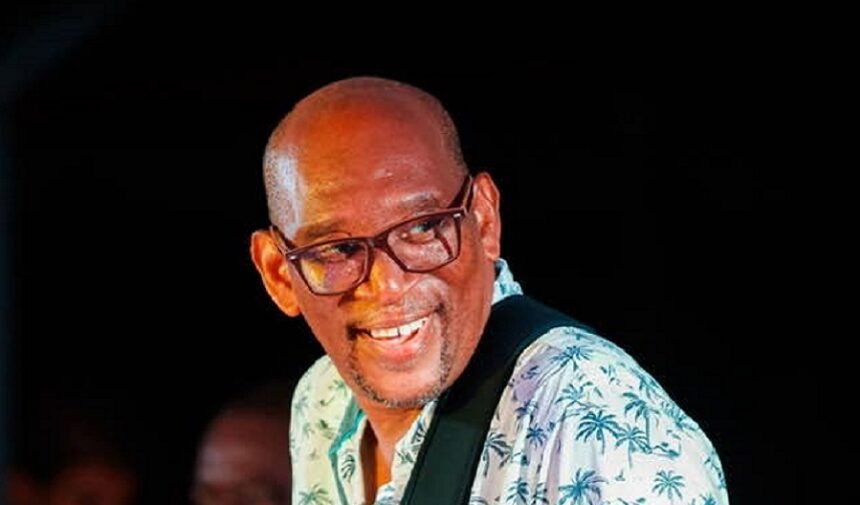
Speaking live on the morning radio program OMG, Vincentian commentator and Cuban-trained professional Dexter Rose strongly endorsed the government of St. Vincent and the Grenadines for standing on principle during the United Nations General Assembly vote on the United States embargo against Cuba.
Commending earlier commentary by legal analyst Jomo Thomas, Rose described Cuba as a historic “shining light” for global solidarity and urged Vincentians to unite across political lines in support of their government’s courageous posture, despite anticipated diplomatic pressure.
Rose highlighted the deep historical, geographical, and cultural ties binding the region, describing Cuba as the largest island in the Antillean chain with a shared heritage rooted in African migration and colonial history.
Drawing on his personal experience as one of several hundred Vincentians who completed their higher education in Cuba, Rose recalled that Cuban institutions instill in foreign students a duty to return home and serve as needed professionals. He contrasted this altruistic educational model with other international study destinations that often encourage brain drain or deport individuals back to the Caribbean.
Reflecting on Cuba’s international legacy, Rose emphasized the nation’s pivotal contribution to the liberation of Southern Africa. He recalled how former Cuban President Fidel Castro dispatched troops to fight against the apartheid regime in South Africa at a time when major world powers maintained trade relations with the government.
Rose specifically cited the decisive Battle of Cuito Cuanavale, where Cuban forces defeated apartheid forces, accelerating the independence of Namibia, the release of Nelson Mandela, and democratic elections in South Africa.
Turning to present conditions, Rose forcefully condemned the tightened US economic and energy blockade as “criminal”. He detailed severe humanitarian crises across the island, including medical surgeons forced to perform delicate operations using the light from cell phones and infants dying in incubators during sudden power blackouts.
Rose noted that Cuba, which previously maintained the lowest infant mortality rate in the Western Hemisphere, has seen its infant mortality rate double since energy supplies were restricted. He also cited remarks by Cuban Foreign Minister Bruno Rodríguez Parrilla at the UN, who noted that US sanctions prevent Cuba from purchasing American-developed treatments for lung cancer.
Addressing the UN General Assembly vote, Rose acknowledged the intense pressure under which Caribbean governments operate. He observed that while some regional neighbors—such as St. Lucia, Dominica, and Antigua and Barbuda—absented themselves from the vote to avoid political friction, Prime Minister Dr. Godwin Friday and diplomatic representative Chris Bramble took a bold and principled stand by voting to end the embargo.
Recalling a heated exchange at the United Nations where Foreign Minister Rodríguez Parrilla challenged US representations, Rose stressed that the UN assembly is an international forum governed by law rather than host nation authority. Warning that St. Vincent’s vote could trigger “serious repercussions” from powerful international actors, Rose called on all Vincentians to set aside political differences and stand united behind the administration’s decision.
